Skip to content
Category 02 / 10

Plate Beveling Machines

Milling-type chamfering for plate edges

Milling-type plate beveling machines produce clean V, Y, X and K bevels on carbon, stainless and clad plate. Self-propelled and stationary models cover hull-section prep, structural welding seats and pressure-vessel edge preparation — no slag, no oxide layer, no rework before welding.

Talk to an engineer
Plate Beveling Machines
02 Where it's used
Shipyard hull-plate edge preparation
Pressure-vessel & boiler shell prep
Wind-tower section welding
Structural steel & bridge fabrication
On-site bore restoration — pins, stern tubes, turbine casings
03 Series

12 series available

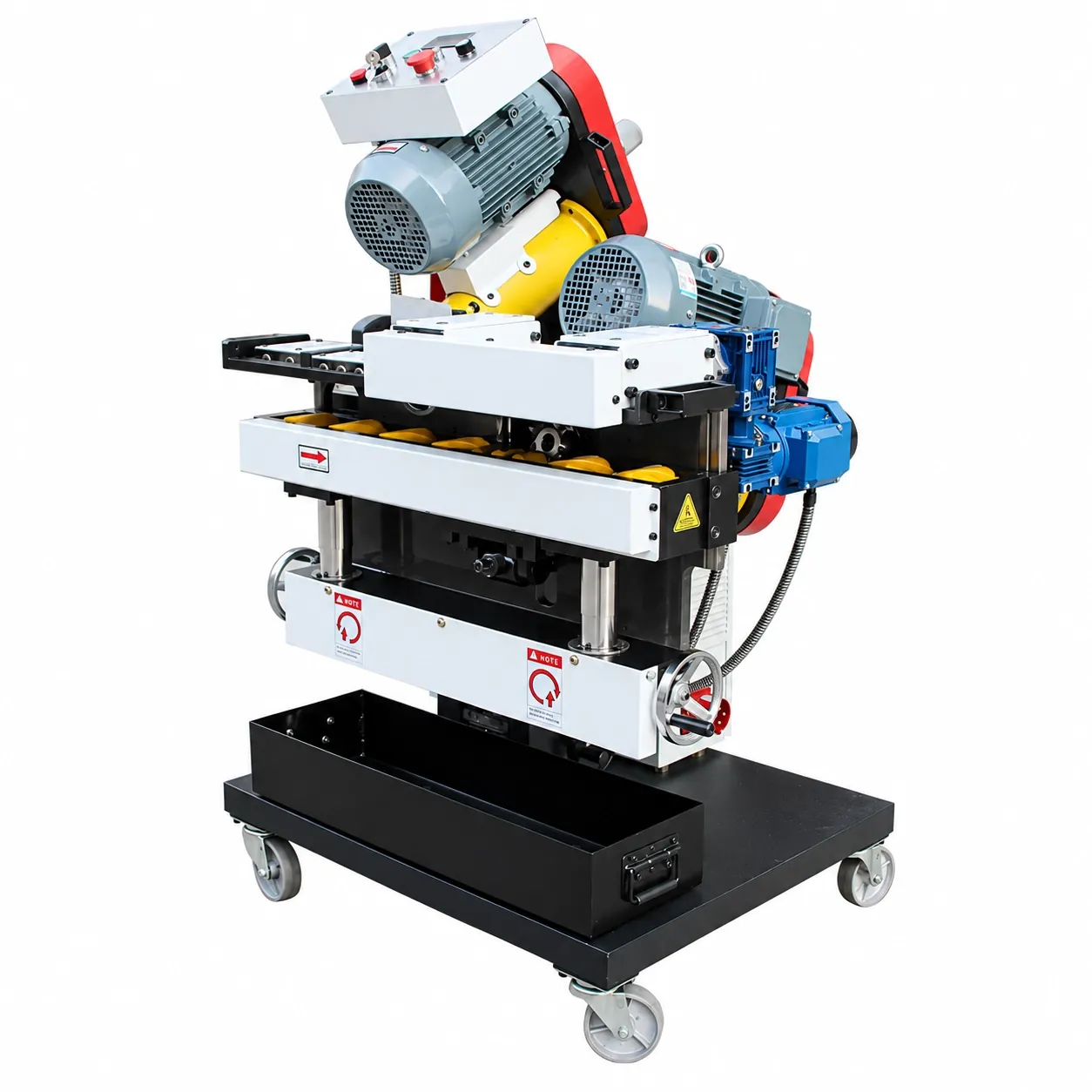
DMM-1232 Double-Sided Plate Edge Milling Machine
DMM-1232

DMM-1232 Double-Sided Plate Edge Milling Machine

Twin-head plate edge miller that bevels the top and bottom of the edge in the same pass — X and K weld preps on 4 – 55 mm plate without turning the plate over. The top head sets 0° – 45°, the bottom 0° – 60°, and each cuts bevel width up to 40 mm; at 0° it mills a straight edge for trimming. Built for medium to thick plate in production shops.

  • Plate thickness 4 – 55 mm
  • Bevel angle Top 0° – 45° · bottom 0° – 60°
View details
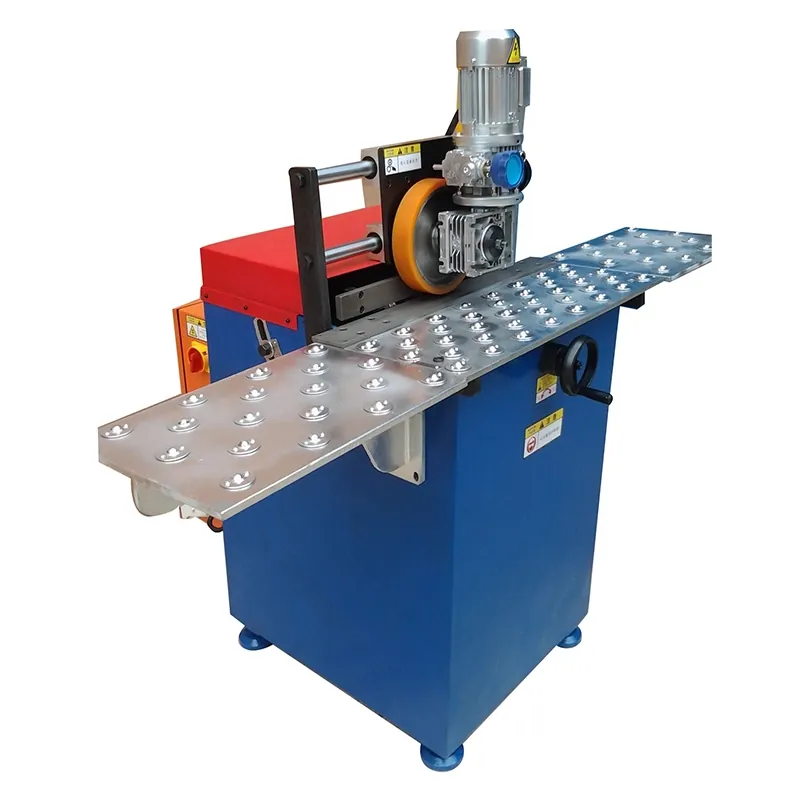
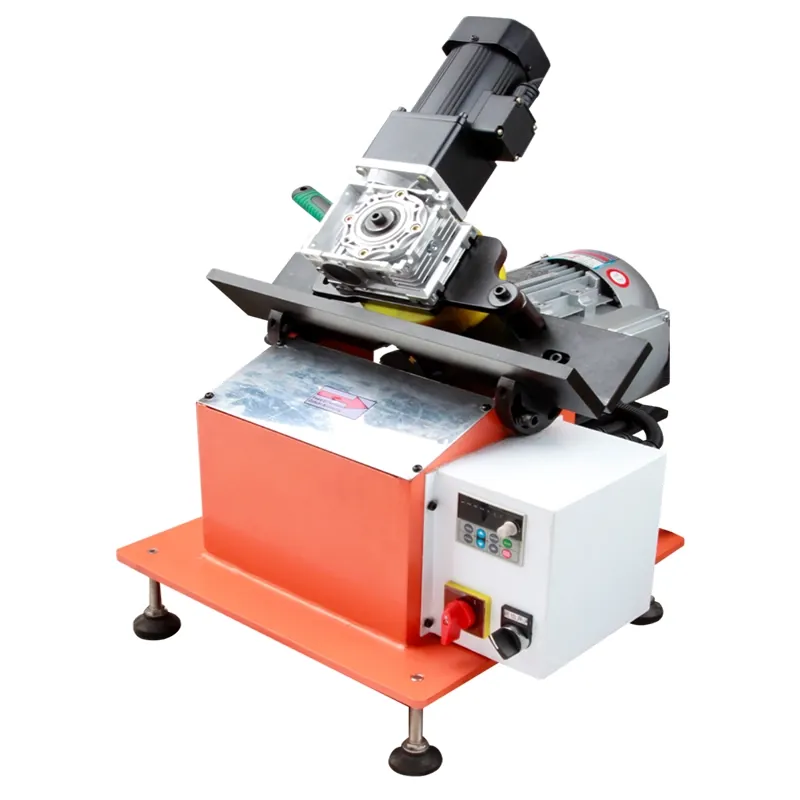
DMM-20D Heavy-Duty Tabletop Edge Milling Machine
DMM-20D · Tabletop

DMM-20D Heavy-Duty Tabletop Edge Milling Machine

550 kg stationary edge miller with independent dual motors — 4 kW main spindle and 750 W feed drive. Sized between the benchtop DZ class and the floor-standing heavy hydraulics; the production-shop standard for batch edge prep on plate 2 – 40 mm with up to 25 mm bevel width.

  • Plate thickness 2 – 40 mm
  • Bevel width Up to 25 mm
View details
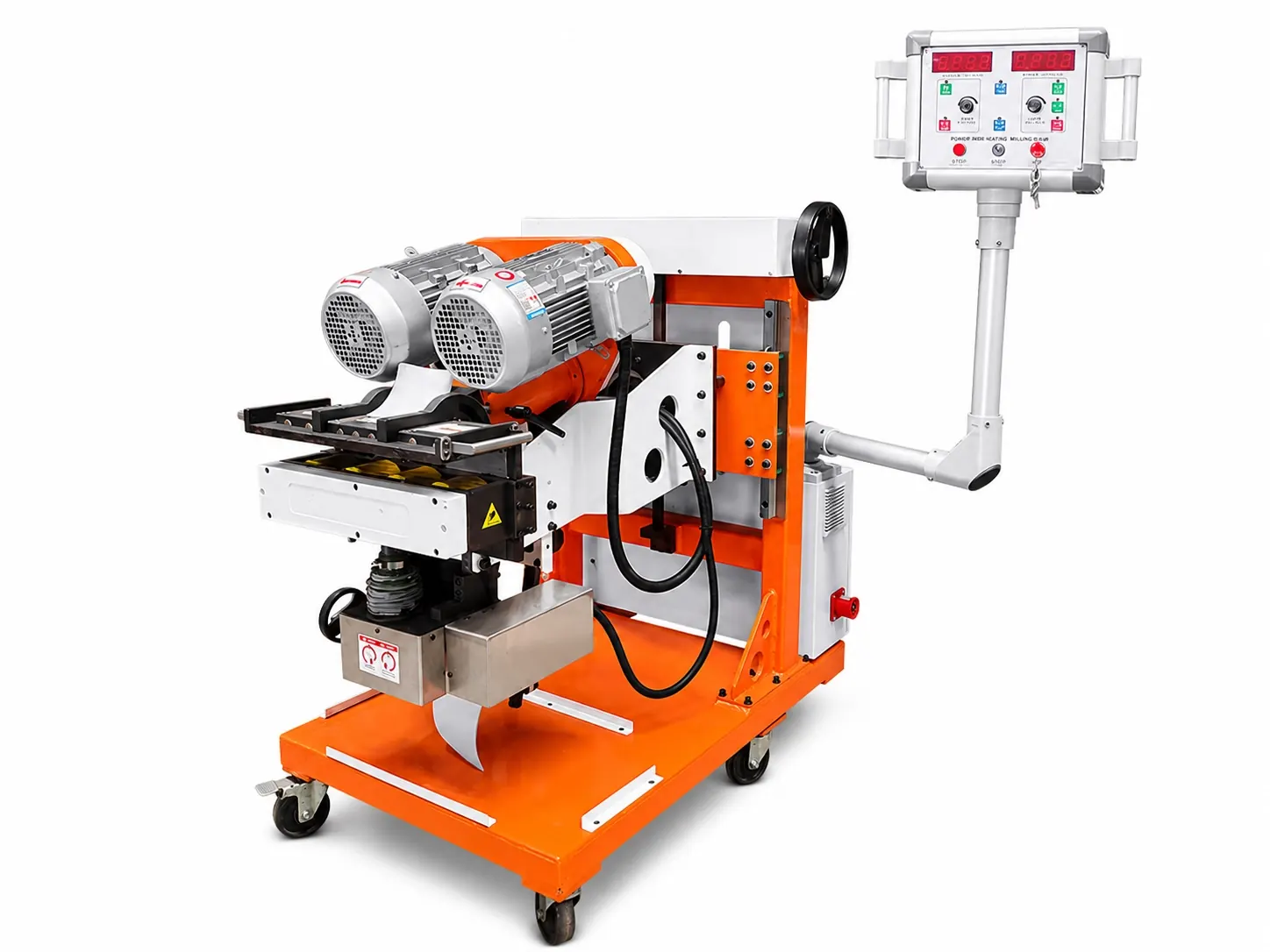
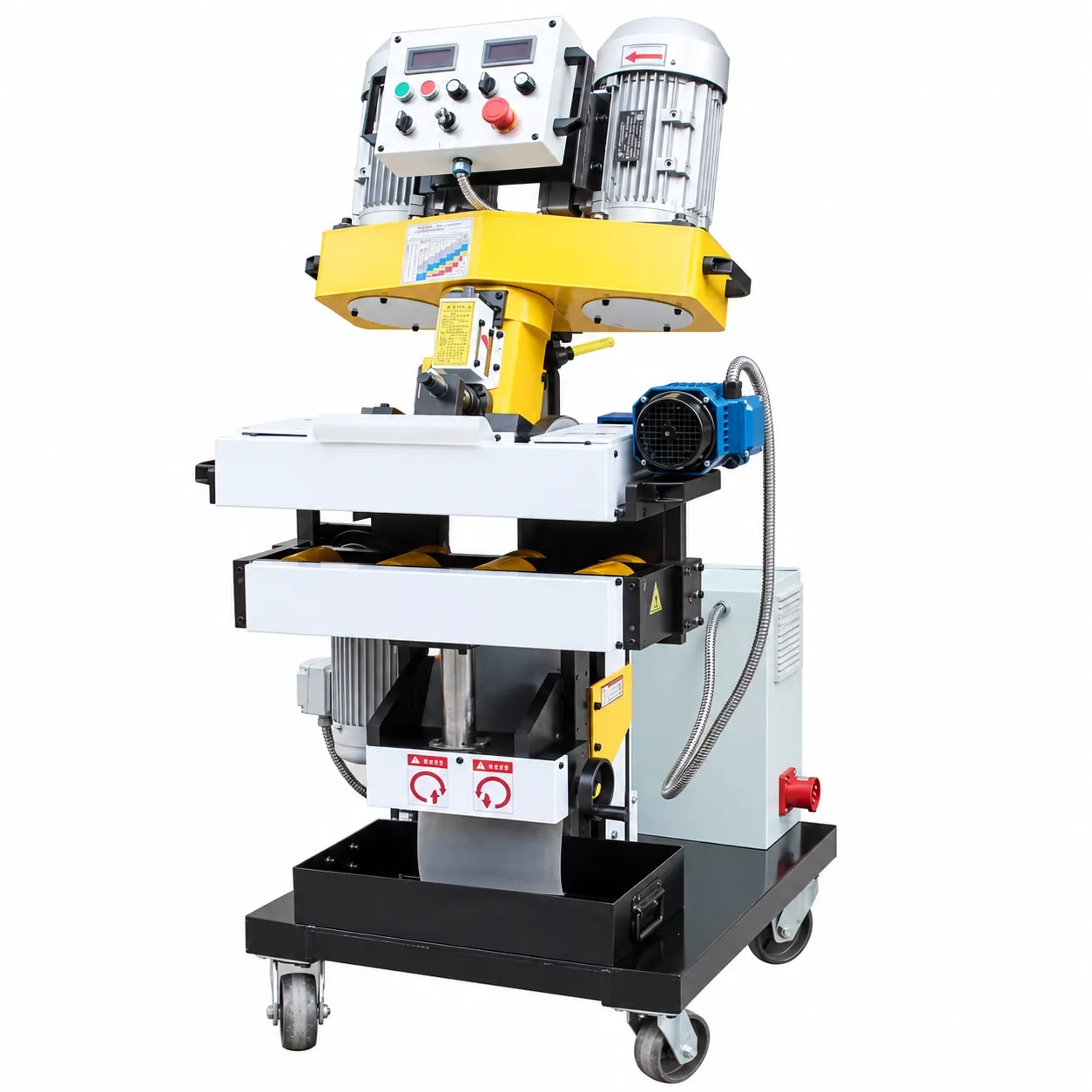
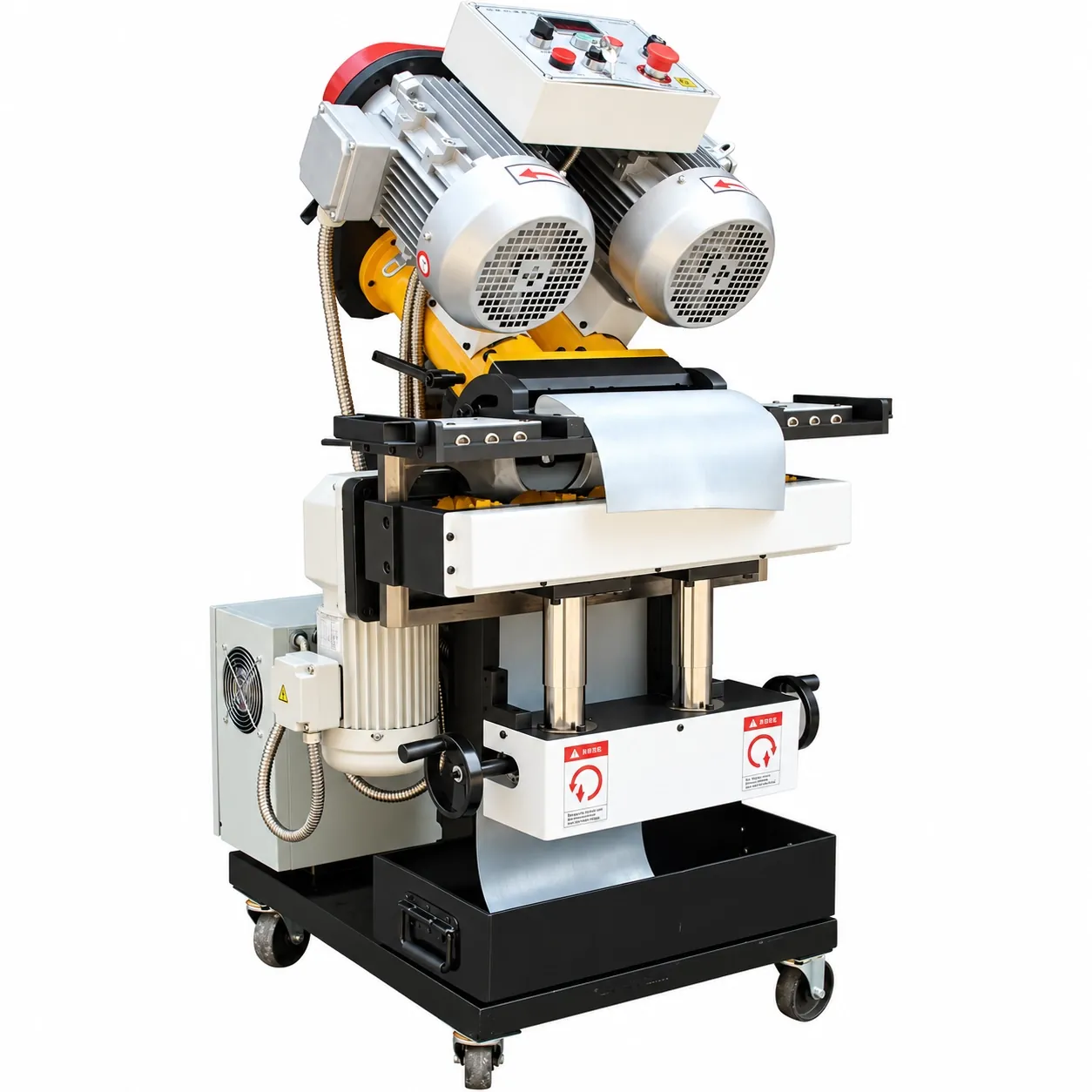
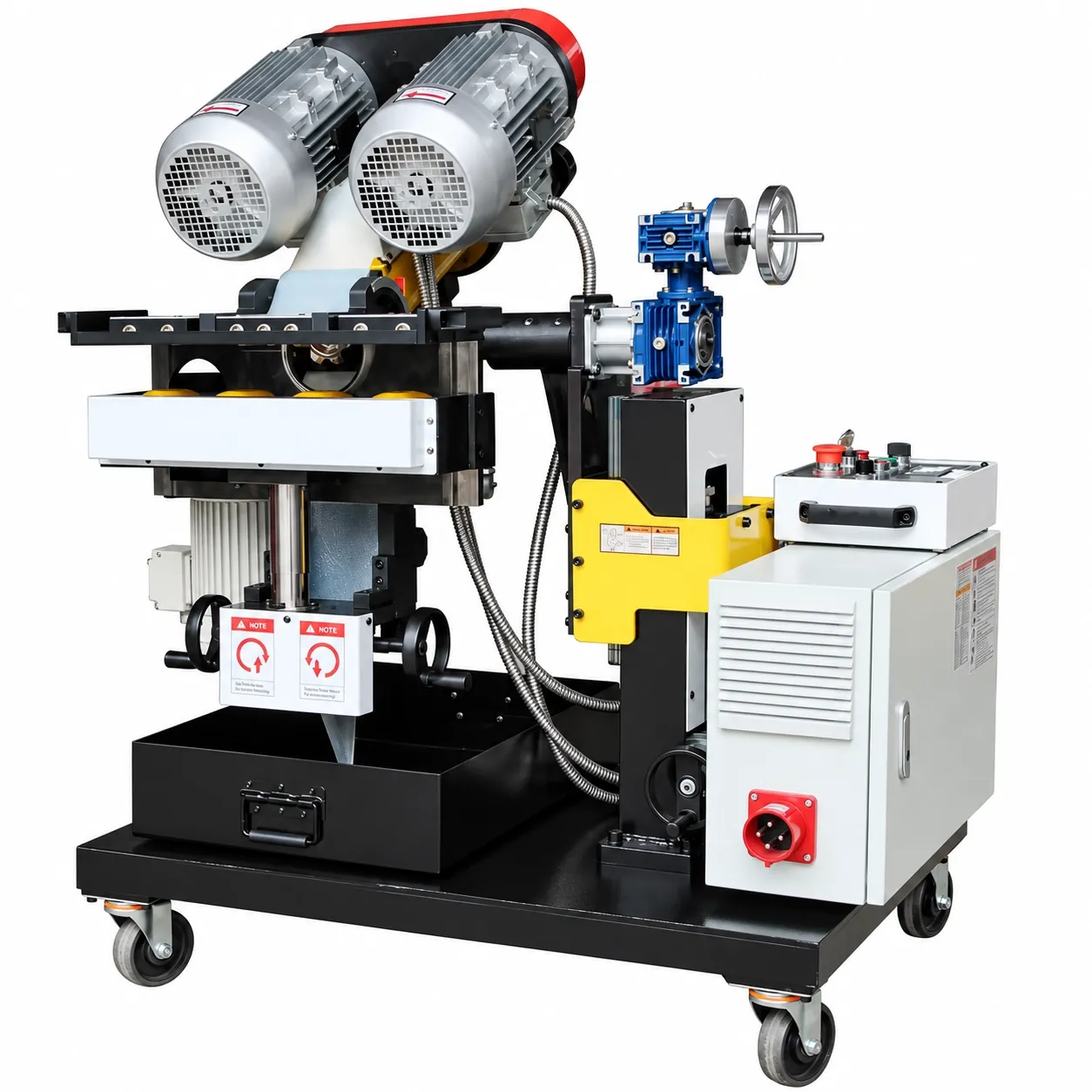
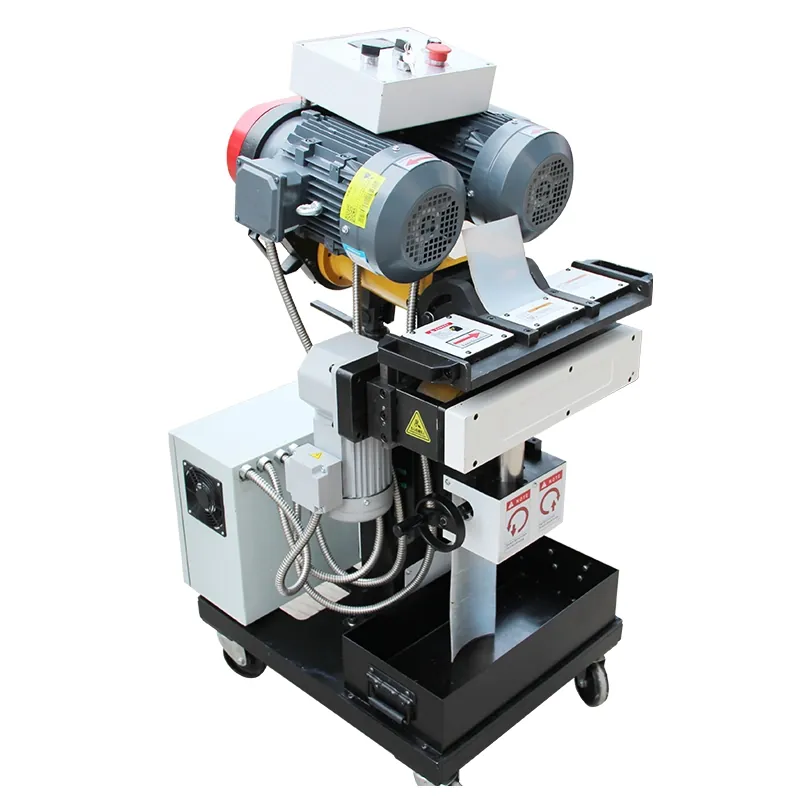
DMM-900 Automatic Traveling Plate Edge Milling Machine
DMM-900

DMM-900 Automatic Traveling Plate Edge Milling Machine

Compact self-propelled plate edge miller with a 0° – 90° bevel angle range. Twin 3 kW cutting motors take bevel width up to 100 mm (30 mm per pass) on 8 – 100 mm plate at Ra 3.2 – 6.3 μm — milling-machine speed in a machine that moves easily around the shop.

  • Plate thickness 8 – 100 mm
  • Bevel angle 0° – 90°
View details
DMM-900X Dual Cutter Head Plate Edge Milling Machine
DMM-900X

DMM-900X Dual Cutter Head Plate Edge Milling Machine

Automatic walking plate edge miller with two Ø 80 mm cutter heads, each on its own 4 kW motor. Bevel angle 0° – 90°, up to 35 mm of bevel width per pass and 80 mm in total on 8 – 100 mm plate, at Ra 3.2 – 6.3 μm — in a compact machine that moves easily around the shop.

  • Plate thickness 8 – 100 mm
  • Bevel angle 0° – 90°
View details
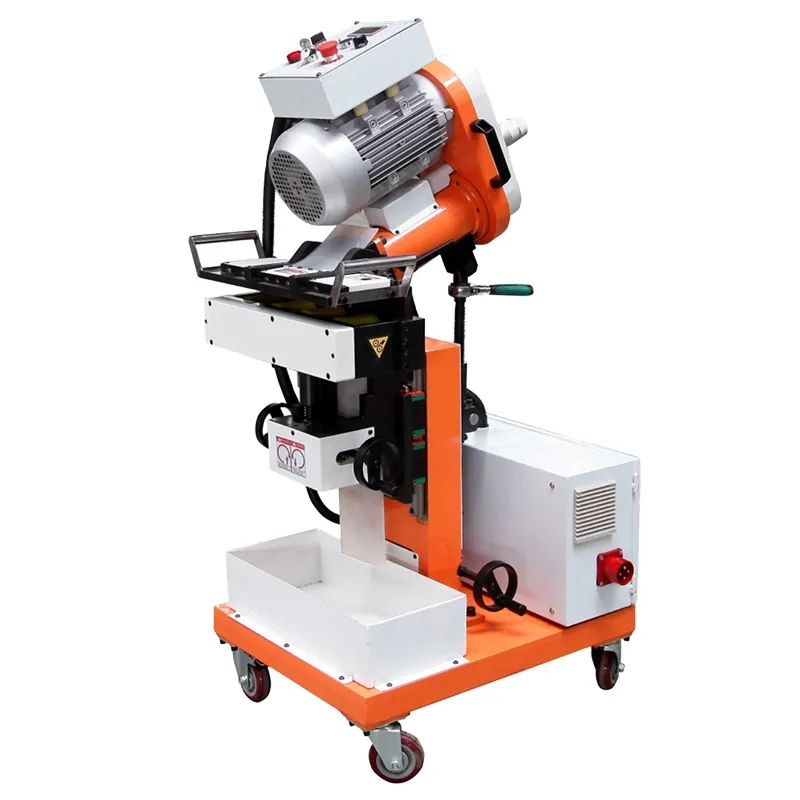
DMM-90X Automatic Traveling Double-Bevel Edge Milling Machine
DMM-90X

DMM-90X Automatic Traveling Double-Bevel Edge Milling Machine

Self-propelled plate edge miller with a flip-over body — bevels the top of the edge, then turns 180° to bevel the underside, so X and K weld preps on 4 – 80 mm plate never need the plate turned over. Bevel angle 0° – 75°, bevel width up to 70 mm, plus 0° side milling of the plate edge.

  • Plate thickness 4 – 80 mm
  • Bevel angle 0° – 75°, upper and lower
View details
DMM Heavy-Duty Hydraulic Plate Edge Milling Machine
DMM Series · Hydraulic Heavy

DMM Heavy-Duty Hydraulic Plate Edge Milling Machine

Dual-motor heavy-duty plate edge miller for thick-wall fabrication — 2 × 3 kW spindles drive cold milling on plate up to 150 mm thick and 90 mm bevel width. Hydraulic lifting on the L variants eliminates manual height adjustment. The standard tool for pressure-vessel, bridge and mining-equipment plate preparation.

  • Plate thickness 6 – 150 mm
  • Max bevel width 70 – 90 mm
View details
DZ Benchtop Plate Edge Milling Machine
DZ Series · Benchtop

DZ Benchtop Plate Edge Milling Machine

Compact stationary edge miller with motorized auto-feed for plate prep on small-to-medium workpieces. Operator pushes the plate into the track — the machine grips, propels and mills a cold V/Y bevel at Ra 3.2 – 6.3 μm surface finish. 80 – 150 kg cast base damps vibration for repeatable cuts across long production runs.

  • Plate thickness 2 – 50 mm
  • Bevel width Up to 20 mm
View details
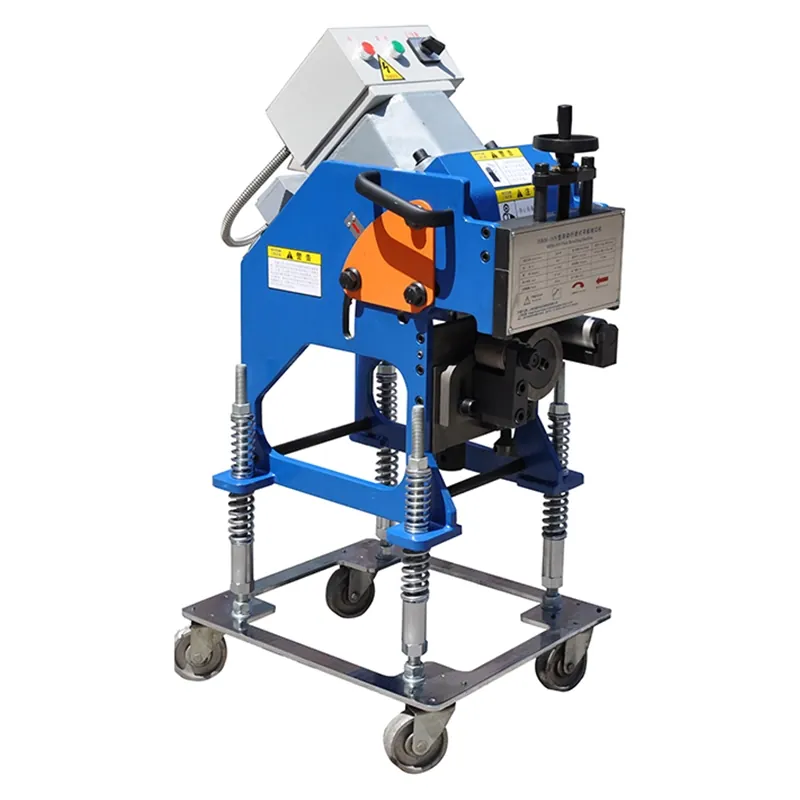
GL Self-Propelled Traveling Plate Edge Miller
GL Series · Traveling

GL Self-Propelled Traveling Plate Edge Miller

Self-propelled traveling edge miller that clamps onto the plate edge and walks itself along — the standard tool for long-edge weld prep where a stationary machine cannot accept the plate length. Four configurations cover plate 6 – 80 mm thick with V / Y / 90° vertical options.

  • Plate thickness 6 – 80 mm
  • Bevel width Up to 70 mm
View details
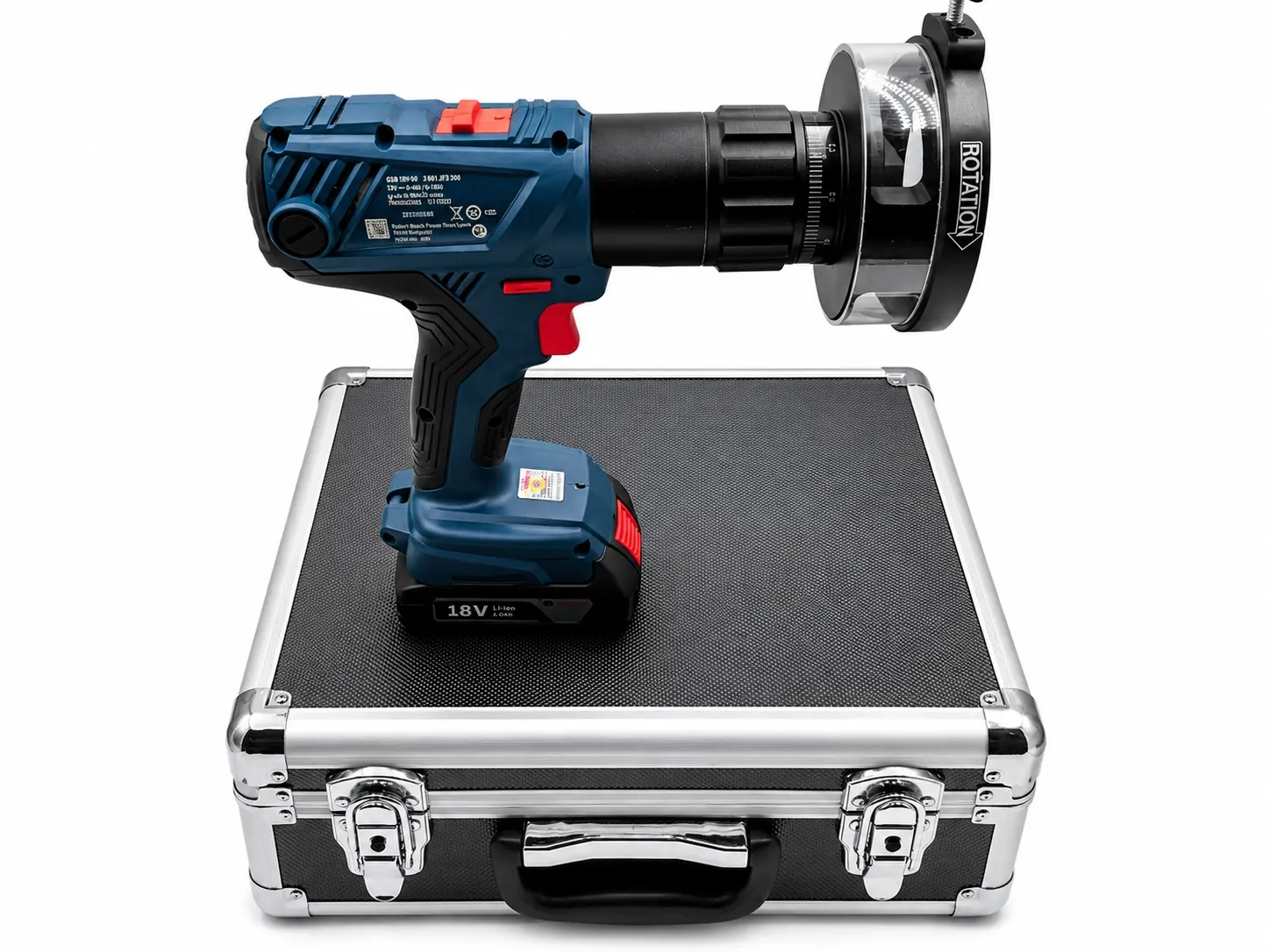
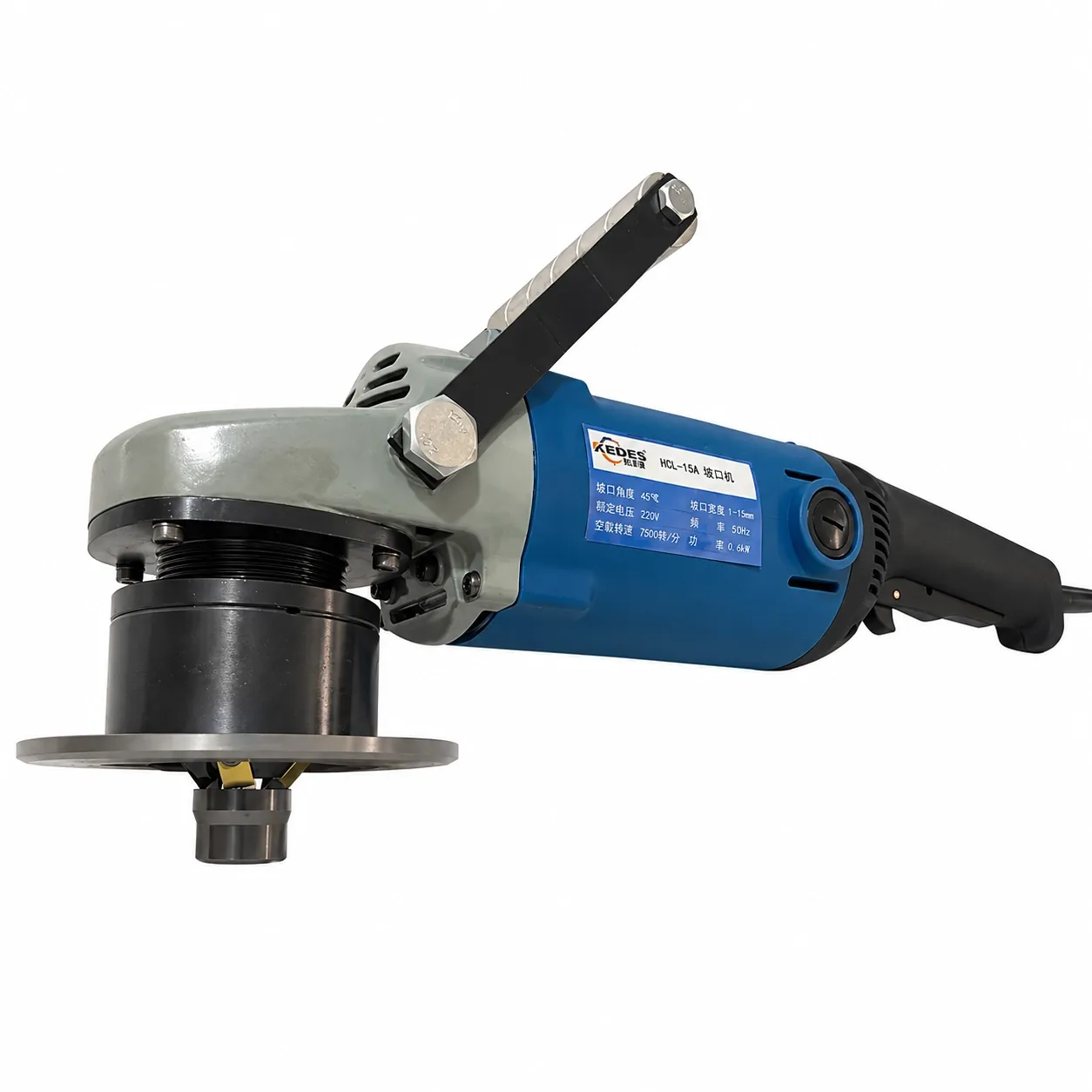
HDL Handheld Multifunctional Edge Miller
HDL Series · Handheld

HDL Handheld Multifunctional Edge Miller

6 – 9 kg handheld cold edge miller that bevels what stationary and traveling machines cannot reach — inner holes, curved plate edges, nozzle stub-outs and one-off pipe ends. 4-insert carbide cutter, adjustable bevel angle 20° – 60°, up to 15 mm bevel width on the HDL-15A.

  • Bevel width 1 – 15 mm
  • Bevel angles 20° – 60° (HDL-15A)
View details
KBM Self-Propelled Rolling-Shear Plate Beveler
KBM Series · Rolling Shear

KBM Self-Propelled Rolling-Shear Plate Beveler

Self-propelled cold-shear plate beveler that uses a rotating shear disc instead of a milling cutter — beveling speed 2.0 – 3.0 m/min, roughly 4 – 8× faster than carbide-insert milling on equivalent plate. Lowest consumable cost in the line (one wear disc, no inserts). Standard tool for high-volume V-bevel preparation in steel-construction and shipbuilding.

  • Plate thickness 5 – 45 mm
  • Bevel speed 2.0 – 3.0 m/min
View details
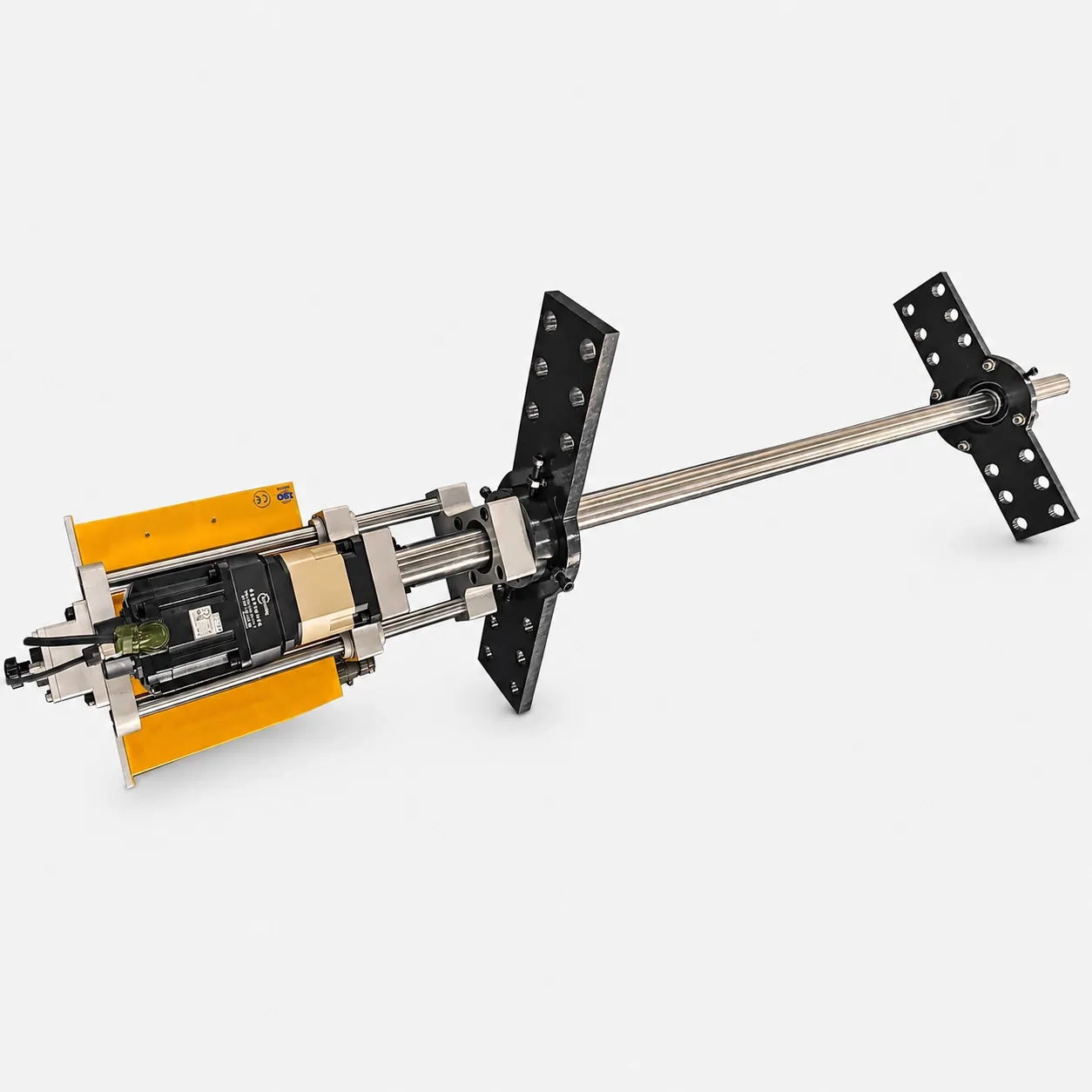
Portable Line Boring Machine (On-Site Bore Restoration)
LBE / LBH / LBS Series

Portable Line Boring Machine (On-Site Bore Restoration)

Portable line boring system that restores worn pivot bores, stern tubes, turbine casings and pin holes in situ — without disassembly. Modular boring bar mounts in the workpiece, drive head spins it through aligned bores to original tolerance. Pairs with an automatic bore welder for a "weld-and-bore" single-setup repair.

  • Boring range Ø 55 – 1600 mm
  • Bar length 1.8 – 4.5 m (custom)
View details
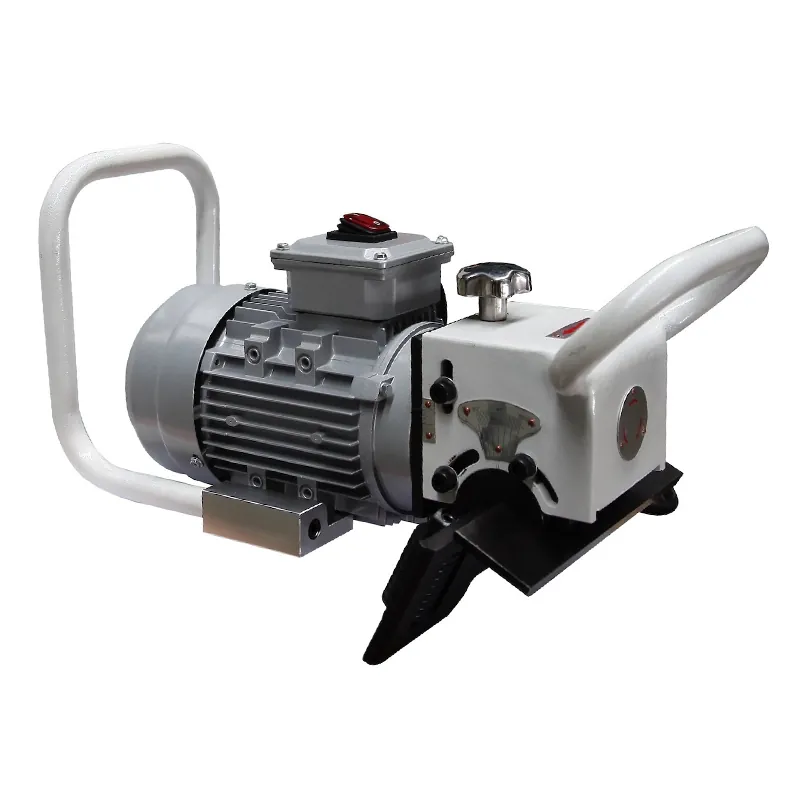
SKF-15 Hand-Propelled Portable Plate Beveler
SKF-15 · Hand-Propelled

SKF-15 Hand-Propelled Portable Plate Beveler

18 kg hand-propelled cold edge miller for straight plate edges. The agile entry-level option for one-off prep, on-site repair and training — rolls along the plate edge on wheels, operator pushes the handle. 1.1 kW motor, 1 – 15 mm bevel width, 30° – 60° angle adjustable.

  • Bevel width 1 – 15 mm
  • Bevel angles 30° – 60° adjustable
View details
04 Applications in depth

Where these machines earn their keep.

01

Weld edge preparation for steel fabrication

Plate weld prep splits into two methods — rolling shear and edge milling — and most shops pick the wrong one. Rolling shear is fast on long runs of one angle in mild steel; edge milling handles every other case, including alloy and variable angles.

The KBM rolling-shear plate beveler is the right answer for high-volume mild-steel work; the GL traveling edge miller covers everything else.
03

Pressure-vessel and boiler shell prep

Vessel longitudinal seams above 25 mm wall are where J-prep and compound bevels save real money — see V vs J prep economics. The constraint is holding the J radius and land consistently on long shell plates.

That rules out grinder prep entirely (see cold beveling vs grinding) and pushes the job onto a heavy edge miller — the DMM-900 vertical edge miller is sized for this thickness band.

04

Field repair and short-plate prep

Not every plate prep is shop work. For field repair, on-board ship modifications, or short structural plate, a handheld machine is the right scale.

The HDL handheld edge miller and the SKF-15 hand-propelled plate beveler cover the range. Bring plate thickness, target bevel angle and a photo of the typical work to the quote form and we will size the machine for what the crew actually carries.

05

On-site bore restoration (line boring)

Not all on-site machining is edge work. Worn pins, stern tubes, turbine casings and excavator pivot bores — anything cylindrical that has gone oversize in service — are restored in place by the portable line-boring machine: clamp the machine to the workpiece and bore the aligned holes back to tolerance without disassembly.

The decisive specs are bar rigidity (sets the depth-of-cut you can take without chatter) and how cleanly the bar can be set concentric to the original bore axis. Skimping on either is the difference between a bushing that lasts a year and one that fails again before the next outage. It pairs with an automatic bore welder for a single-setup weld-and-bore repair.

05 Selection Matrix

Not sure which model?

SeriesPlate thicknessBevel widthFeedBest for
HDL — 1 – 15 mm Handheld Touch-up, short runs, awkward access
SKF-15 — 1 – 15 mm Hand-propelled Straight edges, one operator, 18 kg
DZ 2 – 50 mm Up to 20 mm Benchtop Small parts brought to the machine
DMM-20D 2 – 40 mm Up to 25 mm Tabletop feed-through Repeat production on small plate
KBM 5 – 45 mm 16 / 26 mm single pass Self-propelled shear Long runs of one angle in mild steel
GL 6 – 80 mm Up to 70 mm Self-propelled milling Long plate edges, machine goes to the work
DMM-900 8 – 100 mm Up to 100 mm Self-propelled milling Steep angles and vertical end facing
DMM-90X 4 – 80 mm Up to 70 mm Self-propelled, flip-over body X/K preps — flips 180° instead of the plate
DMM-900X 8 – 100 mm Up to 80 mm Self-propelled, dual cutter head Wide bevels, up to 35 mm per pass
DMM-1232 4 – 55 mm Up to 40 mm per face Twin head, plate or machine feed X and K preps without turning the plate
DMM hydraulic 6 – 150 mm 70 – 90 mm Self-propelled milling The heaviest plate in the shop
06 Selection Guide

Answer these and the model picks itself.

  1. How wide does the bevel have to be?

    This decides the machine class before anything else. Up to 15 mm a handheld or hand-propelled unit is enough. Up to 25 mm, a benchtop or tabletop machine. Above that you are into self-propelled milling.

  2. Does the plate move, or does the machine?

    Plate comes to the machine — DZ benchtop or DMM-20D tabletop. Faster per part, and the operator stays in one place.

    Machine goes to the plate — GL or DMM-900 self-propelled millers run against 6 m and 12 m plate without re-fixturing.

  3. Milling or rolling shear?

    Rolling shear is faster and cheaper on long runs of one angle in mild steel up to about 12 mm. Milling handles everything else — alloy and stainless, variable angles, heavy wall, anything that has to pass code inspection. Most fabrication shops should own a miller, not a shear. Worked through in rolling shear vs edge milling.

  4. Single-sided or double-sided prep?

    X and K joints need both faces bevelled. Two ways to get there: flip the machine over with the DMM-90X, or cut both faces at once with the DMM-1232. Either beats turning the plate over — see double-sided plate beveling for when X-prep starts paying for itself.

  5. Thicker than 100 mm?

    The hydraulic heavy edge miller takes plate to 150 mm. Above that, send the drawing — heavy-section prep is usually a fixture question as much as a machine one.

07 Frequently asked

Quick answers.

What is a plate beveling machine?
A machine that mills or shears an angled edge along a steel plate to prepare it for welding. It replaces flame cutting and hand grinding, holding the bevel angle along the whole edge instead of drifting. Detail in plate beveling and edge milling.
How thick a plate can be milled in one pass?
Depending on model, single-pass capacity ranges from 3 mm up to 60 mm. The DMM hydraulic heavy edge miller and DMM-900 vertical edge miller handle the heaviest sections. Larger bevels are broken into staged passes per WPS.
Rolling shear vs edge milling — which is the right choice?
Rolling shear is fast on long runs of one angle in mild steel up to ~12 mm wall. Edge milling handles every other case — alloy and stainless, variable angles, heavier wall, anything code-quality. Most fab shops should own an edge miller, not a rolling shear. Full decision tree in rolling shear vs edge milling.
When does X or K (double-sided) bevel pay back?
Above ~20 mm wall thickness. Single-V at 30 mm carbon shrinks by 3–7 mm of bow on a 6-metre seam; X-bevel holds under 1 mm and cuts fill volume by ~40%. The straightening cost saved usually pays back the prep time within the first project. Full case in double-sided plate beveling.
Can the machines bevel stainless and high-strength steel?
Yes, with edge-milling architecture. Rolling shear ceiling is ~600 MPa tensile — above that the wheel work-hardens the edge. For 304 / 316L stainless, duplex, super duplex and abrasion-resistant plate, edge milling is the only viable method. Dedicated stainless tooling avoids cross-contamination — see beveling stainless steel.
Self-propelled vs stationary — which fits my shop?
Self-propelled (cutter walks along clamped plate) for long plate and panel work — see the GL traveling edge miller. Stationary (plate moves through fixed cutter) for batch production and shorter pieces. Both can run V, X and K geometries with the right tooling.
What standards do the machines reference?
ASME B16.25, EN ISO 9692-1, EN 1090, AWS D1.1, and IACS class society rules for shipbuilding. Machines ship with calibration certificates on angle and feed for class surveyor inspection.
Can the portable line-boring machine restore turbine and pin bores?
Yes. The portable line-boring machine mounts on the workpiece and bores worn pins, stern tubes and turbine casings back to tolerance in situ. Bar rigidity sets the depth-of-cut you can take without chatter; bar concentricity to the original bore axis decides whether the bushing lasts.
Next step

Get a quote within 24 hours.

Send us your spec sheet, pipe schedule, or drawing — our engineers reply with pricing, lead time, and recommended models.

  1. 01Send specs & drawings
  2. 02Receive quote within 24h
  3. 03Confirm & manufacture
Chat on WhatsApp
Chat on WhatsApp
Get a quote

Request a quotation.

Tell us pipe diameter, wall, material and country. We reply within one working shift.

WE REPLY WITHIN ONE WORKING SHIFT · GMT+8