
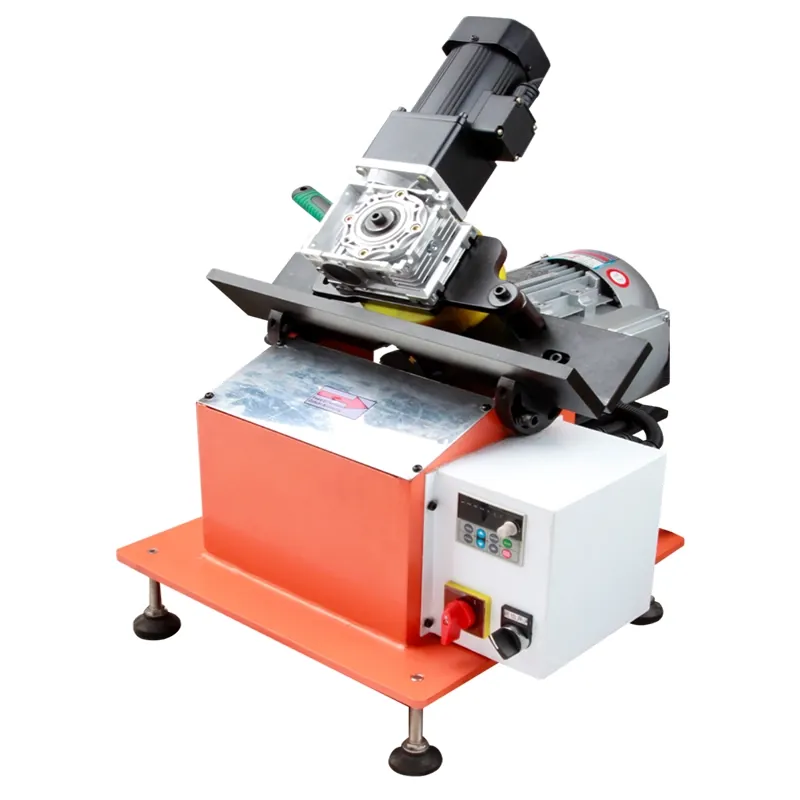
DZ Benchtop Plate Edge Milling Machine
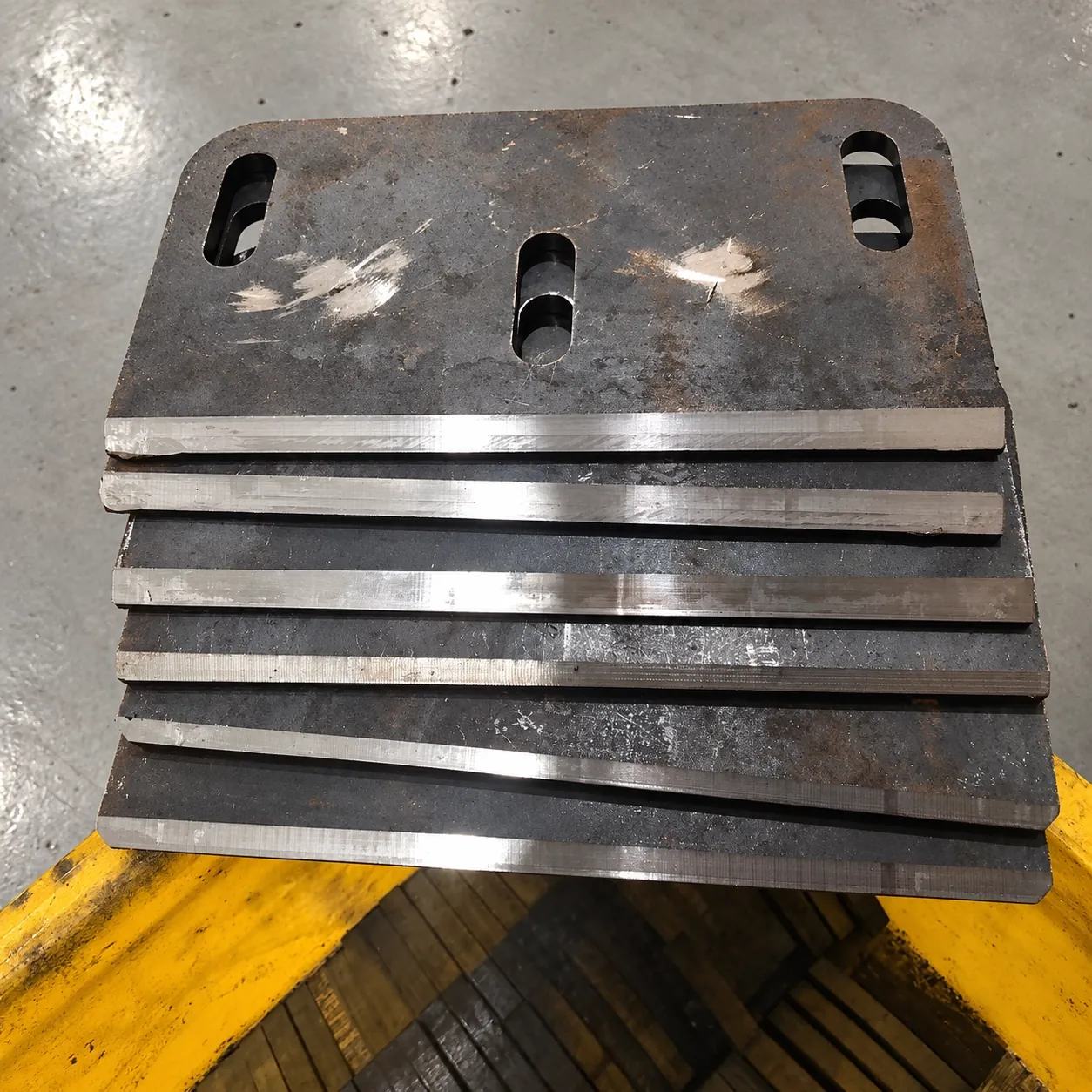
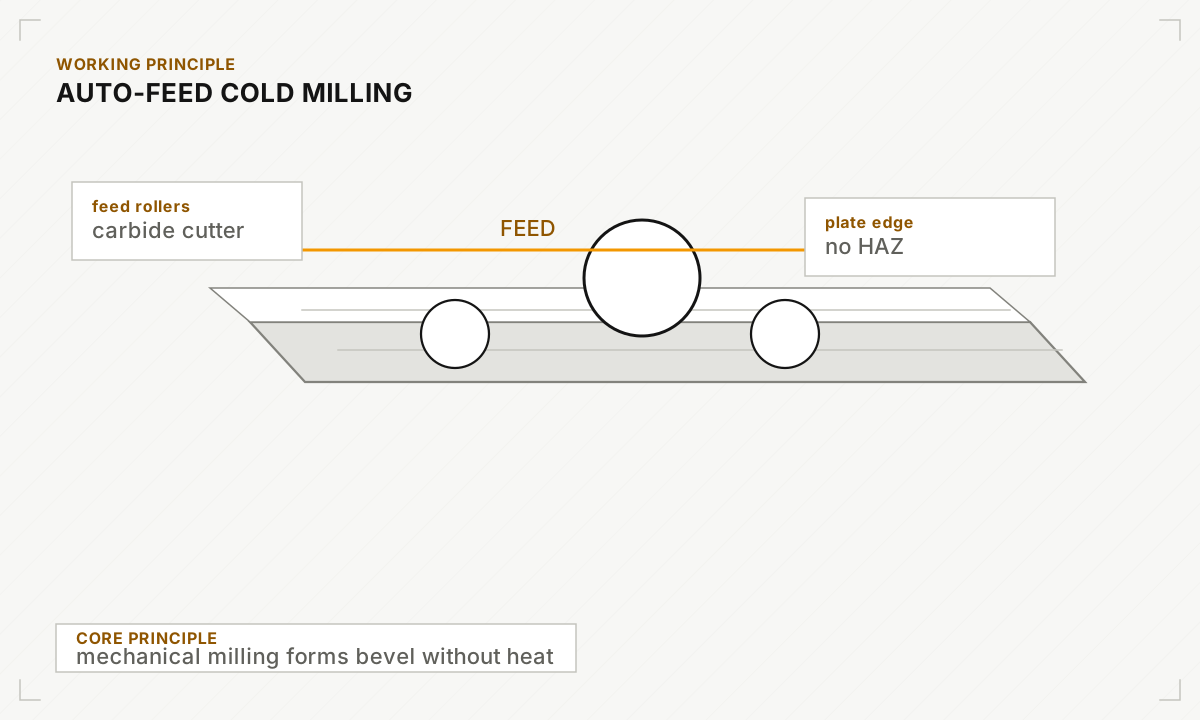
Compact stationary edge miller with motorized auto-feed for plate prep on small-to-medium workpieces. Operator pushes the plate into the track — the machine grips, propels and mills a cold V/Y bevel at Ra 3.2 – 6.3 μm surface finish. 80 – 150 kg cast base damps vibration for repeatable cuts across long production runs.
Pick your size — 2 models in the series.
| DZ-10 Standard · 2 – 40 mm | DZ-20 Heavy-duty · 3 – 50 mm | |
|---|---|---|
| Plate thickness | 2 – 40 mm | 3 – 50 mm |
| Bevel angle range | 30° – 60° | 30° – 75° |
| Max bevel width | 18 mm | 20 mm |
| Min plate width | > 20 mm | > 30 mm |
| Feed speed | 0 – 1200 mm/min | 0 – 1500 mm/min |
| Motor power | 2200 W · 380 V | 2200 W · 380 V |
| Spindle speed | 2880 r/min | 2880 r/min |
| Net weight | 80 kg | 150 kg |
| Quote this model |
Why cold milling beats grinding on plate weld prep
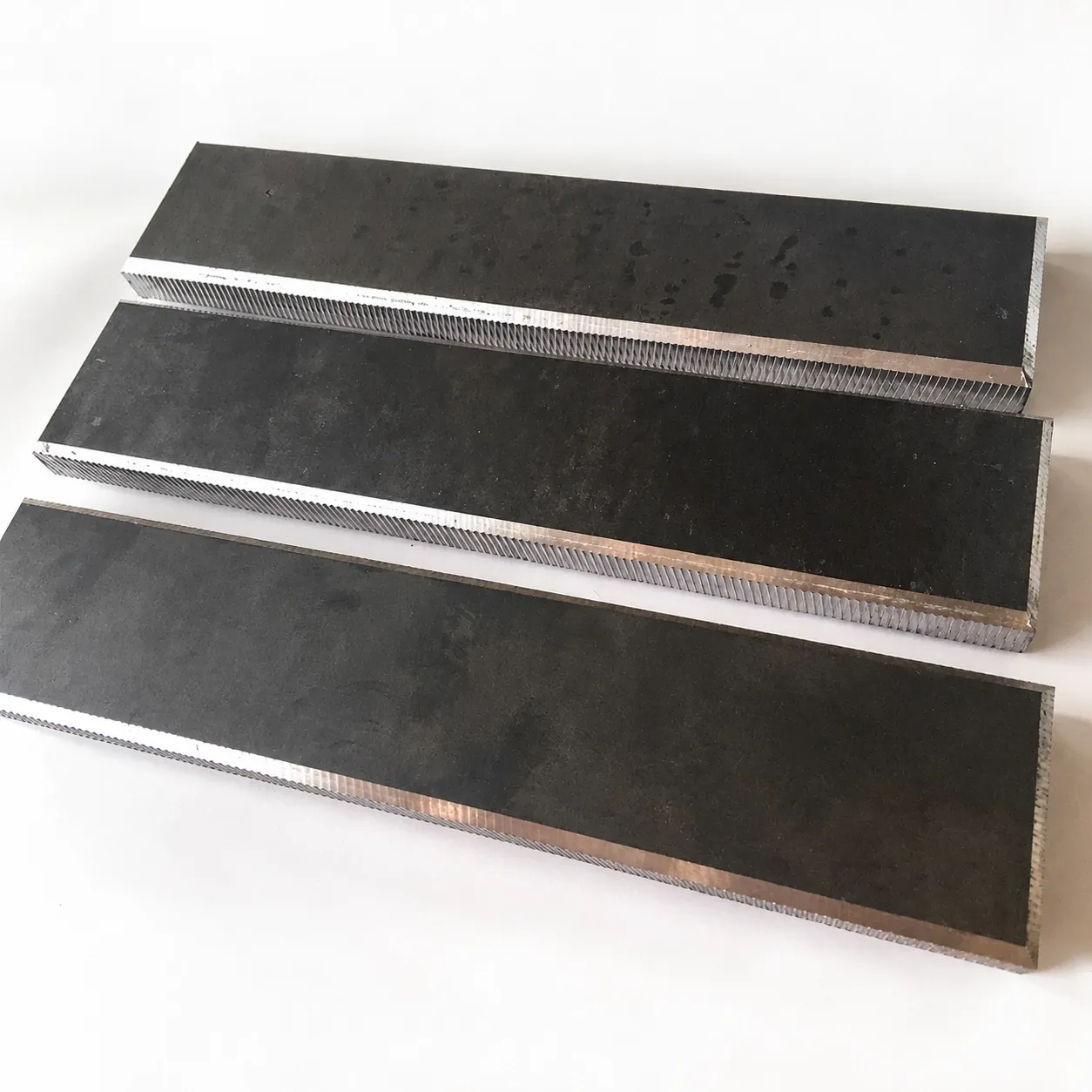
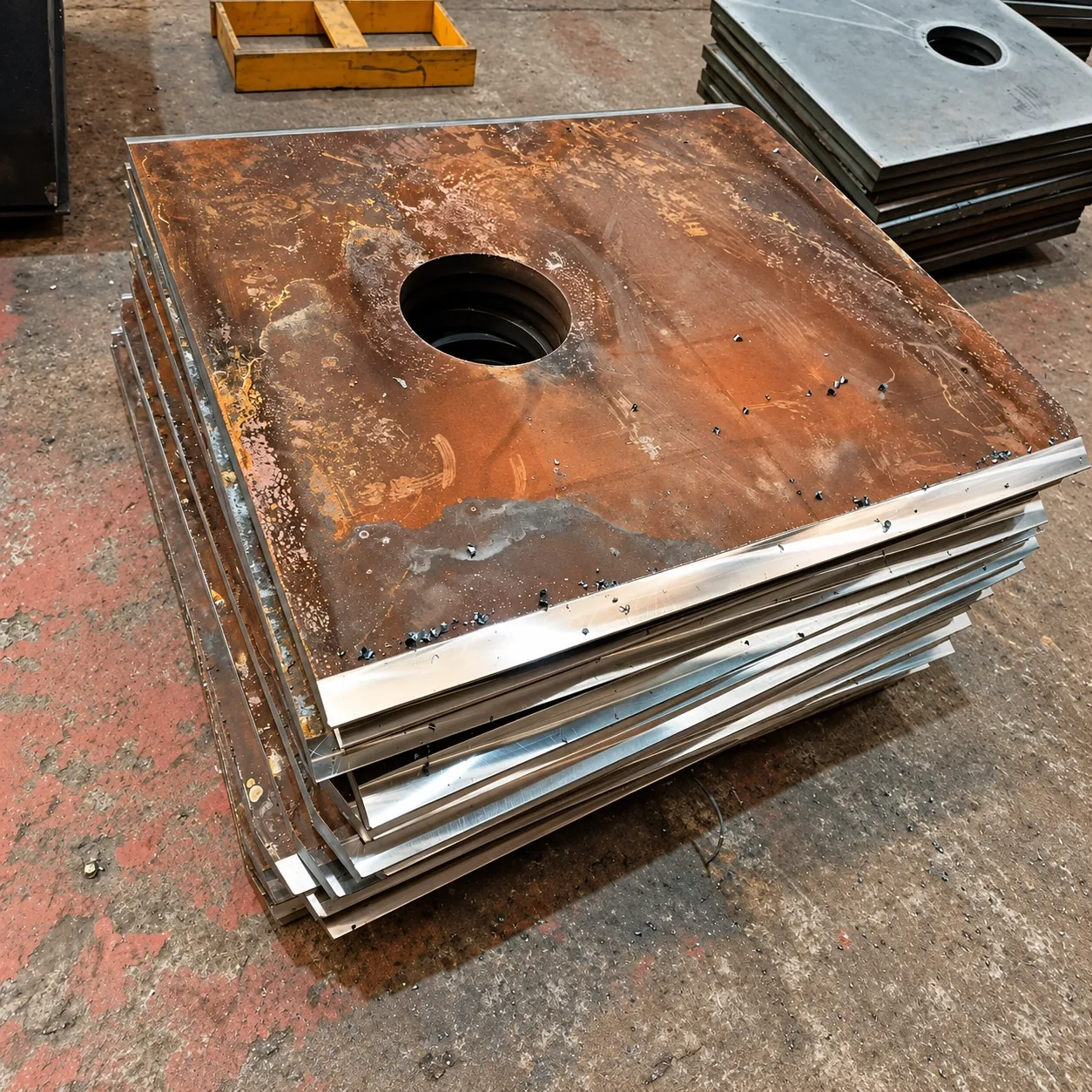
Conventional plate-edge prep on small parts is done with an angle grinder or a torch — both leave a heat-affected zone (HAZ), uneven bevel angle, and surface oxidation that the welder has to wire-brush off before laying the root pass. The DZ Series replaces both with mechanical milling: a multi-insert carbide cutter at 2880 r/min trims a precise, repeatable V or Y bevel along the plate edge at constant feed. Surface finish arrives directly at Ra 3.2 – 6.3 μm — well within ASME B31 weld-prep surface requirements — and there is no thermal damage to the parent metallurgy. The 80 – 150 kg cast base is what makes consistent finish possible across a long production run; lighter benchtop imitators accumulate vibration error that destroys insert life and surface quality within minutes.
Built for the job site.
Where this series earns its keep.
Pressure vessel coupon & small shell prep
Weld-prep on test coupons, small shell plates and pad reinforcement plates for pressure-vessel fabrication. DZ-20 typical for ASME Section VIII new-build coupon work.
Aerospace & precision aluminum work
Edge milling of aluminum and alloy parts for aerospace assemblies where the cold-cut surface preserves alloy temper and finish quality.
General fabrication brackets & weldments
Bracket, bracket-arm and small-weldment edge prep for general fab work where part size is below the threshold of self-propelled traveling machines.
Common questions about the DZ Series · Benchtop.
Can't find your answer?
DZ-10 or DZ-20 — which should I order?
How is this different from the DMM-20D tabletop machine?
Why not just use an angle grinder?
Does it work on aluminum and copper?
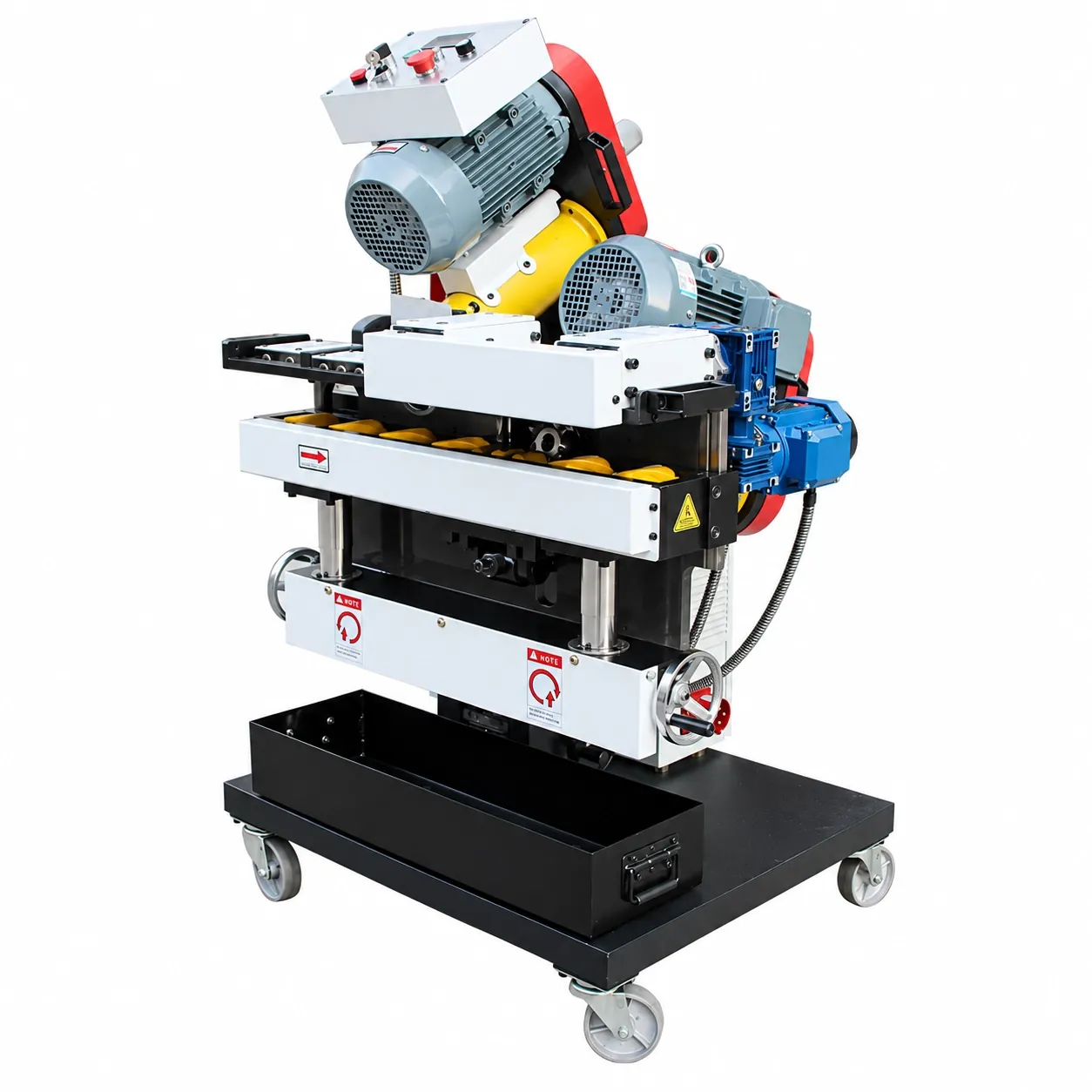
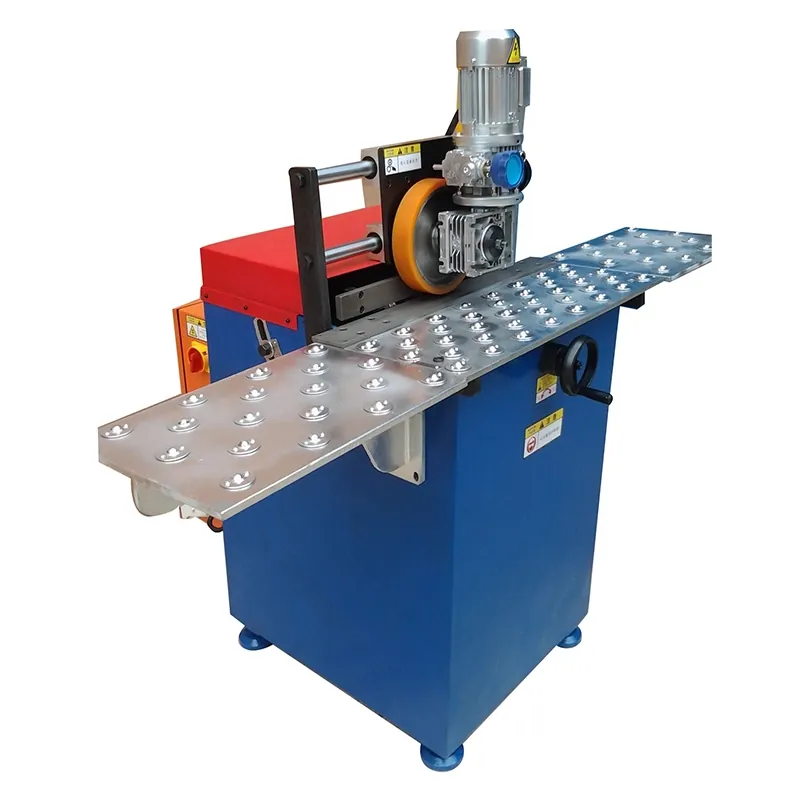
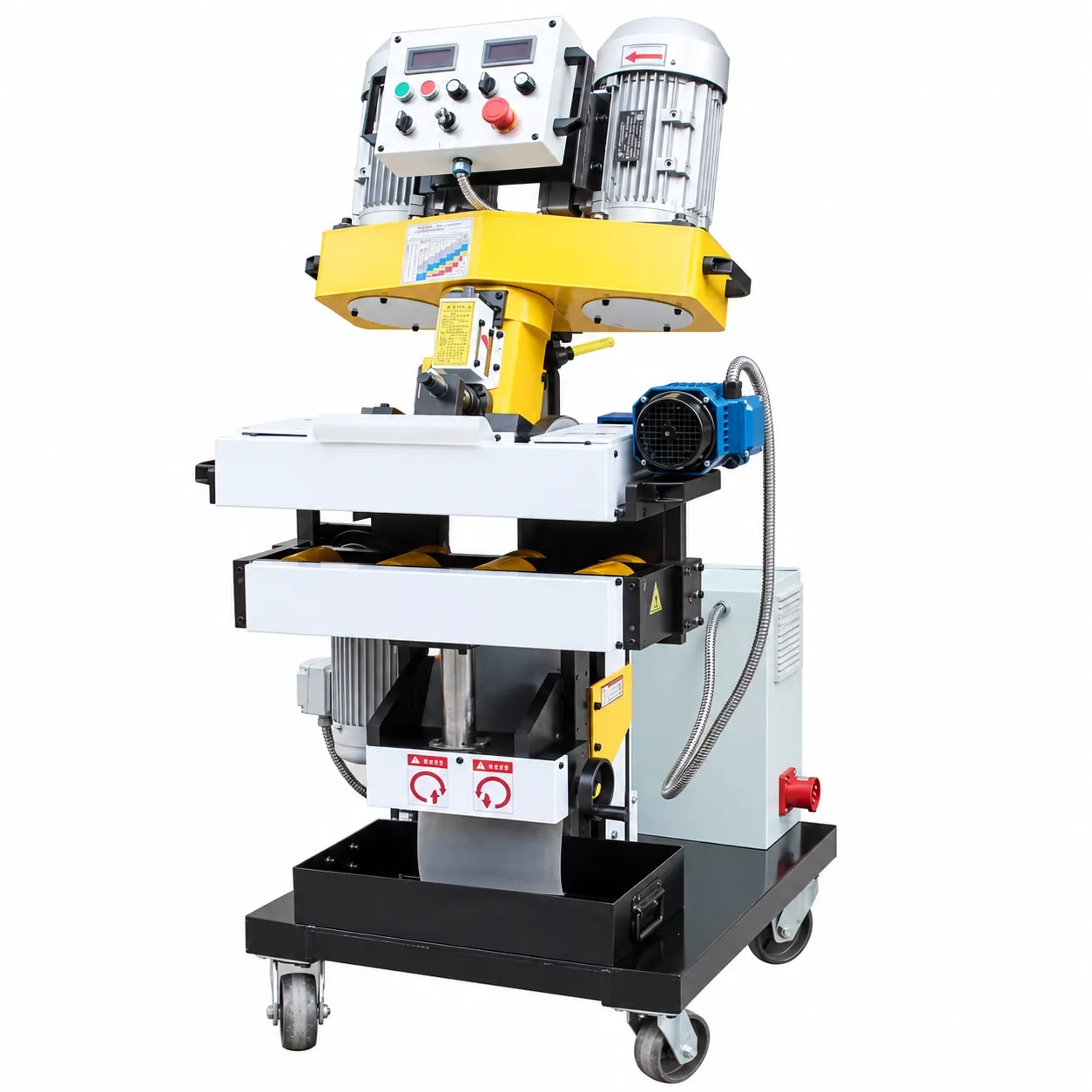
Other plate beveling machines.
Get a quote within 24 hours.
Send us your spec sheet, pipe schedule, or drawing — our engineers reply with pricing, lead time, and recommended models.
- 01Send specs & drawings
- 02Receive quote within 24h
- 03Confirm & manufacture