Skip to content
Category 01 / 10

Pipe Beveling Machines

Cold-cut bevels for pipeline construction

Internal-mount (ISY) and split-frame (OD-mount) cold cutting machines prepare pipe ends for welding without heat-affected zones, sparks, or thermal distortion. Engineered for in-situ work on installed lines and for high-throughput shop benching — V, Y, J and compound bevels per ASME B16.25 / EN ISO 9692-1.

Talk to an engineer
Pipe Beveling Machines
02 Where it's used
Cross-country pipeline tie-ins
Refinery turnarounds & shutdowns
Power-plant boiler header replacement
Shipyard manifold fabrication
Petrochemical & LNG plant piping
03 Series

8 series available

Cam-Type Self-Centering Pipe Beveling Machine
SCB / SCP Series

Cam-Type Self-Centering Pipe Beveling Machine

Lightweight aluminum-body cold beveler for small to mid-bore pipe (Ø 14 – 114 mm). Cam-lock self-centering clamp engages in one lever stroke; synchronous feed produces a code-grade weld prep without HAZ.

  • Pipe OD range Ø 14 – 114 mm
  • Wall thickness ≤ 12 mm
View details
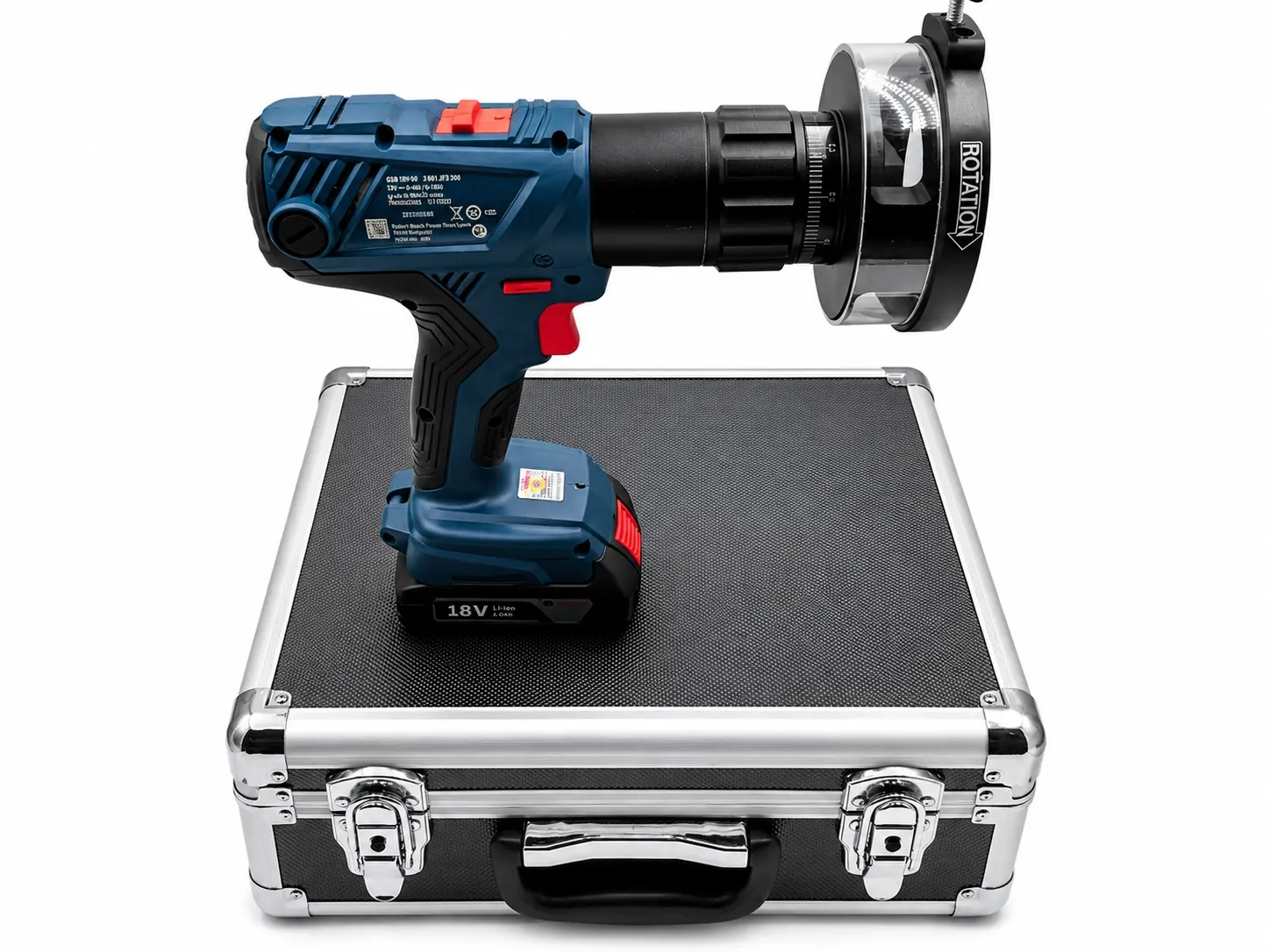
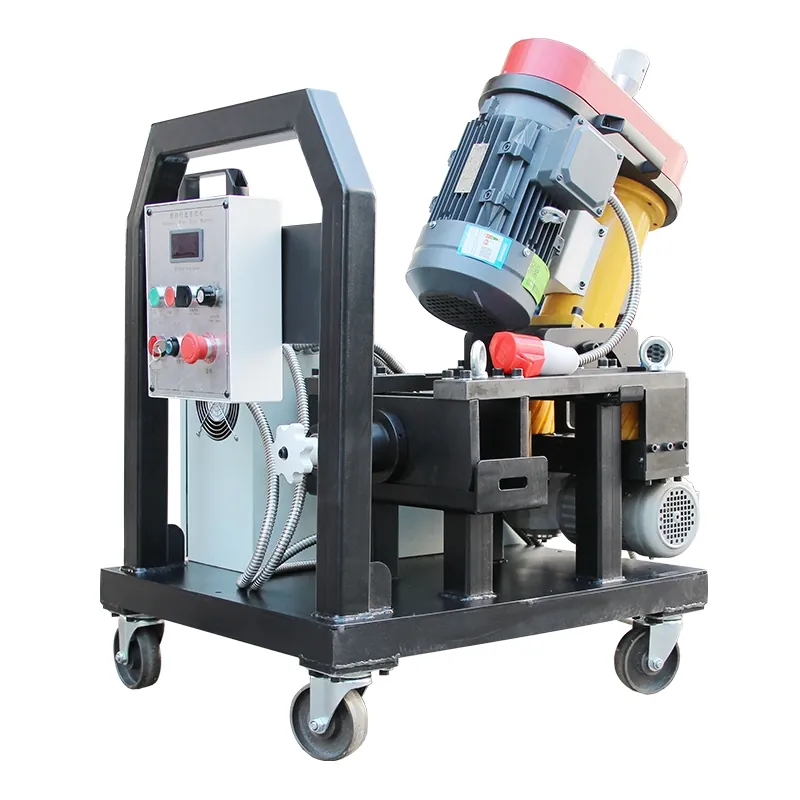
Chuck-Type Self-Centering Pipe Beveling Machine
SOC Series · Chuck Type

Chuck-Type Self-Centering Pipe Beveling Machine

OD-mounted cold beveler with a 4-jaw self-centering chuck for pipe Ø 25 – 1230 mm (3/4" – 48") in 20 sizes. Electric (SOCE) and pneumatic (SOCP) drive cut wall up to 60 mm; hydraulic (SOCH) takes wall up to 150 mm and pipe beyond Ø 1230 mm. A Metabo motor drive (SOCM) is also available.

  • Pipe OD range Ø 25 – 1230 mm (3/4" – 48") · SOCH above 1230 mm
  • Wall thickness ≤ 60 mm (SOCE / SOCP) · ≤ 150 mm (SOCH)
View details
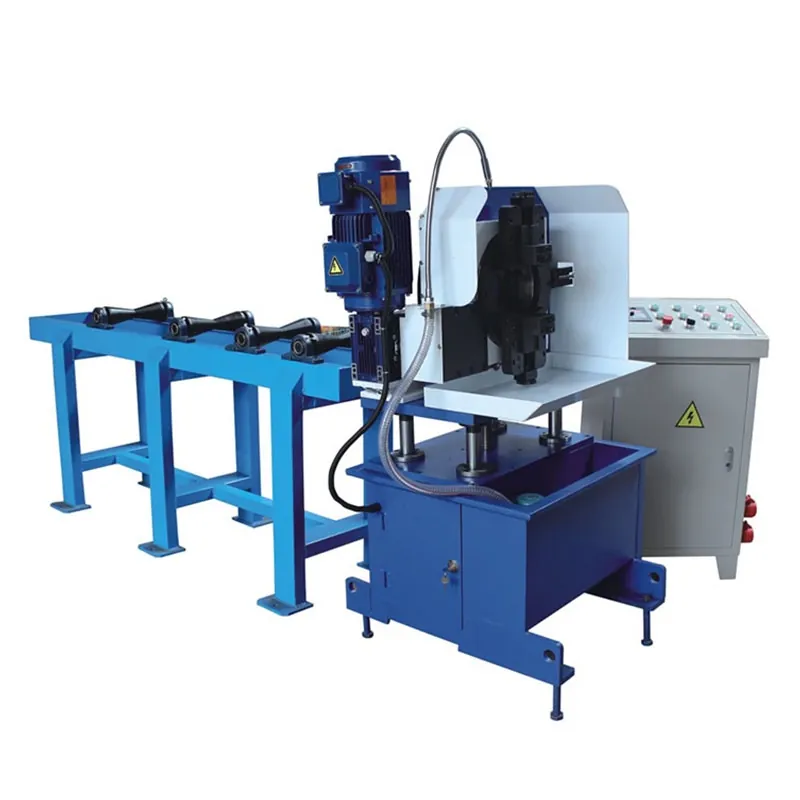
DCM Workshop Pipe Cutting & Beveling Station
DCM Series · Workshop

DCM Workshop Pipe Cutting & Beveling Station

Floor-standing pipe spool cutting and beveling station. Holds the pipe stationary in a 4- or 6-jaw electric self-centering clamp while the tool head orbits around it — cutting and beveling in a single pass for pipe Ø 50 – 630 mm, wall up to 38 mm. The workhorse for prefab shop production.

  • Pipe OD range Ø 50 – 630 mm (2" – 24")
  • Wall thickness Up to 38 mm (DCM-325)
View details
DMM-YG Large-Diameter Pipe & Vessel Edge Miller
DMM-YG Series

DMM-YG Large-Diameter Pipe & Vessel Edge Miller

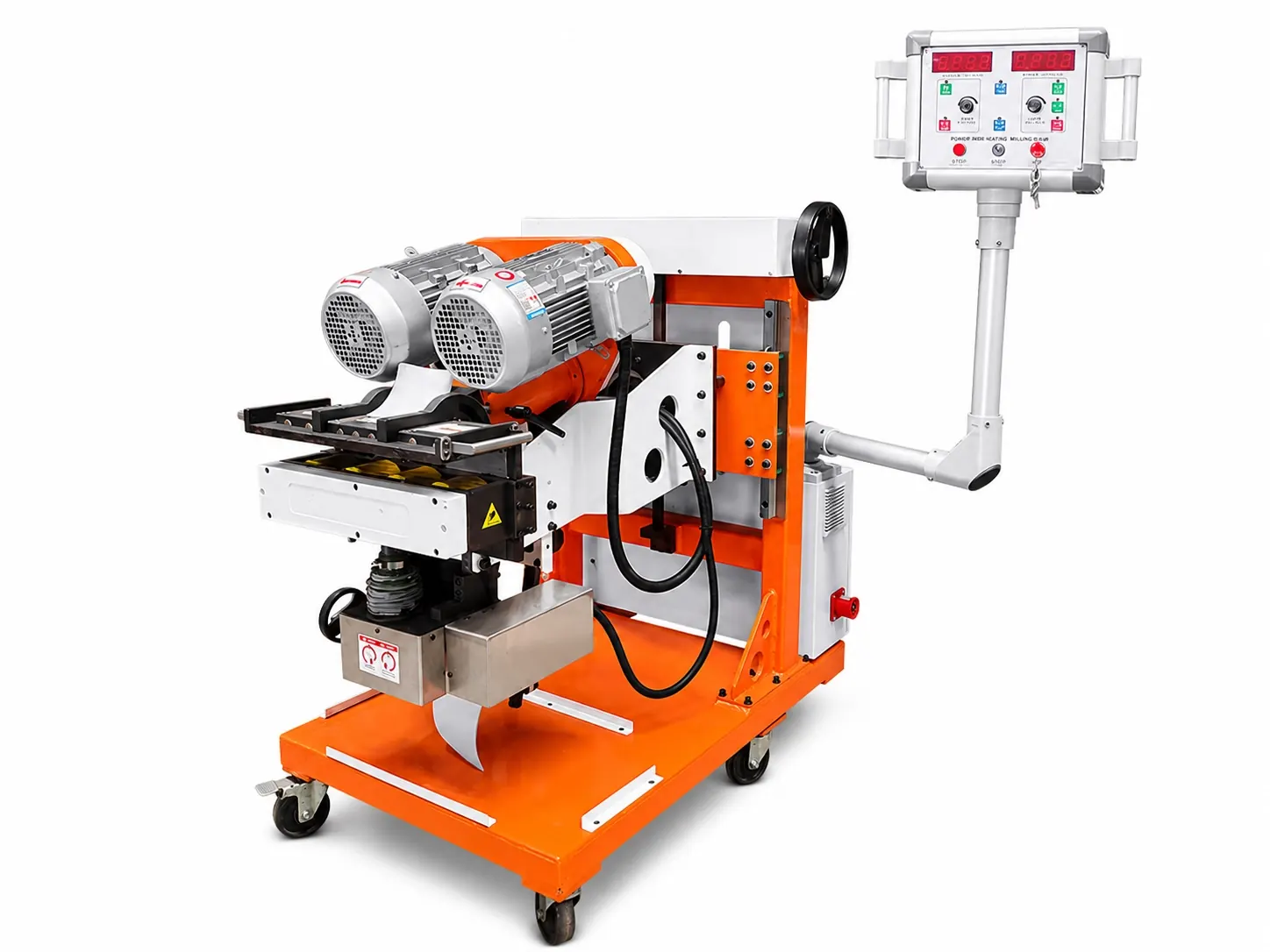
Self-propelled edge miller that travels around the circumference of large-diameter pipe and pressure-vessel shells (OD > 600 mm). Specialized clamping system tracks curved surfaces while the cutter prepares longitudinal or circumferential weld seams up to 100 mm wall. Cold milling, Ra 3.2 – 6.3 μm directly off the tool.

  • Pipe diameter Ø > 600 mm (YG-60) / > 800 mm (YG-80)
  • Wall thickness 5 – 100 mm
View details
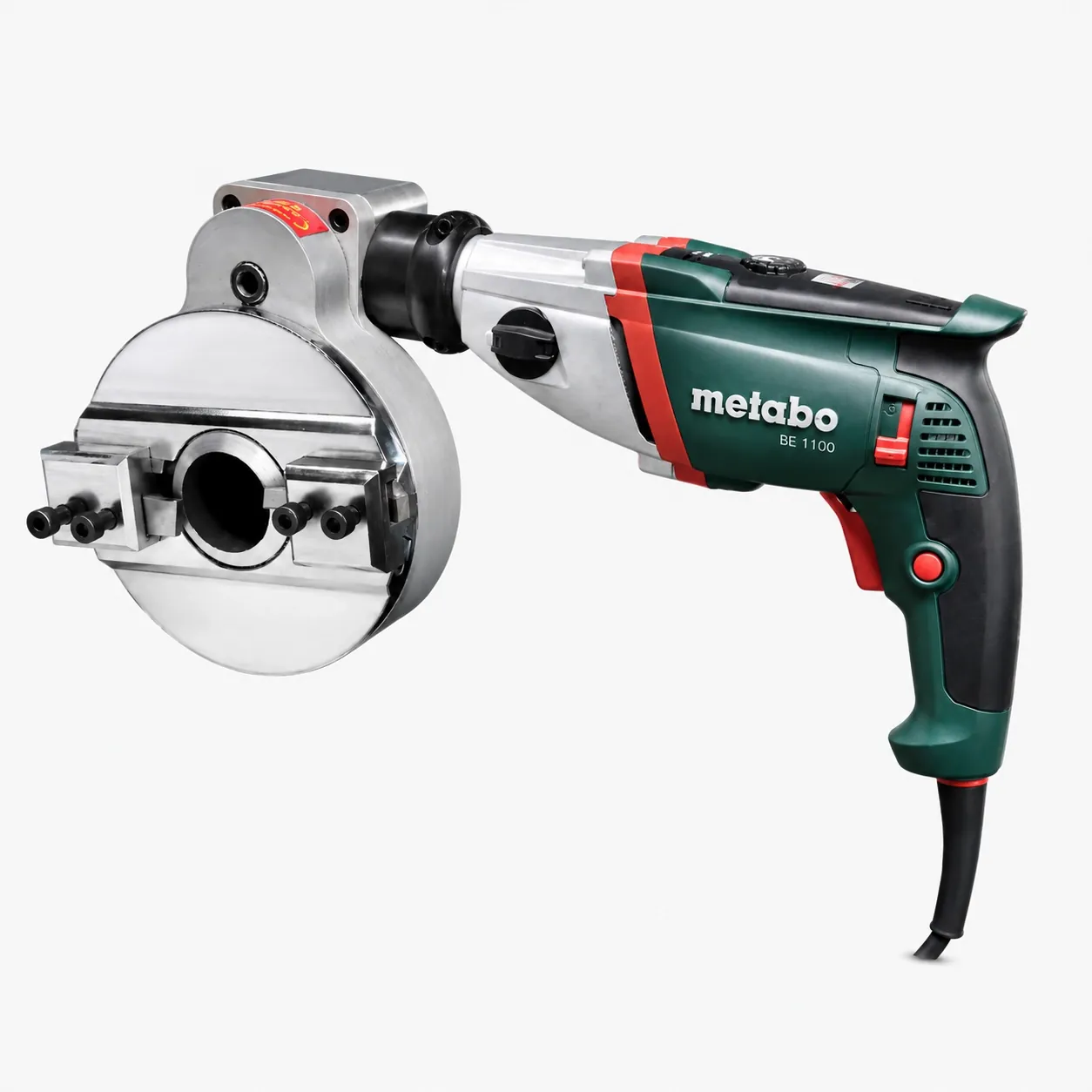
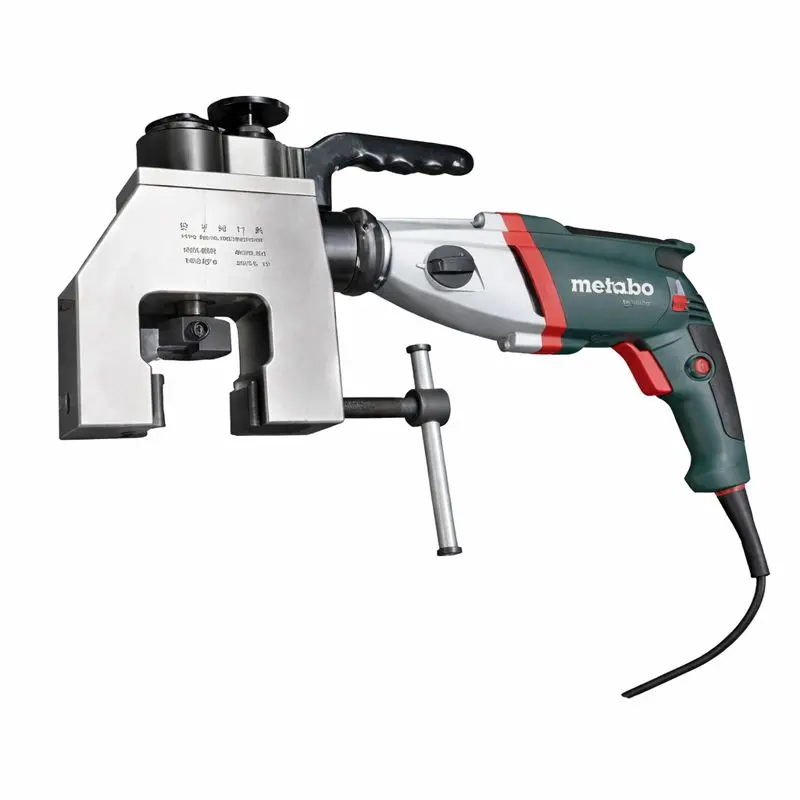
External-Clamping Automatic Pipe Beveler (ISC Series)
ISC Series · External Clamp

External-Clamping Automatic Pipe Beveler (ISC Series)

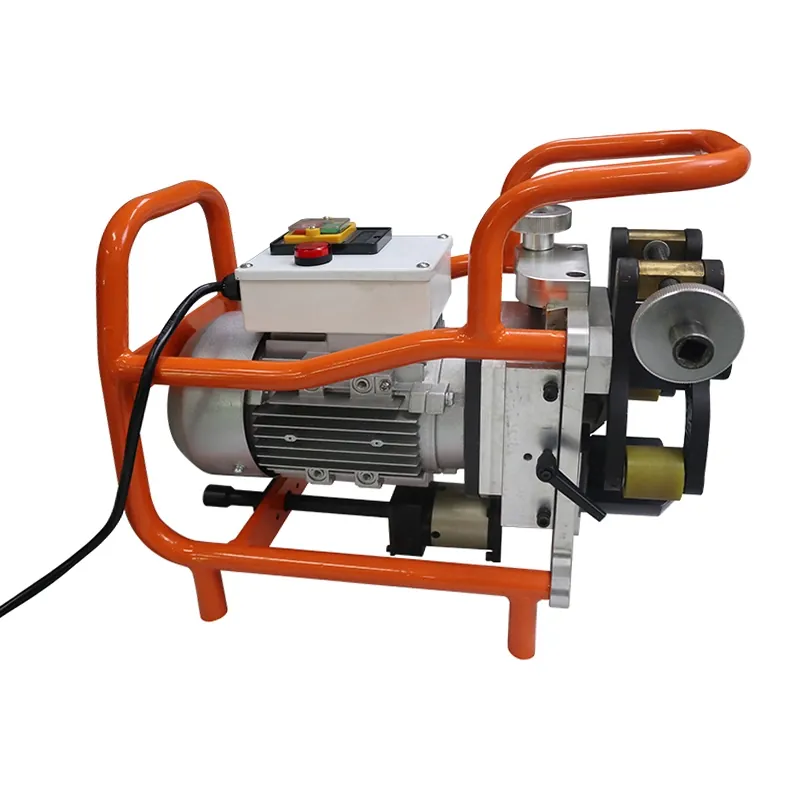
OD-clamped automatic pipe beveler built for narrow working spaces and small-diameter pipe ends. An external bidirectional clamp seats on the pipe OD, swappable cushion blocks size it to each diameter, and a Metabo drive feeds the tool automatically — the right tool whenever the pipe ID is blocked, sealed or too tight for an internal mandrel.

  • Pipe OD range Ø 25 – 114 mm
  • Wall thickness ≤ 12 mm
View details
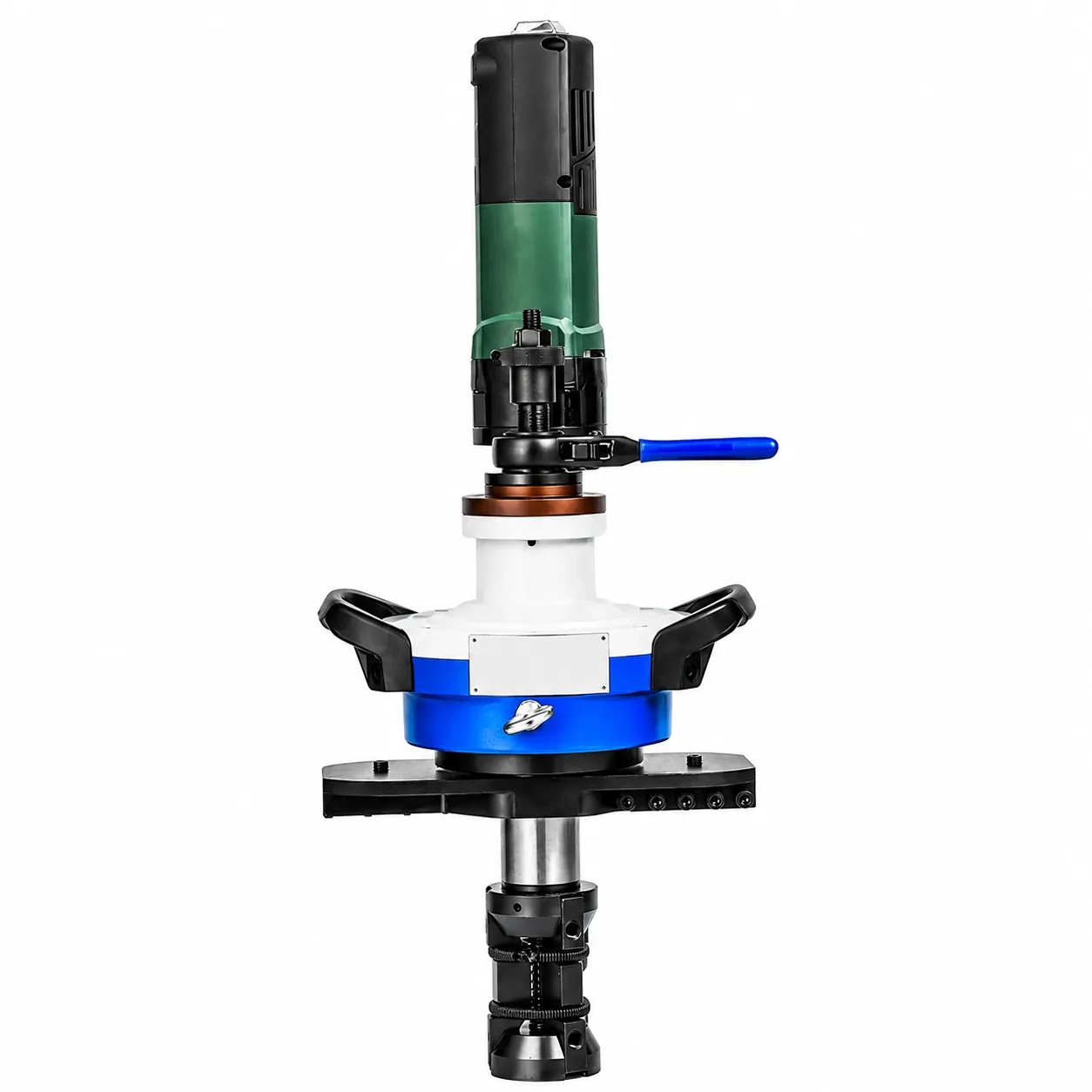
Internal-Expansion ID-Mounted Pipe Beveler
ISE · ISP · ISM · T + II-Model

Internal-Expansion ID-Mounted Pipe Beveler

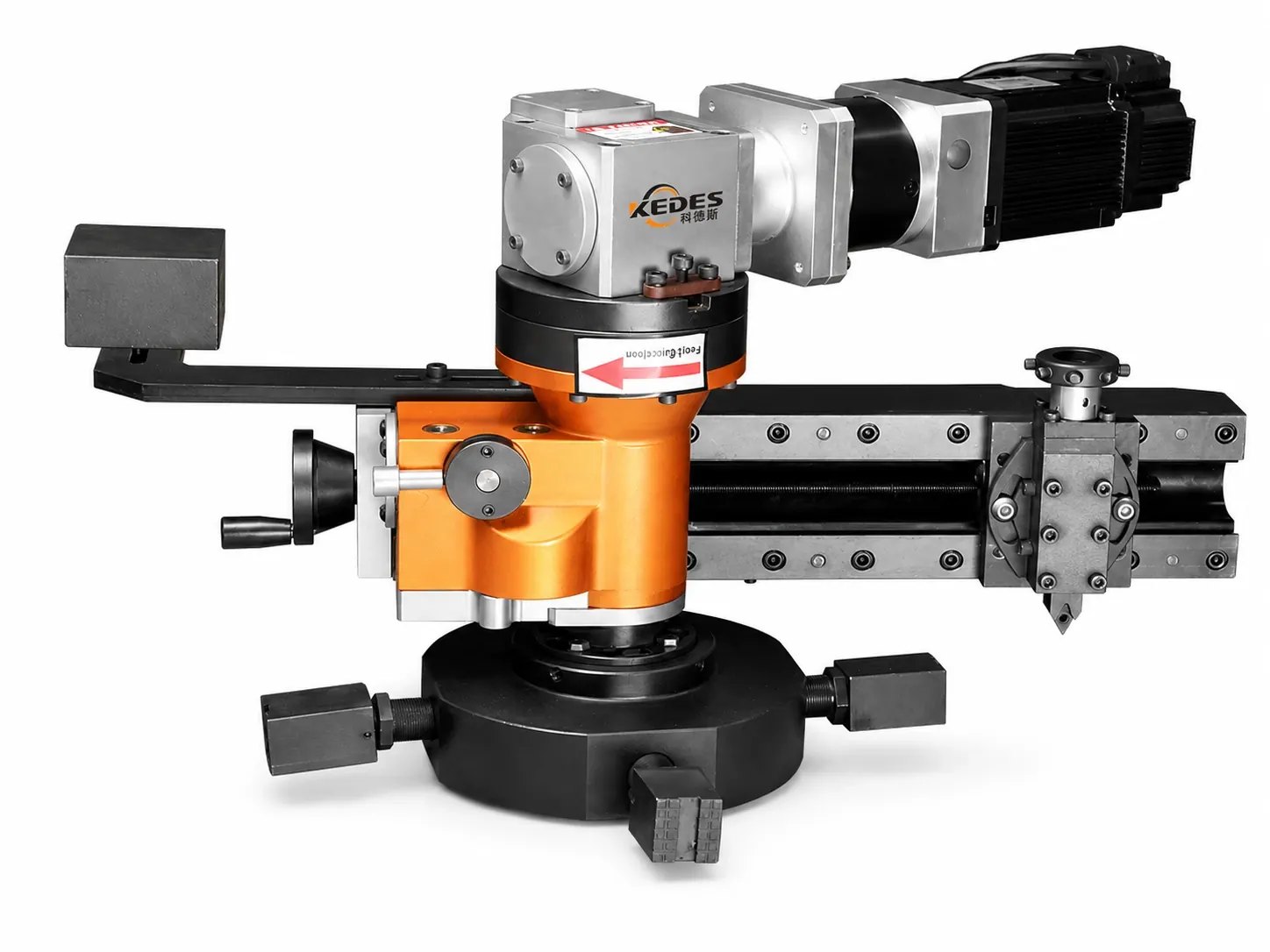
ID-mounted cold beveler for pipe Ø 18 – 830 mm. Two series share one expanding-mandrel platform: the lightweight T-Model for standard wall (≤ 15 mm) and the heavy-wall II-Model (≤ 75 mm). The mandrel inserts into the bore and self-centers, then bevels, chamfers and trims the pipe end in one setup. Electric, pneumatic or Metabo drive — interchangeable on the same body.

  • Pipe ID range Ø 18 – 830 mm
  • Wall thickness ≤ 15 mm (T) / ≤ 75 mm (II)
View details
SKF-150L Capless Portable Edge Miller
SKF-150L · Capless

SKF-150L Capless Portable Edge Miller

Portable cold edge miller that crawls along the workpiece edge instead of clamping into a fixed frame. Bevels pipe Ø > 114 mm — without an upper size limit — and flat plate from the same machine. 35 kg single-operator unit for field maintenance, large-diameter pipeline and tank fabrication.

  • Working range Pipe ID > 114 mm (unlimited) + flat plate
  • Max bevel width 20 mm
View details
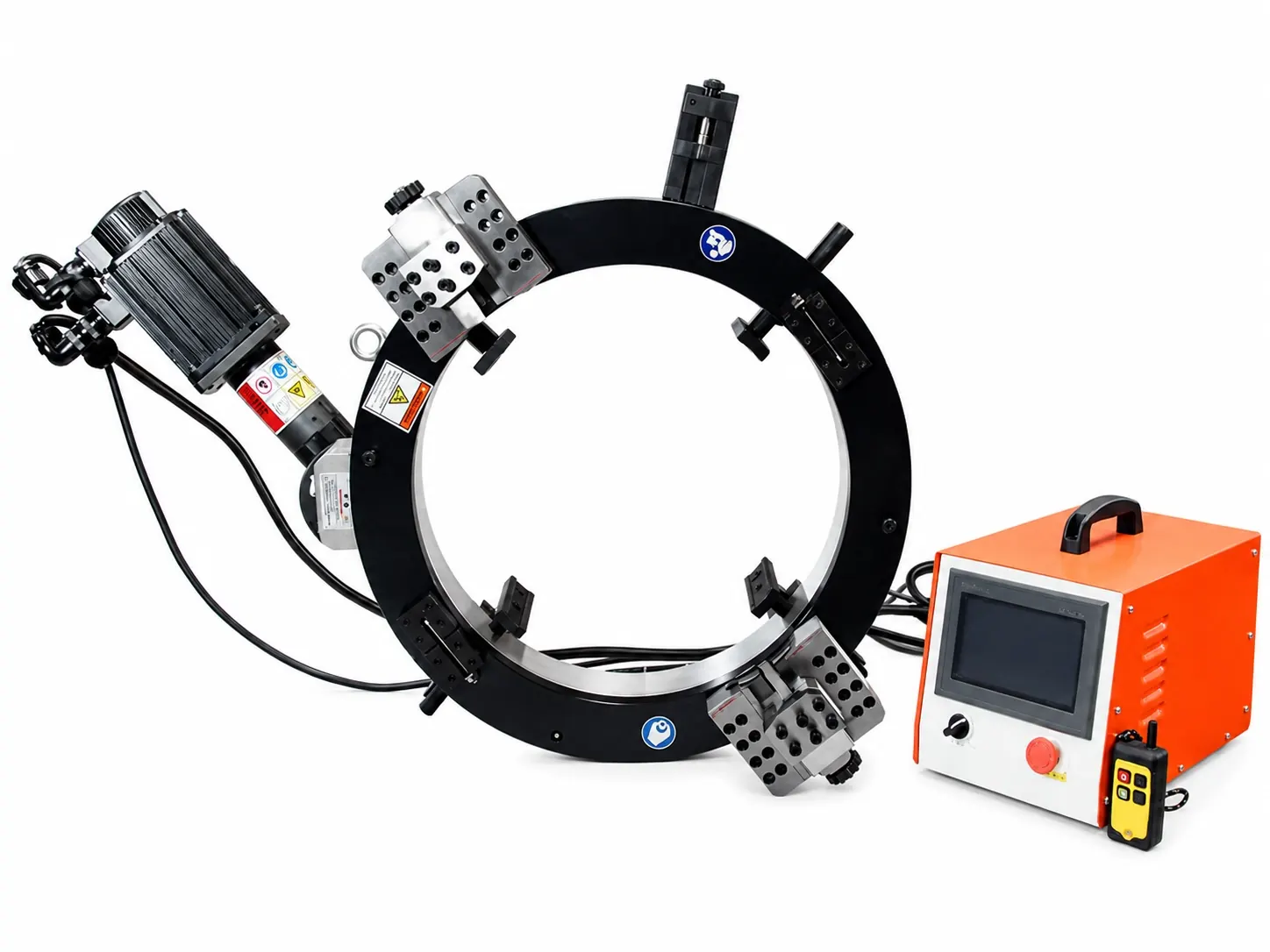
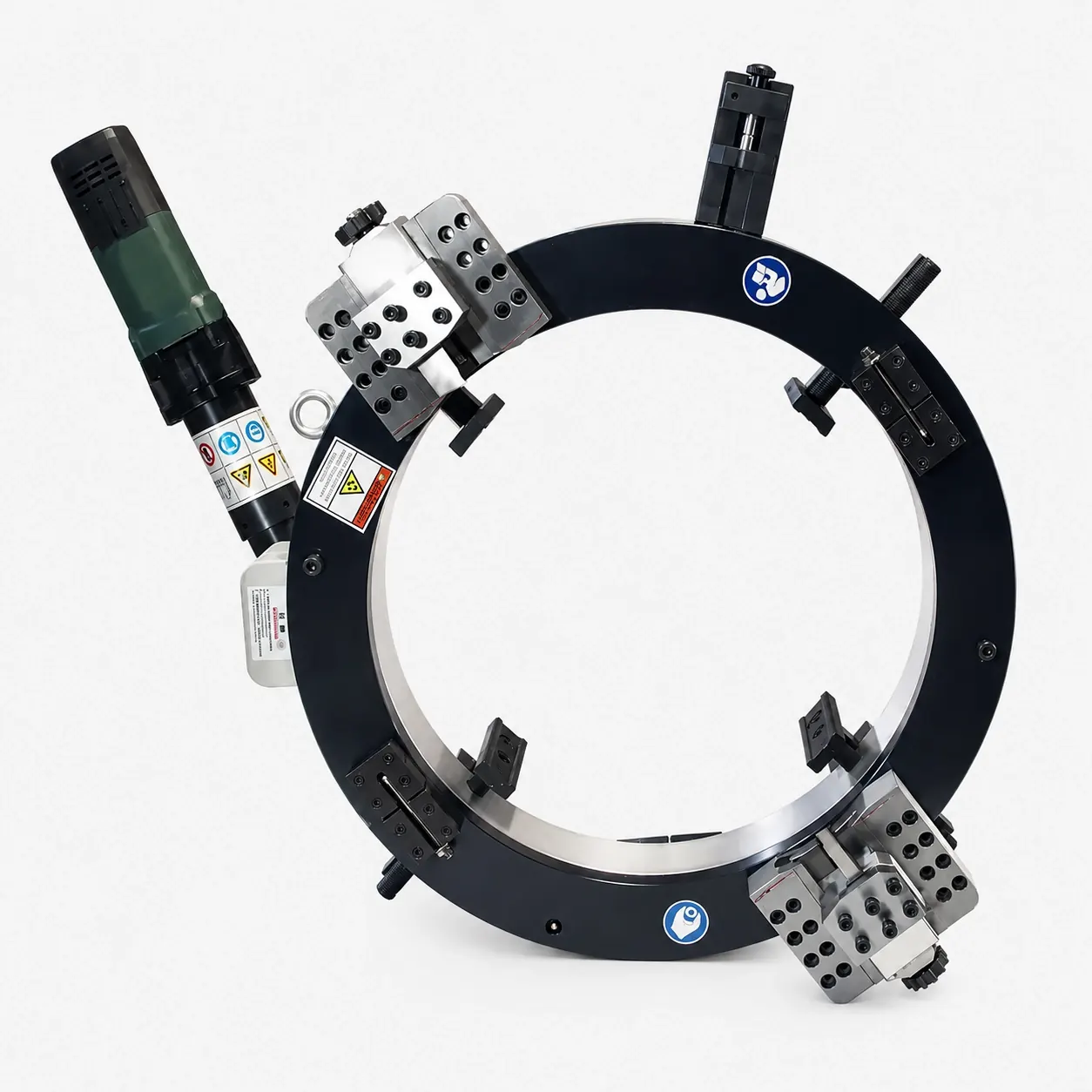
Split-Frame Clamshell Pipe Cutting & Beveling Machine
OC Series · Split-Frame

Split-Frame Clamshell Pipe Cutting & Beveling Machine

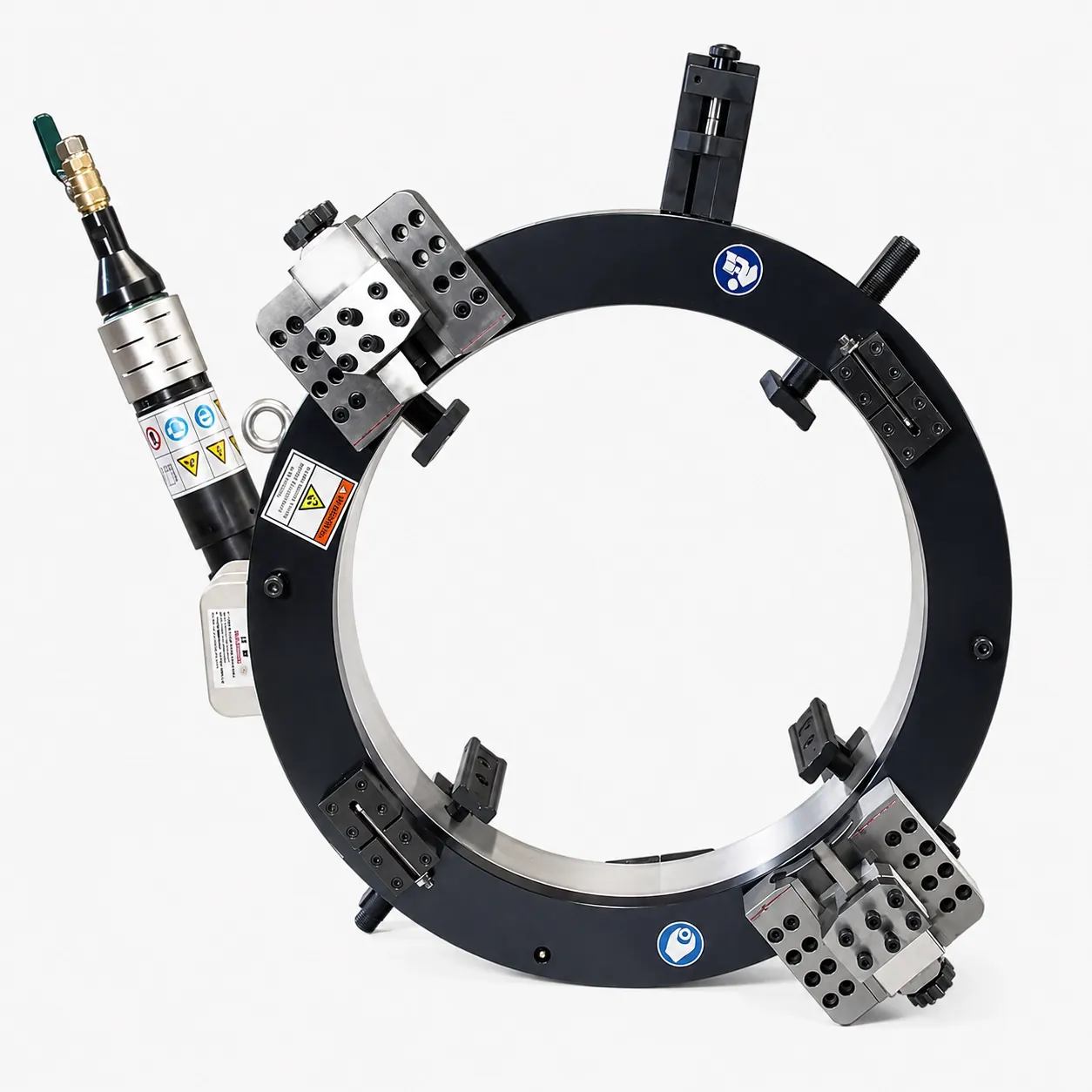
OD-mounted split-frame (clamshell) cold cutter and beveler for in-situ pipe Ø 25 – 1230 mm (3/4" – 48"), 20 sizes. Light and compact with a small radial footprint — the two-piece frame closes around installed pipe and parts and bevels it in a single pass, with no heat-affected zone. Electric (OCE) or pneumatic (OCP) drive for wall ≤ 35 mm; hydraulic (OCH) for heavy wall up to 150 mm and pipe beyond Ø 1230 mm.

  • Pipe OD range Ø 25 – 1230 mm (3/4" – 48") · OCH above 1230 mm
  • Wall thickness ≤ 35 mm (OCE / OCP) · ≤ 150 mm (OCH)
View details
04 Applications in depth

Where these machines earn their keep.

01

On-site weld prep for installed pipelines

Most pipe we get asked about is already welded into a system, which rules out ID-mount tools and pushes the job onto an OD-mounted split-frame beveler. Cold cutting, no hot-work permit, no HAZ — and the bevel lands inside ASME B16.25 in one setup.

The common mistake is buying a chain-style portable because the OD fits the catalogue. Chain mounts cannot react cutting torque on heavy wall (Sch 80 carbon and above) and the bevel comes out tapered. Match the clamping family to the wall, not just the diameter.
02

Portable field weld prep on pipeline construction

Pipeline crews on the move need a machine they can carry to the joint and run on whatever supply is available. Our portable range covers Ø 50 to 600 mm with pneumatic or electric drive — pneumatic is the default in hazardous zones (see why air-driven beats electric in Zone 1), electric everywhere else.

Tie-in failures usually come from one thing: a beveler that loses rigidity at the larger end of its OD range, producing a bevel that varies around the circumference. The "portable" rating is real; the rigidity rating is rarely published. Ask for it.

03

High-precision weld end prep for code piping

For pipework with a WPS attached — stainless process lines, sour-service carbon, P91/P92, Inconel transition spools — the bevel is not a fitter's choice. A ground bevel will not hold WPS tolerance joint after joint. Only a machined bevel will. Our cam-type self-centering and split-frame machines ship with calibration certificates.

V, Y, J and compound heads share the same machine body. For the geometry selection logic on a specific WPS, see V bevel vs J bevel, and for stainless prep cleanliness, see beveling stainless without losing corrosion resistance.

04

Boiler tube and water-wall panel replacement

Boiler outages are an access problem first. Tubes are small (38–76 mm OD) but membrane panels leave 40–80 mm of clearance — most pipe bevelers do not fit, no matter what their catalogue OD range says.

The right tool is an external-clamping narrow-body beveler — thin annular body, closes inside the panel pitch, cold cuts T22 / T91 / T92 alloy without HAZ. For full outage planning, see boiler water-wall tube replacement.

05

Shipyard manifold and large-spool fabrication

Shipyard piping is volume work — predictable wall, repetitive geometry. The bottleneck is throughput per shift, not complexity.

We pair ID-mount bevelers (shorter spools, both ends open) with split-frame OD-mount machines for larger manifold tees and headers. Class society rules (LR / DNV / ABS / CCS) reference the same bevel geometries as ASME B16.25, so a single tooling pack covers the major specs.

06

Petrochemical and LNG plant piping

Petrochem and LNG add two constraints: cryogenic service (9% Ni, austenitic stainless) cannot tolerate HAZ, and pre-fab modules tie in on schedule only if the bevel quality is right the first time. Cold cutting is mandatory on both counts.

For typical LNG transfer line work (Ø 200–600 mm), a split-frame OD-mount beveler with a J or compound head pays back the head cost in 9% Ni filler savings within a single project — see V vs J prep economics for the math. The DMM-YG large pipe edge miller covers the heavier end of the range.

05 Selection Matrix

Not sure which model?

SeriesWorking rangeMax wallMountingBest for
ISE / ISP Ø 18 – 830 mm ID 15 mm (T) · 75 mm (II) Internal expansion Open pipe ends — widest size ladder
SOC Ø 25 – 1230 mm OD 60 mm · 150 mm hydraulic 4-jaw self-centring chuck 3/4" – 48" where the bore is obstructed
SCB / SCP Ø 14 – 114 mm OD 12 mm Cam-actuated OD clamp Small bore, fast repeat setup
ISC Ø 25 – 114 mm OD 12 mm External block clamp Small bore with auto-feed
OC split-frame Ø 25 – 1230 mm OD (larger on hydraulic) 35 mm · 150 mm hydraulic OD clamshell Pipe already installed — cut and bevel in one setup
SKF-150L ID > 114 mm, no upper limit 20 mm bevel width Rides the edge Vessel shells and plate as well as pipe
DMM-YG Ø > 600 / > 800 mm 5 – 100 mm Rides the edge Large-diameter pipe and vessel sections
06 Selection Guide

Answer these and the model picks itself.

  1. Is the pipe already installed?

    Yes — in-situ pipework, tie-ins, repairs. You need an OD-mounted split-frame clamshell. It closes around the pipe without touching the ends, and cuts and bevels in the same setup.

    No — the spool can come to the machine. Go to question 2.

  2. Can you get at the bore?

    Yes — the end is open. ID-mounted machines are lighter and faster to set: the internal-expansion beveler covers Ø 18 – 830 mm.

    No — a flange or fitting blocks it. Use an OD-mounted machine. The chuck-type self-centres on 2" – 24"; the cam-type and external-clamping machines handle small bore.

  3. How thick is the wall?

    Wall thickness eliminates more models than diameter does. Up to 15 mm the standard internal-expansion body is enough; above that the heavy-duty II-model takes 75 mm, and split-frame in hydraulic configuration takes up to 150 mm. Angle and root-face requirements by code are in pipe bevel angles and code requirements.

  4. Is it above 600 mm diameter?

    Conventional clamping stops being practical on large vessel and pipe sections. The DMM-YG edge miller and the SKF-150L capless both ride the workpiece edge instead of encircling it, so there is no upper diameter limit.

  5. What material?

    All of these cut cold, which is the point on stainless, duplex and chrome-moly — a thermal cut leaves a zone that has to be ground back before welding. See beveling stainless steel and P91 and chrome-moly.

07 Frequently asked

Quick answers.

What is a pipe beveling machine?
A machine tool that cuts a controlled angle on a pipe end so the joint can be welded with full penetration. Unlike a grinder it holds the angle, the root face and the surface finish repeatably, which is what the codes actually ask for. Full explanation in what is pipe beveling and how beveling machines work.
Why cold cutting instead of plasma or oxy-fuel for bevel prep?
Cold cutting removes material with a tungsten-carbide tool, leaving no heat-affected zone (HAZ). Spec piping for sour service, stainless, duplex and Inconel cannot tolerate the metallurgical changes thermal cutting introduces — and HSE rules in many hazardous zones prohibit hot work without a permit. The cut also lands within ASME B16.25 tolerance ready to weld. Full trade-off in cold cutting vs hot cutting.
ID (internal) vs OD-mount (split-frame) — which should I pick?
ID-mount machines (ISY family) expand into the bore and work well on shorter shop spools up to ~Ø 250 mm with both ends open. Split-frame OD-mount units clamp on the outside and are the standard for in-situ work — installed pipework, larger diameters above Ø 250 mm, or anywhere the bore is not accessible. Buy for where the pipe lives, not for the catalogue diameter.
What OD range and wall thickness do your machines cover?
Across the full pipe beveling range we cover Ø 25 mm to 2000 mm and wall thicknesses up to ~80 mm. The split-frame family handles Ø 50–2000 mm; ID-mount and chuck-type machines cover the smaller diameters. Match the clamping family to the wall, not just the diameter — chain mounts cannot react cutting torque on Sch 80 and above, and the bevel comes out tapered.
Do you supply tooling for J-prep, compound and custom geometries?
Yes. V, Y, J and compound heads are interchangeable on the same machine body. J-prep typically pays back the head cost on a single project above 25 mm wall (much sooner on stainless or Inconel) — see V vs J prep economics for the math. Send the WPS or drawing and we will quote the matched insert pack.
Can the machines work without a hot-work permit in refinery / FPSO areas?
Yes. Cold mechanical cutting produces no sparks and no thermal input, so a hot-work permit is not required. Pneumatic-drive variants also remove the electrical ignition source for Zone 1 and Zone 2 areas. On a typical turnaround that translates to 2–4 more productive hours per crew per shift — see pneumatic machining in oil & gas safety.
How fast is a typical bevel job versus grinding?
On a 24" Sch 80 carbon steel pipe, a four-person crew typically grinds a bevel in ~90 minutes. With an OD-mounted beveler a single operator does it in ~12 minutes — and the geometry comes off within WPS tolerance instead of needing rework. Field-measured numbers, not catalogue.
What standards do the machines and tooling reference?
Bevel geometry and tolerances follow ASME B16.25, API 1104, EN ISO 9692-1 and the IACS class society rules (LR / DNV / ABS / CCS). Tooling packs are matched to the project WPS; machines ship with a calibration certificate on angle and feed for surveyor inspection.
Next step

Get a quote within 24 hours.

Send us your spec sheet, pipe schedule, or drawing — our engineers reply with pricing, lead time, and recommended models.

  1. 01Send specs & drawings
  2. 02Receive quote within 24h
  3. 03Confirm & manufacture
Chat on WhatsApp
Chat on WhatsApp
Get a quote

Request a quotation.

Tell us pipe diameter, wall, material and country. We reply within one working shift.

WE REPLY WITHIN ONE WORKING SHIFT · GMT+8