
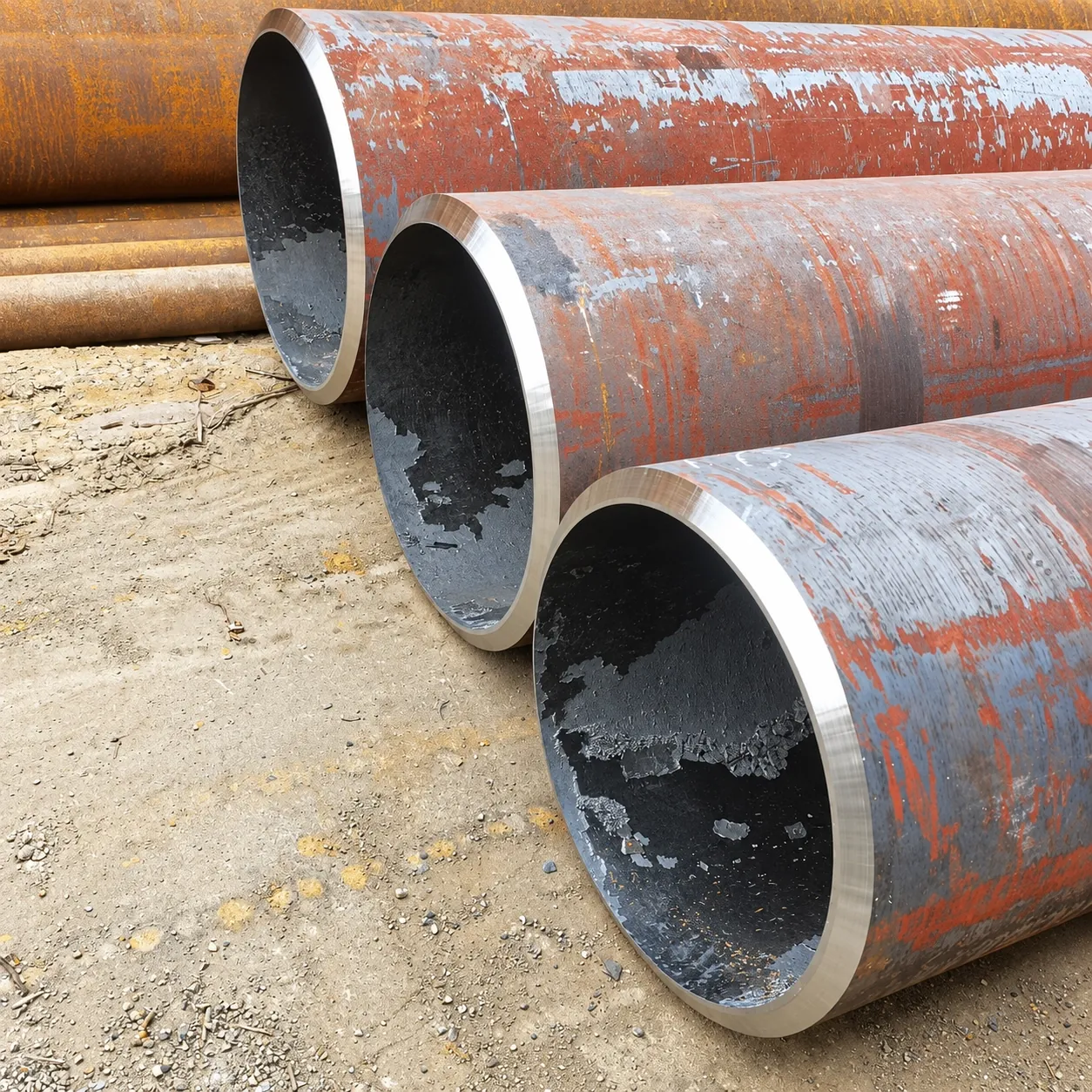
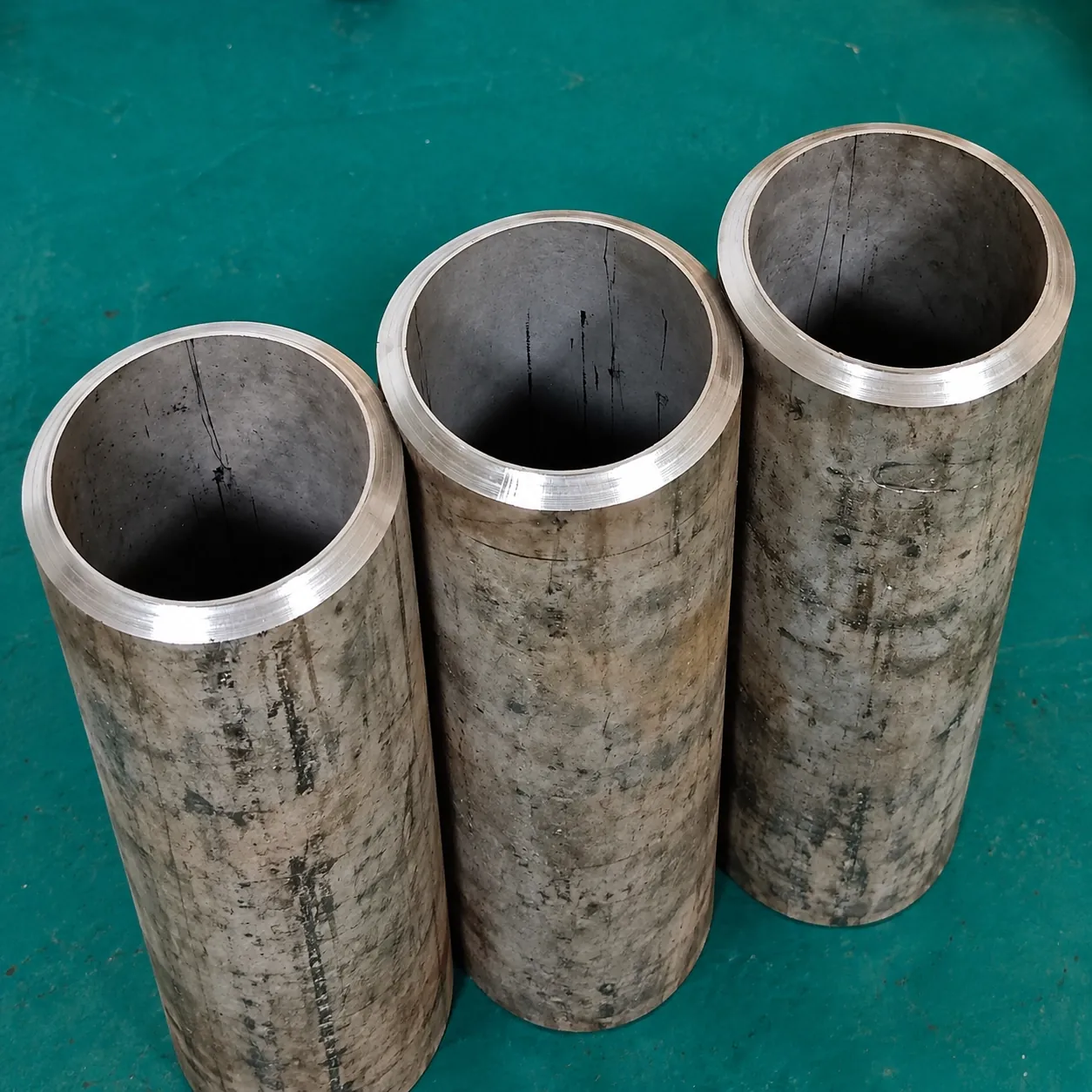
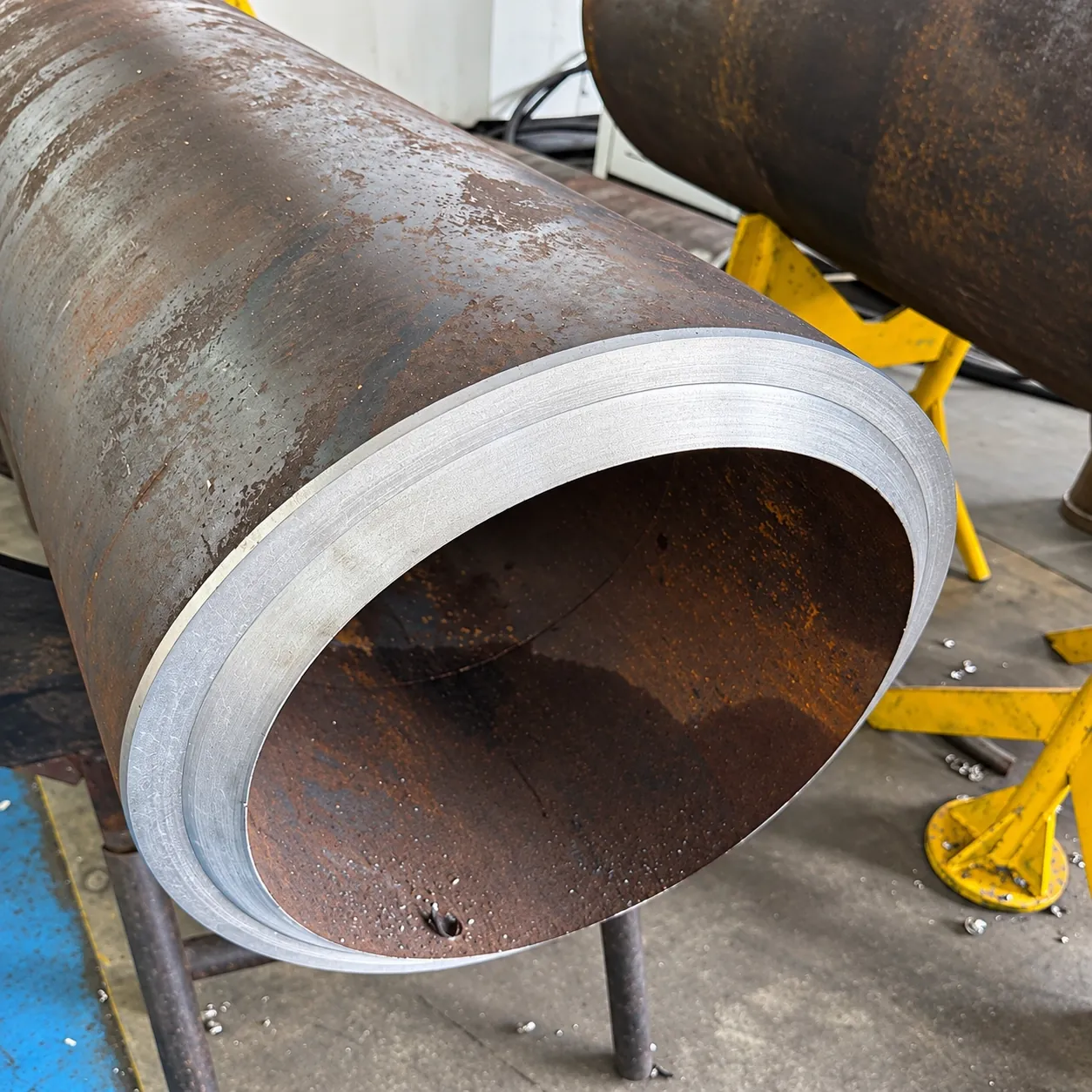
Internal-Expansion ID-Mounted Pipe Beveler
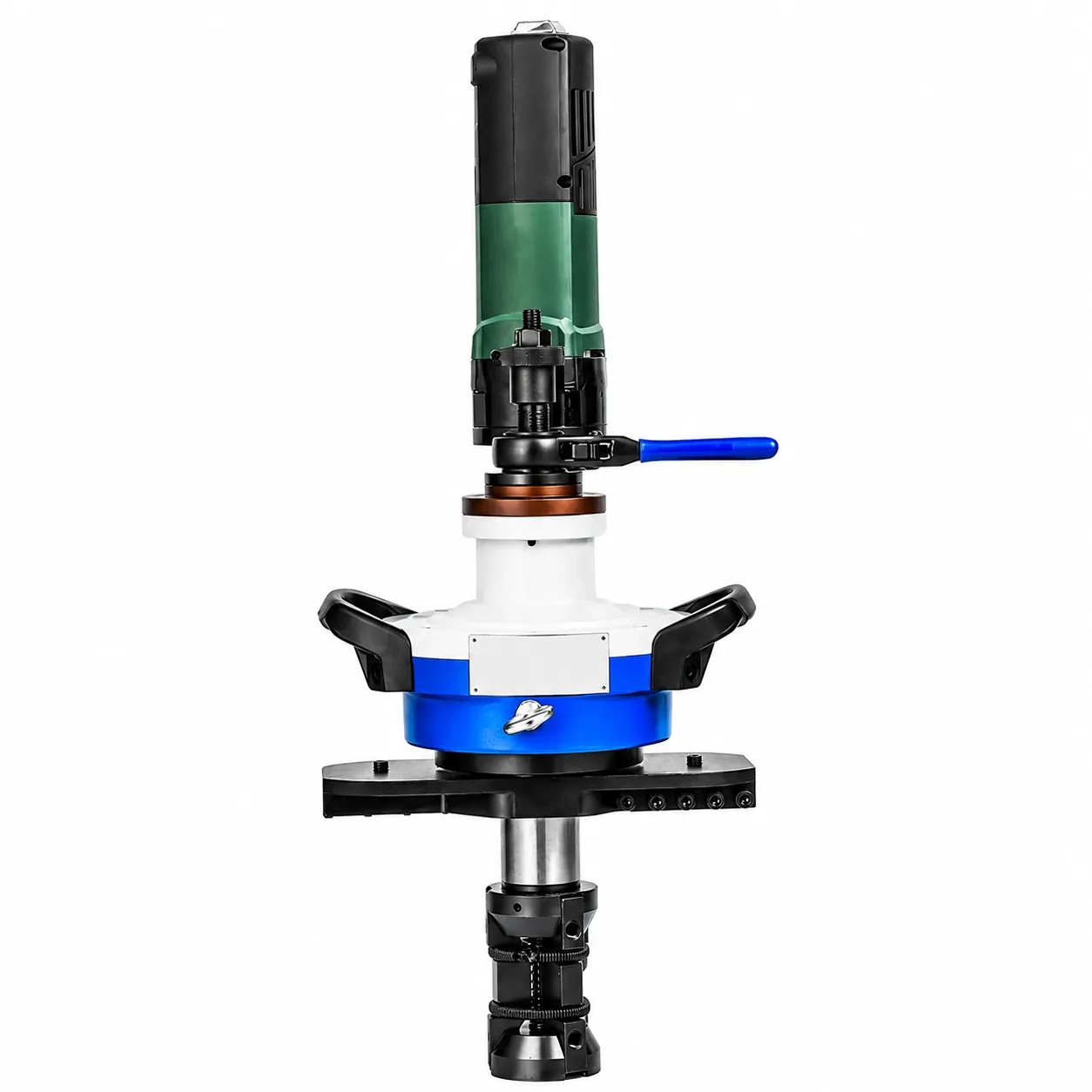
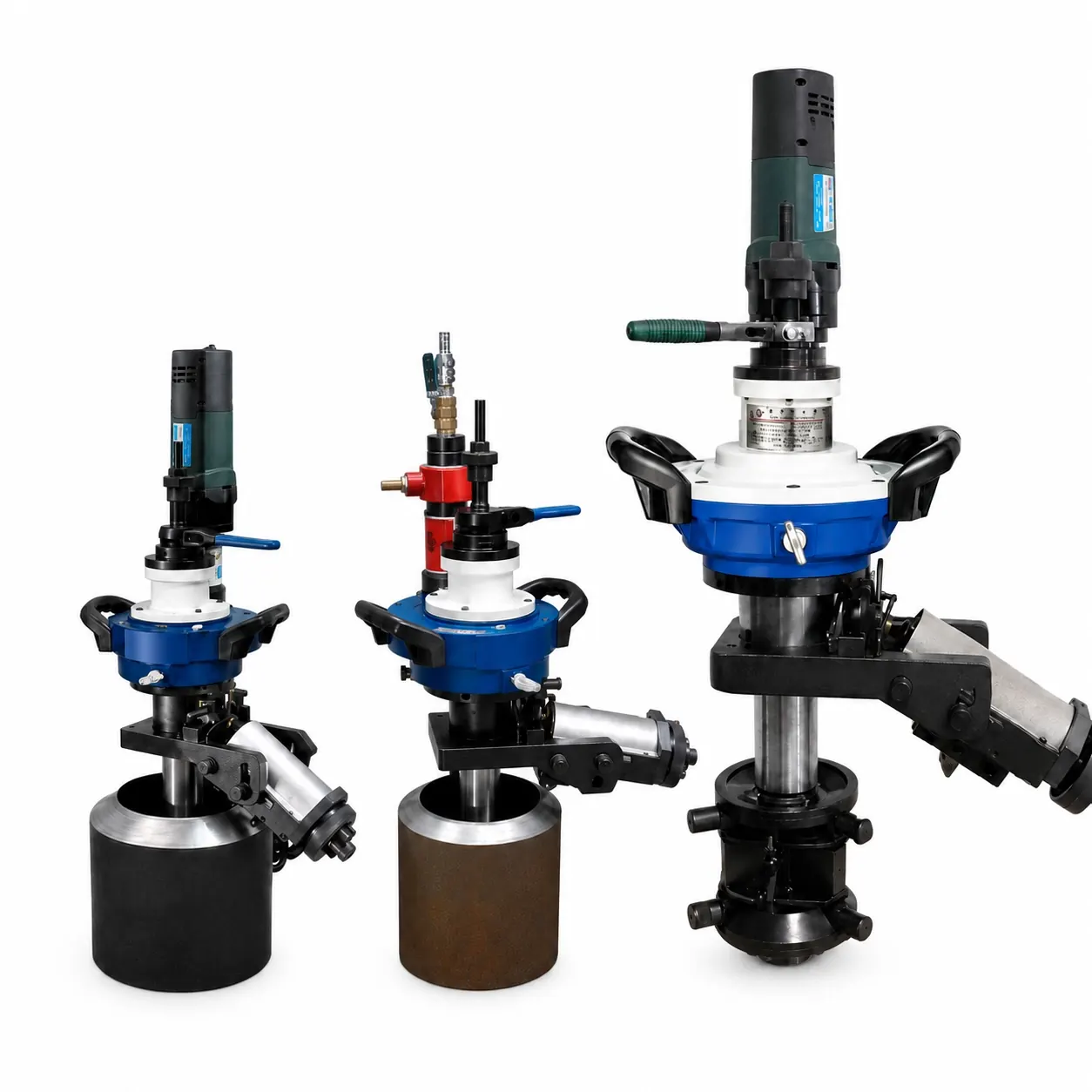
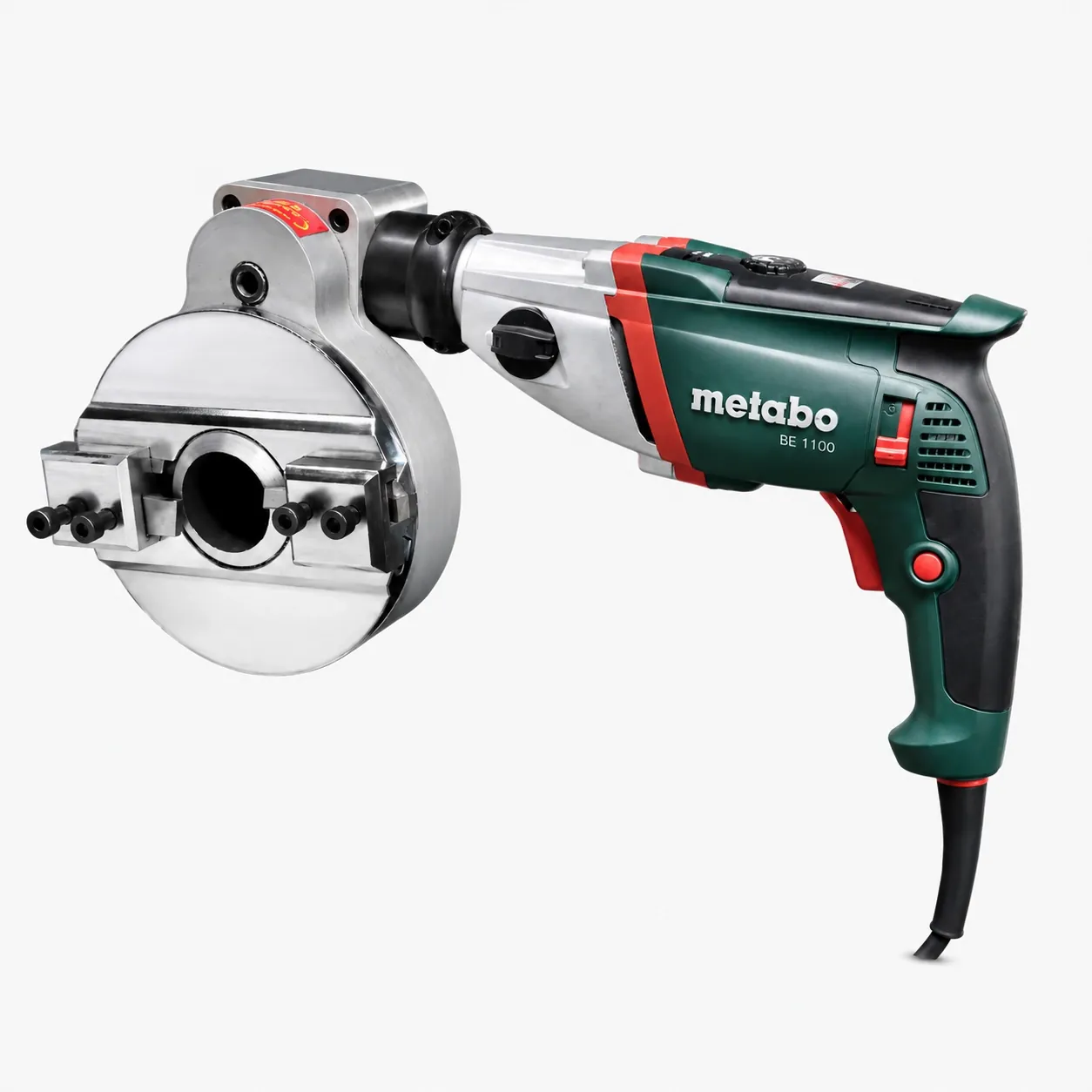
ID-mounted cold beveler for pipe Ø 18 – 830 mm. Two series share one expanding-mandrel platform: the lightweight T-Model for standard wall (≤ 15 mm) and the heavy-wall II-Model (≤ 75 mm). The mandrel inserts into the bore and self-centers, then bevels, chamfers and trims the pipe end in one setup. Electric, pneumatic or Metabo drive — interchangeable on the same body.
Pick your size — 9 models in the series.
| 30 Ø 18 – 28 mm | 80 Ø 28 – 76 mm | 120 Ø 40 – 120 mm | 159 Ø 65 – 159 mm | 252 Ø 80 – 240 mm | 352 Ø 150 – 330 mm | 426 Ø 250 – 426 mm | 630 Ø 300 – 600 mm | 850 Ø 600 – 830 mm | |
|---|---|---|---|---|---|---|---|---|---|
| Pipe ID range | 18 – 28 mm | 28 – 76 mm | 40 – 120 mm | 65 – 159 mm | 80 – 240 mm | 150 – 330 mm | 250 – 426 mm | 300 – 600 mm | 600 – 830 mm |
| Std wall (T-Model) | ≤ 15 mm | ≤ 15 mm | ≤ 15 mm | ≤ 15 mm | ≤ 15 mm | ≤ 15 mm | ≤ 15 mm | ≤ 15 mm | ≤ 15 mm |
| Heavy wall (II-Model) | — | — | — | — | ≤ 75 mm | ≤ 75 mm | ≤ 75 mm | ≤ 75 mm | ≤ 75 mm |
| Rotation speed | 50 r/min | 55 r/min | 30 r/min | 35 r/min | 16 r/min | 14 r/min | 12 r/min | 10 r/min | 9 r/min |
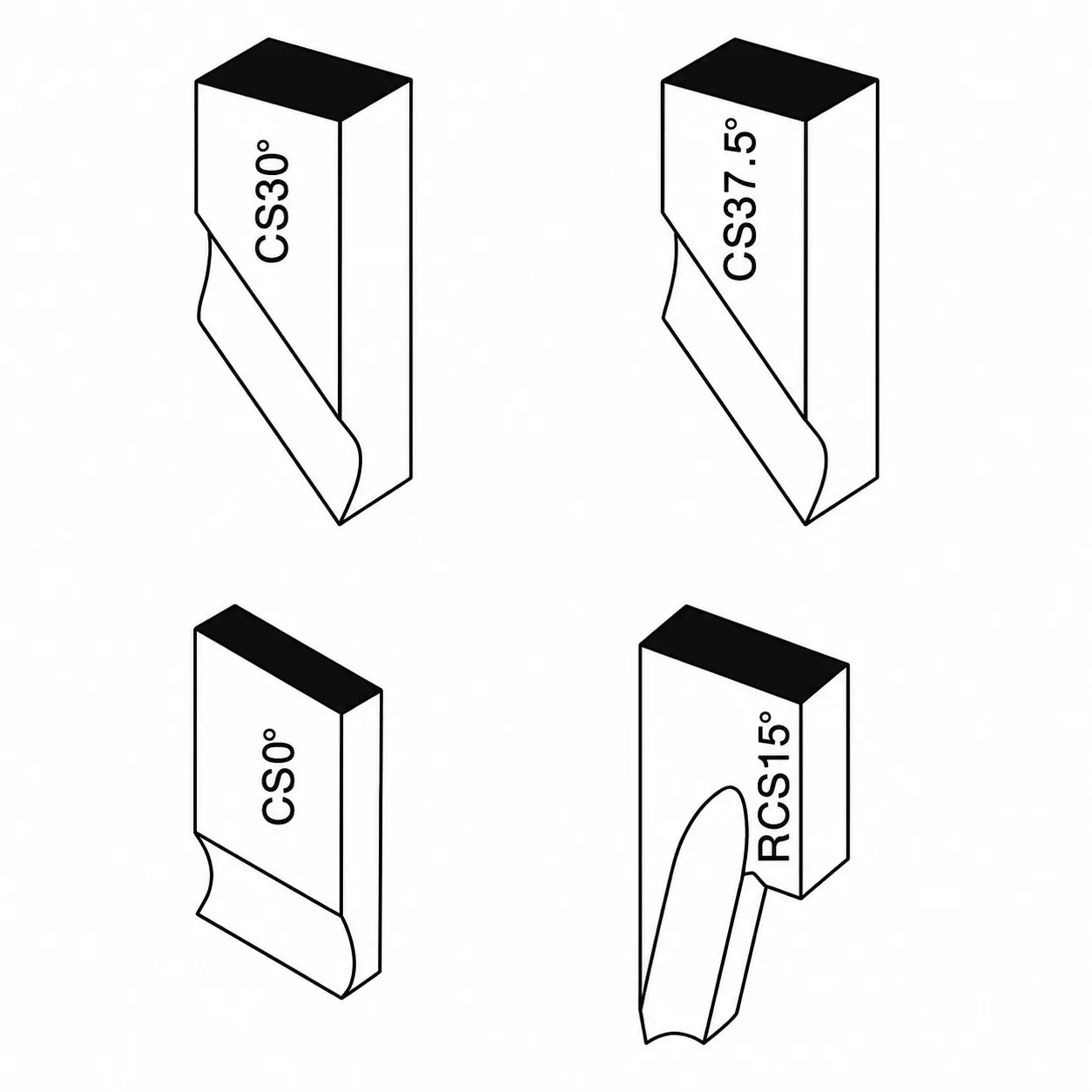
| Bevel geometry | V / U / J | V / U / J | V / U / J | V / U / J | V / U / J · compound | V / U / J · compound | V / U / J · compound | V / U / J · compound | V / U / J · compound |
| Mounting | ID-expanding mandrel | ID-expanding mandrel | ID-expanding mandrel | ID-expanding mandrel | ID-expanding mandrel | ID-expanding mandrel | ID-expanding mandrel | ID-expanding mandrel | ID-expanding mandrel |
| Quote this model |
How ID-mounted internal expansion works
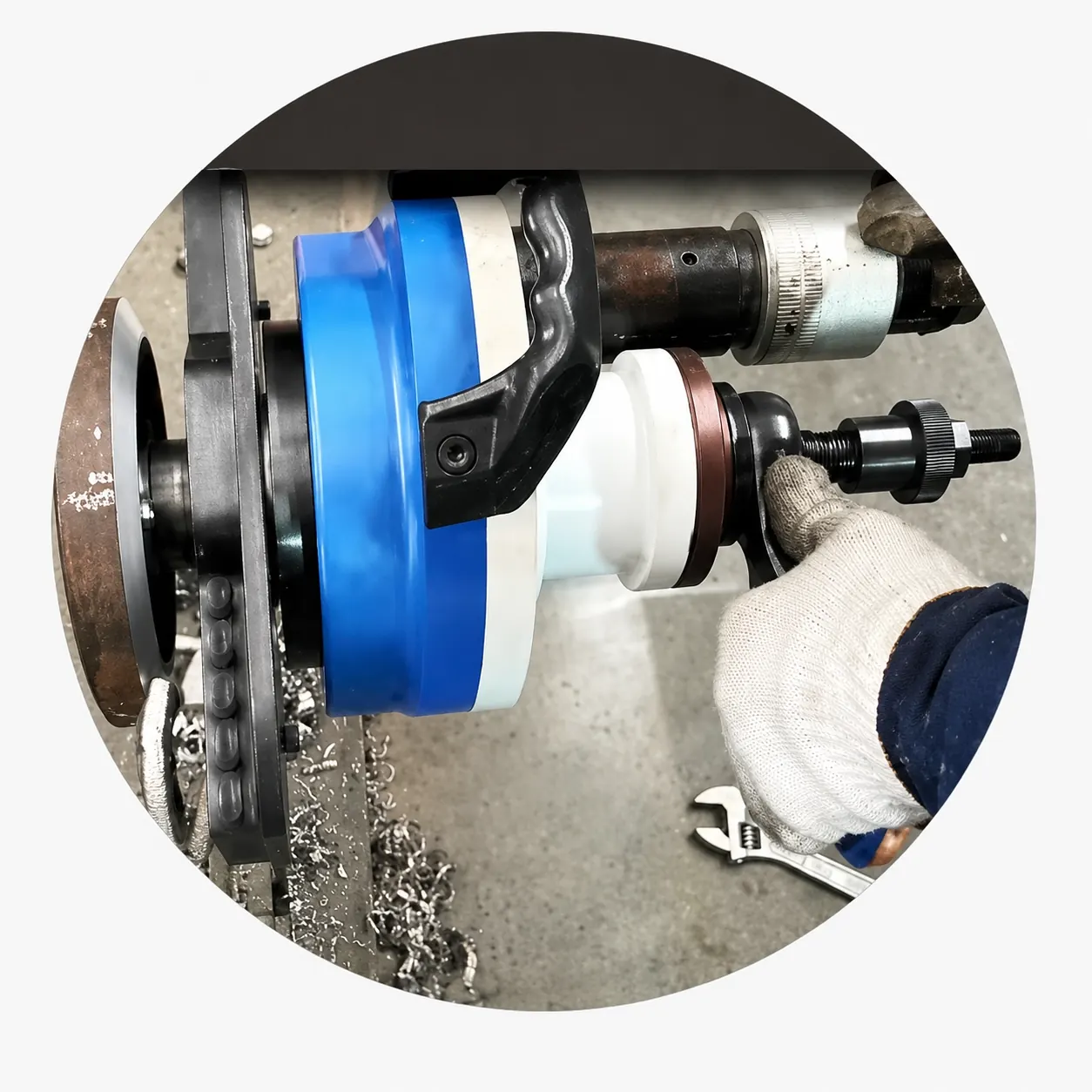
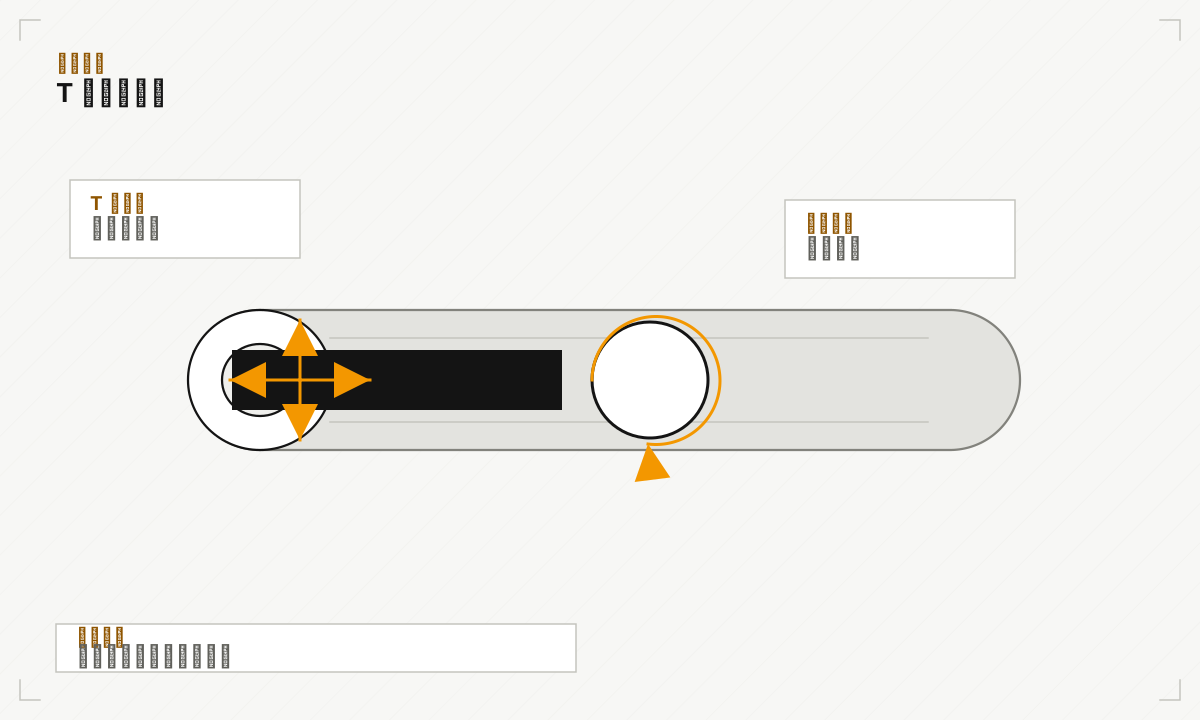
A segmented mandrel passes into the pipe bore; a draw-bar drives a tapered cone that pushes the mandrel jaws radially outward until they grip the pipe ID. Because the cutting head shares the mandrel axis, it is concentric to the bore by construction — the machine auto-centers itself in the pipe with no manual indication. With grip referenced to the ID, the pipe end stays fully exposed for the tool head, so the same setup can bevel, chamfer, trim the edge and even face a convex flange after welding. The lightweight T-Model covers standard wall (≤ 15 mm) across the full Ø 18 – 830 mm range; the II-Model uses a reinforced tool-post for heavy wall up to 75 mm on the larger Ø 80 – 830 mm sizes.
Built for the job site.
Where this series earns its keep.
Petroleum, chemical & natural-gas piping
On-site weld prep and emergency repair on process and pipeline systems — the ISP pneumatic drive runs on plant air for explosion- and fire-risk areas.
Boiler & nuclear-power pipework
Beveling boiler tubes, headers and power-station piping during outages, where the heavy-wall II-Model takes thick-wall code joints up to 75 mm.
Food & pharmaceutical lines
Clean V / J end prep on stainless process tube for food and pharmaceutical fabrication, with cold cutting that leaves no heat tint to passivate.
Field pipeline construction & site fabrication
Portable T-Model for fast field weld prep across the full Ø 18 – 830 mm range, including emergency shutdown and repair work.
Common questions about the ISE · ISP · ISM · T + II-Model.
Can't find your answer?
What is the difference between the T-Model and the II-Model?
Which drive options are available, and can I change them?
What materials and joint geometries can it prepare?
Other pipe beveling machines.
Get a quote within 24 hours.
Send us your spec sheet, pipe schedule, or drawing — our engineers reply with pricing, lead time, and recommended models.
- 01Send specs & drawings
- 02Receive quote within 24h
- 03Confirm & manufacture