
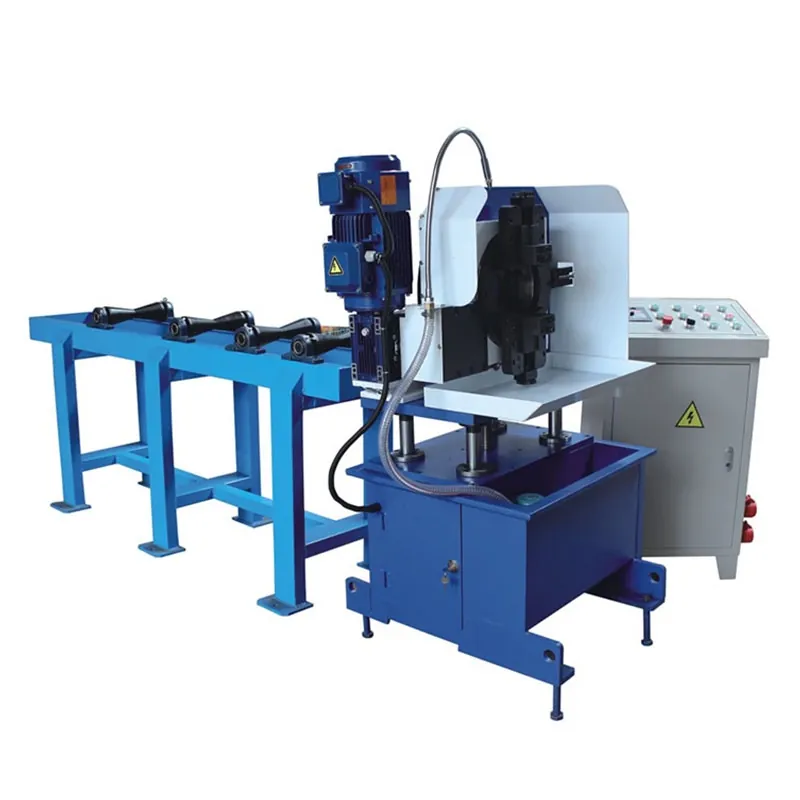
DCM Workshop Pipe Cutting & Beveling Station
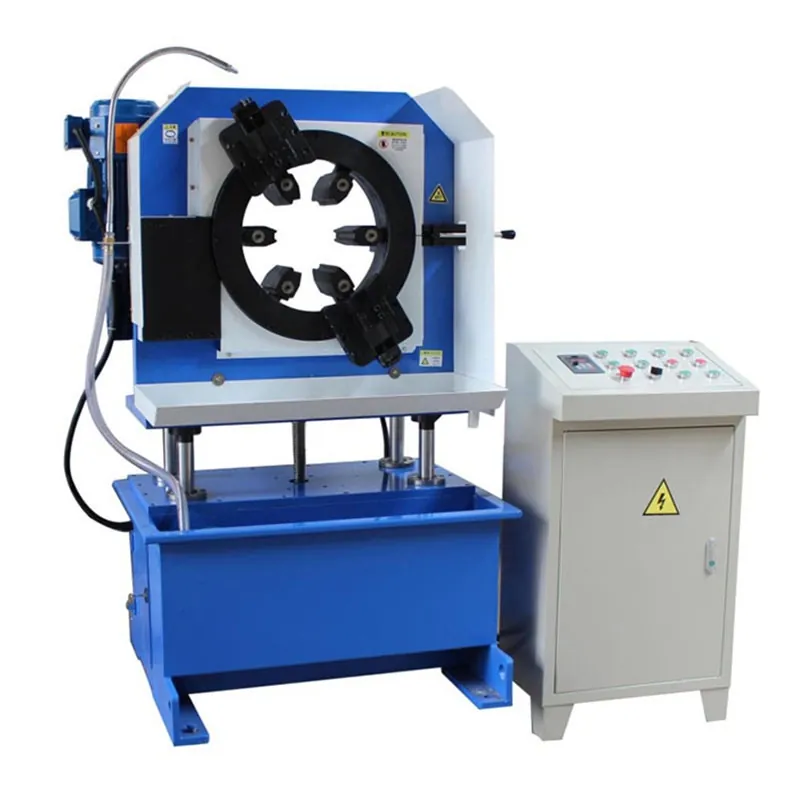
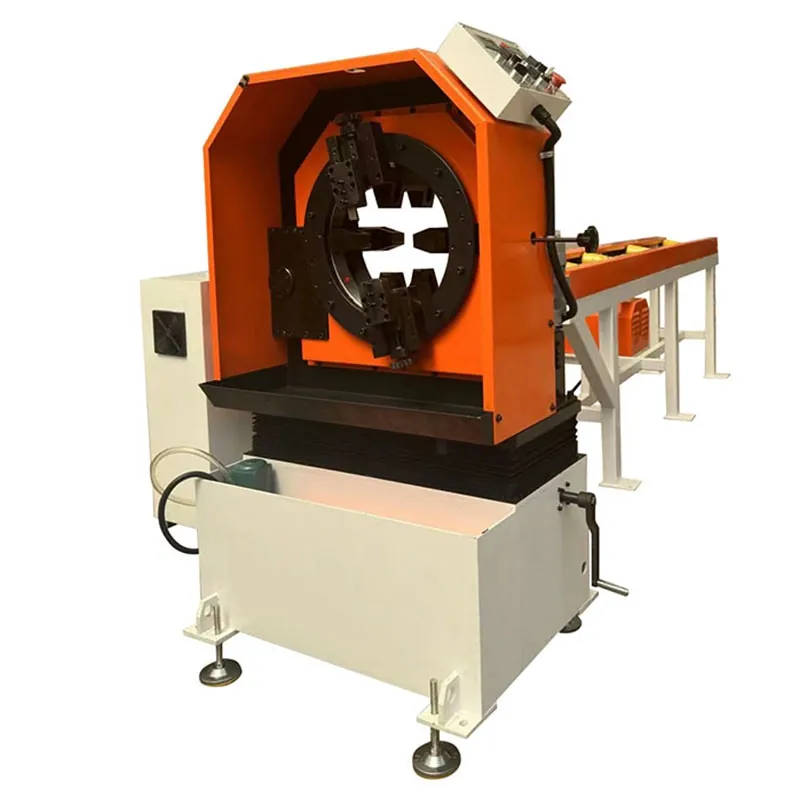
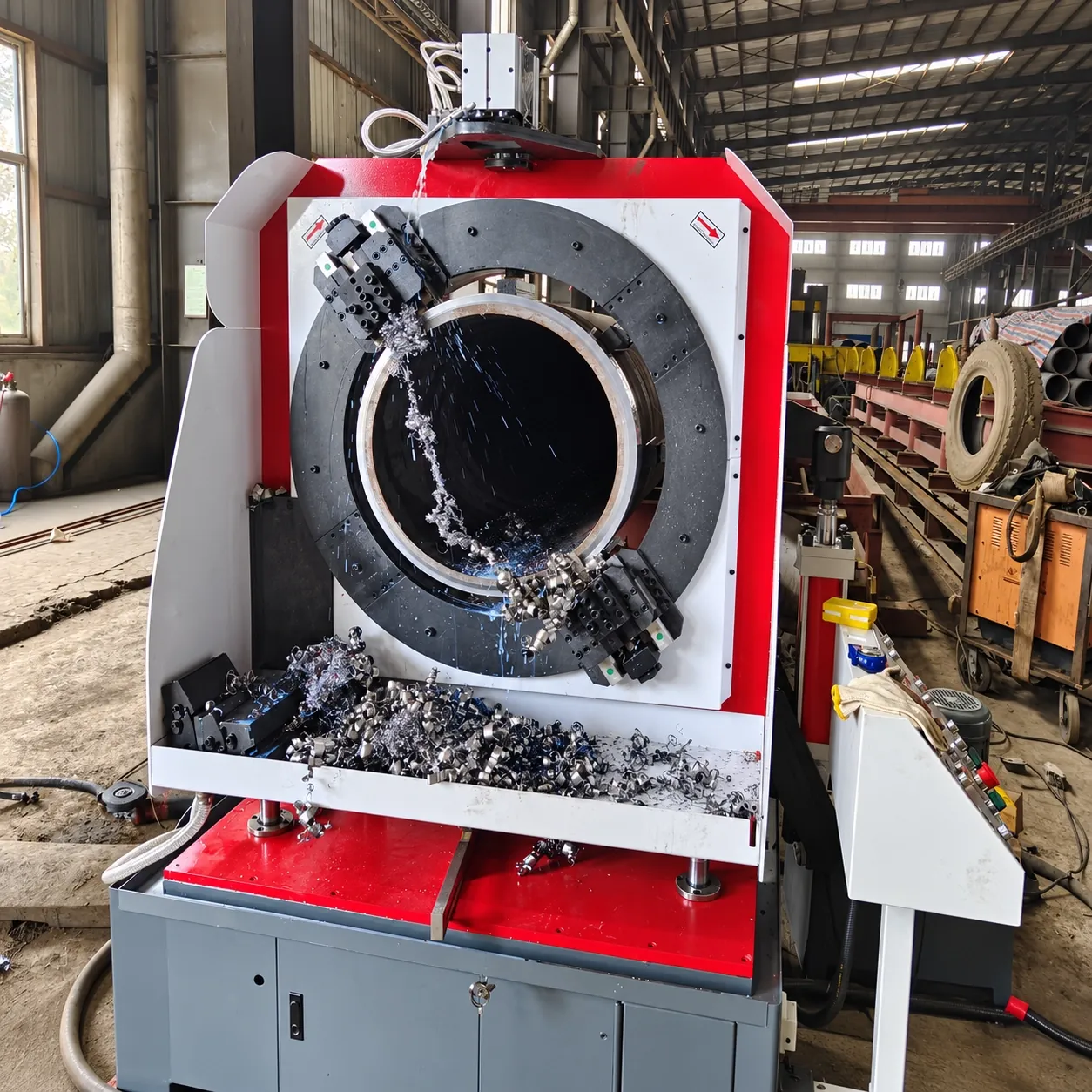
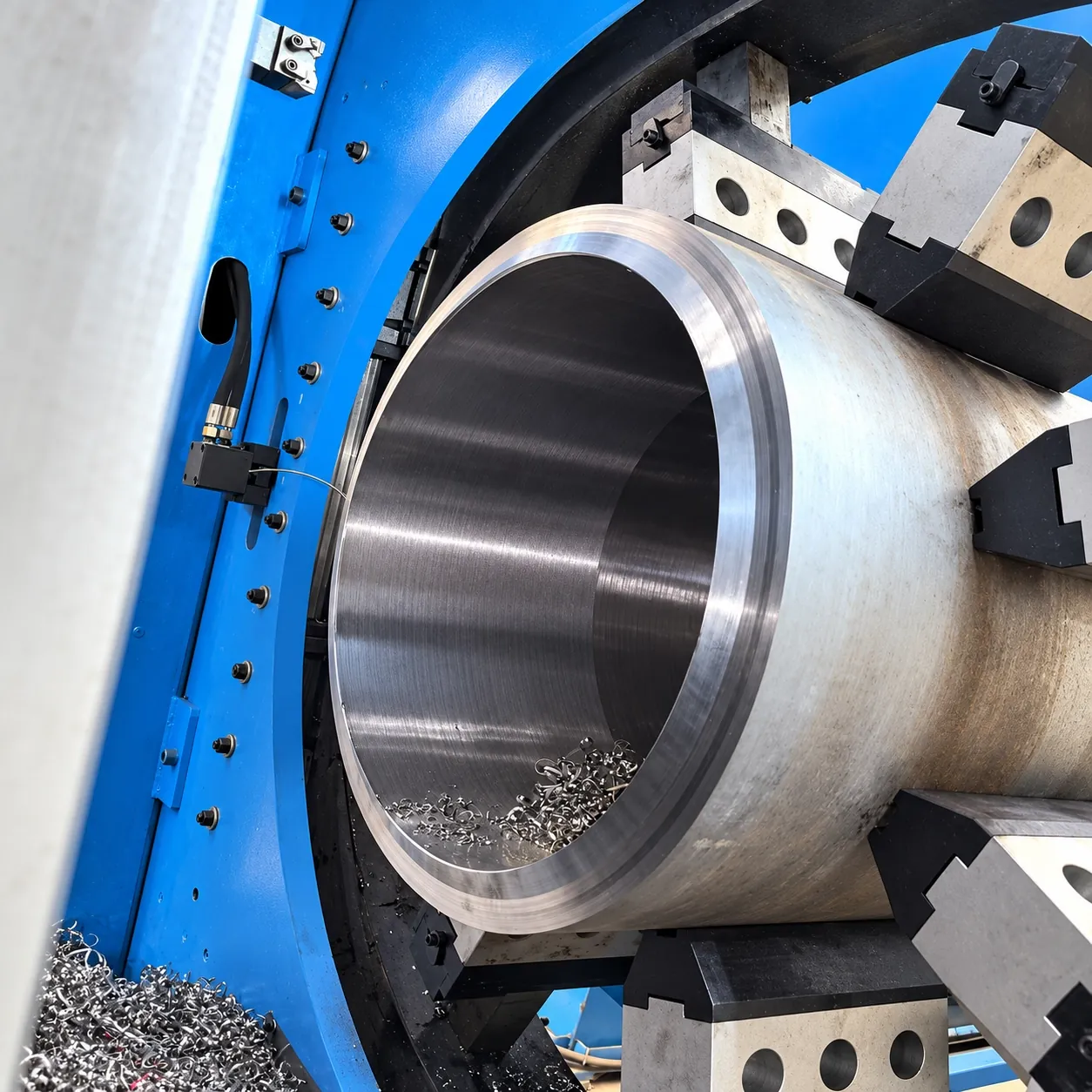
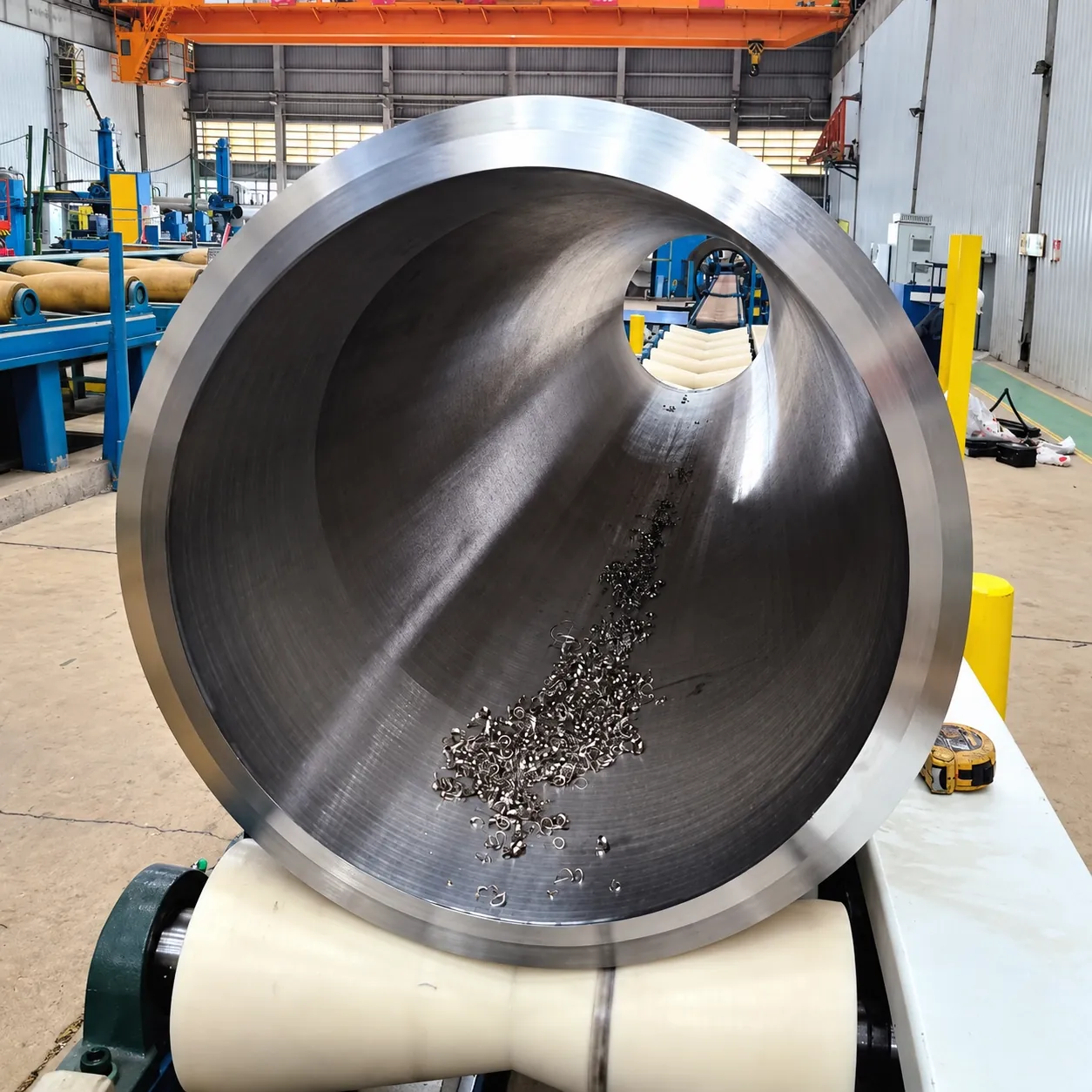
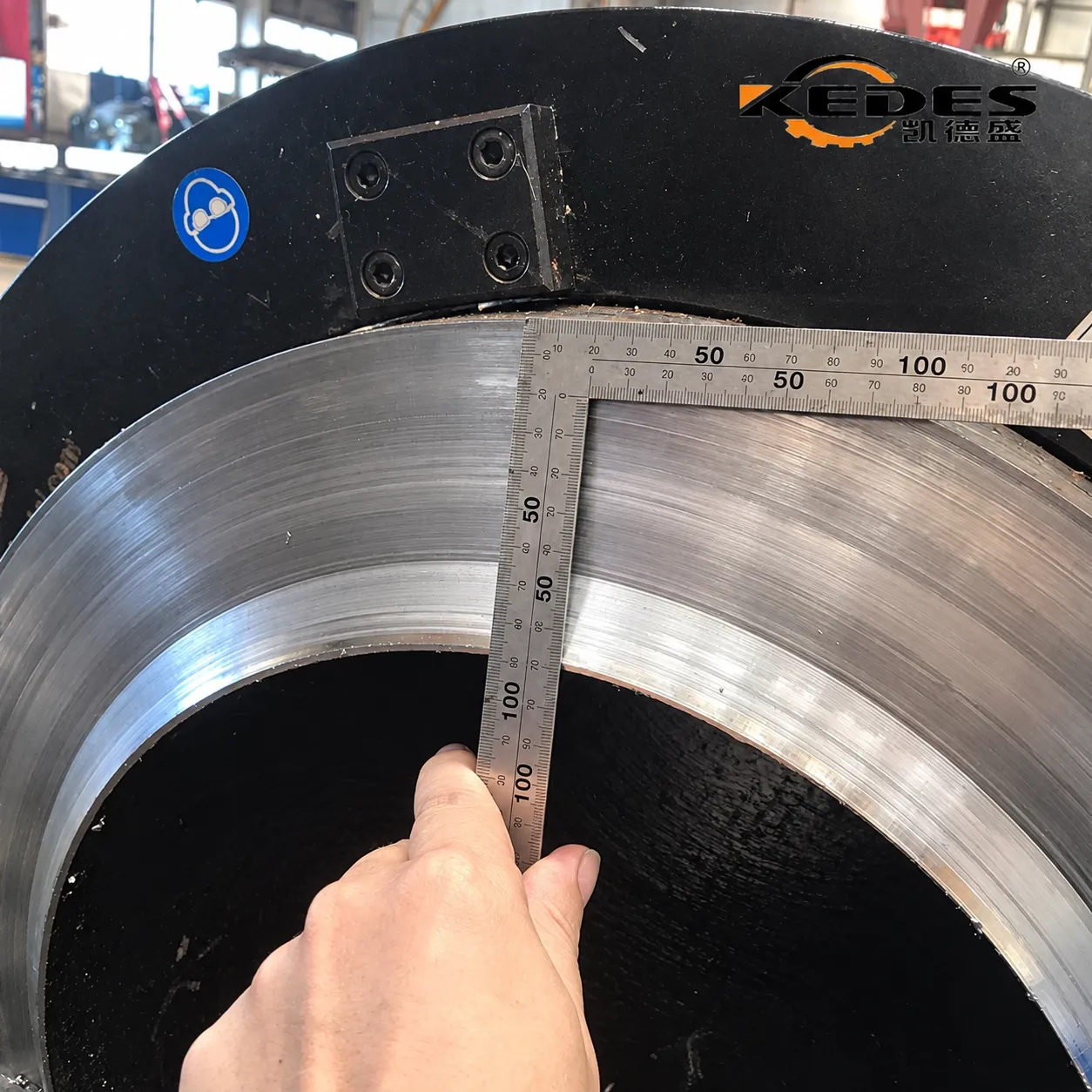
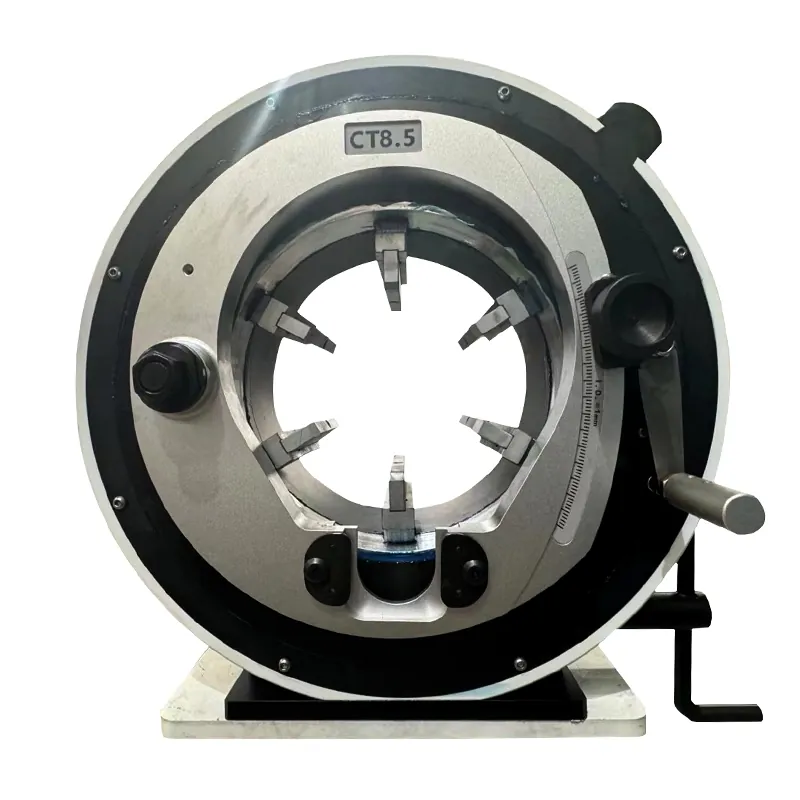
Floor-standing pipe spool cutting and beveling station. Holds the pipe stationary in a 4- or 6-jaw electric self-centering clamp while the tool head orbits around it — cutting and beveling in a single pass for pipe Ø 50 – 630 mm, wall up to 38 mm. The workhorse for prefab shop production.
Pick your size — 3 models in the series.
| DCM-325 Standard · up to 12" pipe | DCM-426 Medium · up to 16" pipe | DCM-630 Heavy-duty · up to 24" pipe | |
|---|---|---|---|
| Pipe OD range | 50 – 325 mm (2" – 12") | 108 – 426 mm (4" – 16") | 325 – 630 mm (12" – 24") |
| Wall thickness | 3 – 38 mm | 5 – 25 mm | 3 – 25 mm |
| Motor power | 4000 W | 5500 W | 7500 W |
| Spindle speed | 0 – 35 r/min | 0 – 35 r/min | 0 – 17 r/min |
| Clamping | 4-jaw electric | 4-jaw electric | 6-jaw electric |
| Feed rate | 0.1 – 0.2 mm/rev | 0.1 – 0.2 mm/rev | 0.1 – 0.2 mm/rev |
| Net weight | 700 kg | 1200 kg | 2000 kg |
| Quote this model |
How a workshop cutting & beveling station works
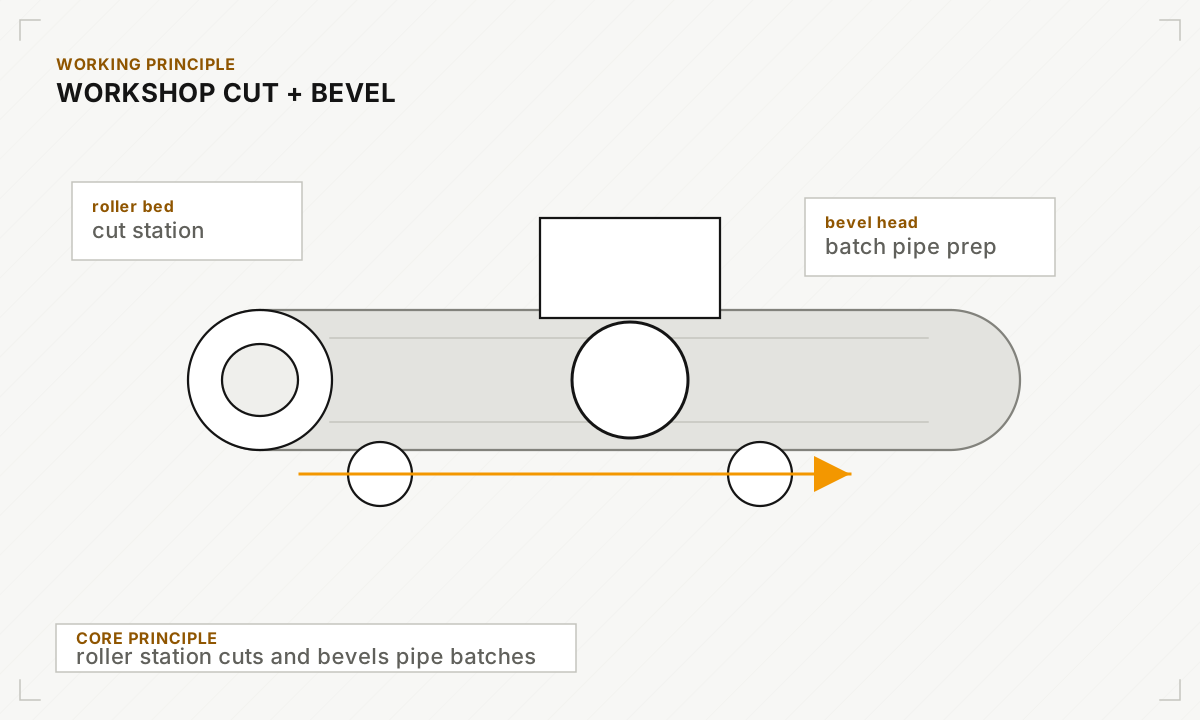
The pipe is held stationary in an electric self-centering chuck on the machine's floor-mounted frame. The cutting head — a parting wheel paired with a bevel tool — orbits the pipe on a ring gear, performing cut and bevel in the same pass. Because the pipe never moves, support rollers can carry long stock without crane work between cuts, which is what makes the DCM the production heart of a pipe-spool fabrication shop. A circulating water-cooling loop keeps the tooling at temperature for long production runs on stainless and Cr-Mo pipe, extending insert life and preserving the cold-cut surface quality.
Built for the job site.
Where this series earns its keep.
Pipe spool prefabrication shops
Batch cutting and beveling of pipe segments for spool assembly. The DCM is the central machine on most production-spool floors — sized to handle the spool sizes assembled there.
Boiler & heat-exchanger fabrication
Length cutting and bevel preparation of tube bundles and header sections during boiler and exchanger manufacturing — DCM-630 sized for HP steam header work.
Refinery & chemical-plant fab
Stainless and corrosion-resistant pipe prep for process piping. Cold cut + water cooling preserves the passive surface required for corrosion-service welds.
Common questions about the DCM Series · Workshop.
Can't find your answer?
How is this different from a portable beveler like the cam-type or split-frame?
Why a 6-jaw chuck on the DCM-630 but 4-jaw on the smaller models?
What pipe wall is realistic in one pass?
Does the same machine handle stainless, alloy and carbon?
Other pipe cutting machines.
Get a quote within 24 hours.
Send us your spec sheet, pipe schedule, or drawing — our engineers reply with pricing, lead time, and recommended models.
- 01Send specs & drawings
- 02Receive quote within 24h
- 03Confirm & manufacture