
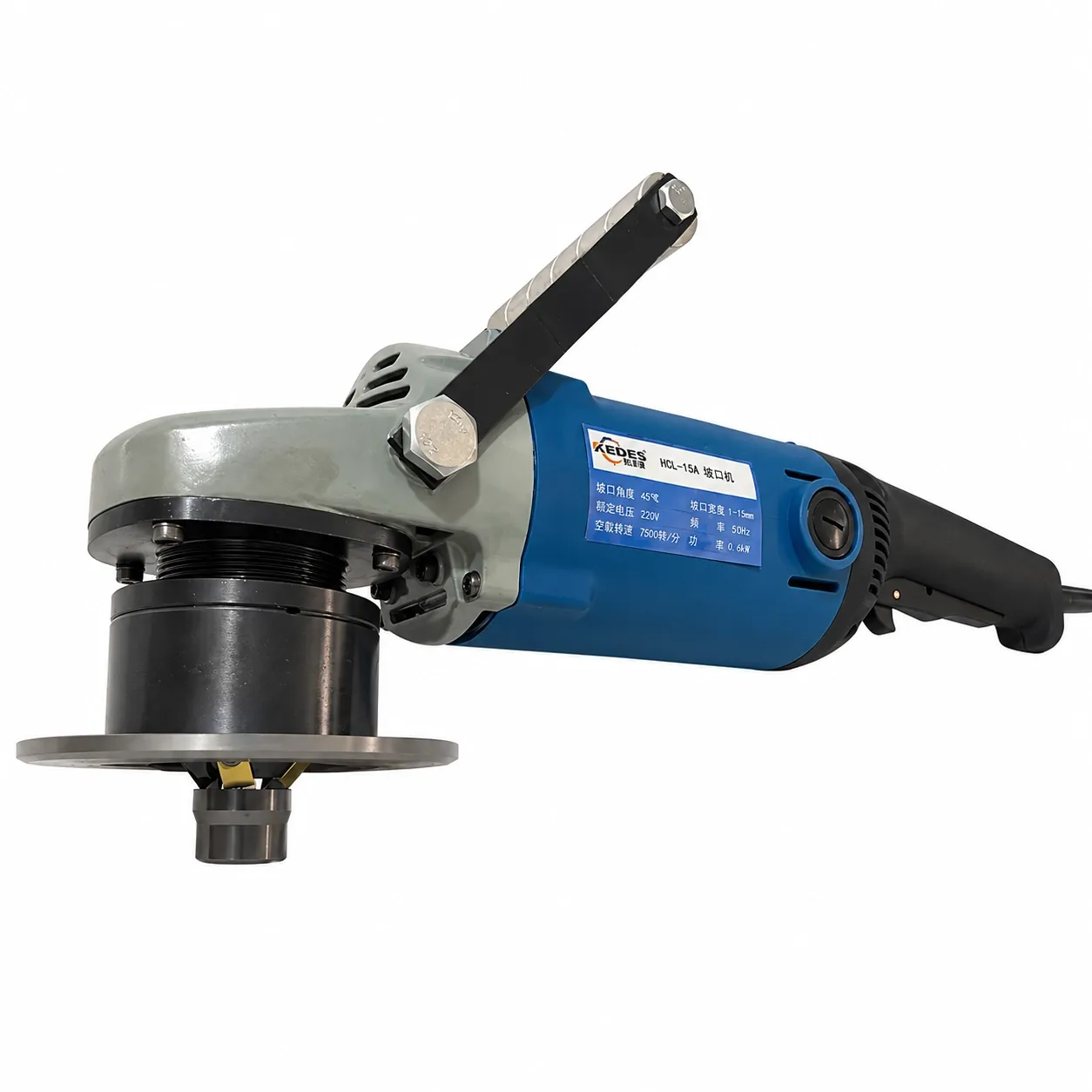
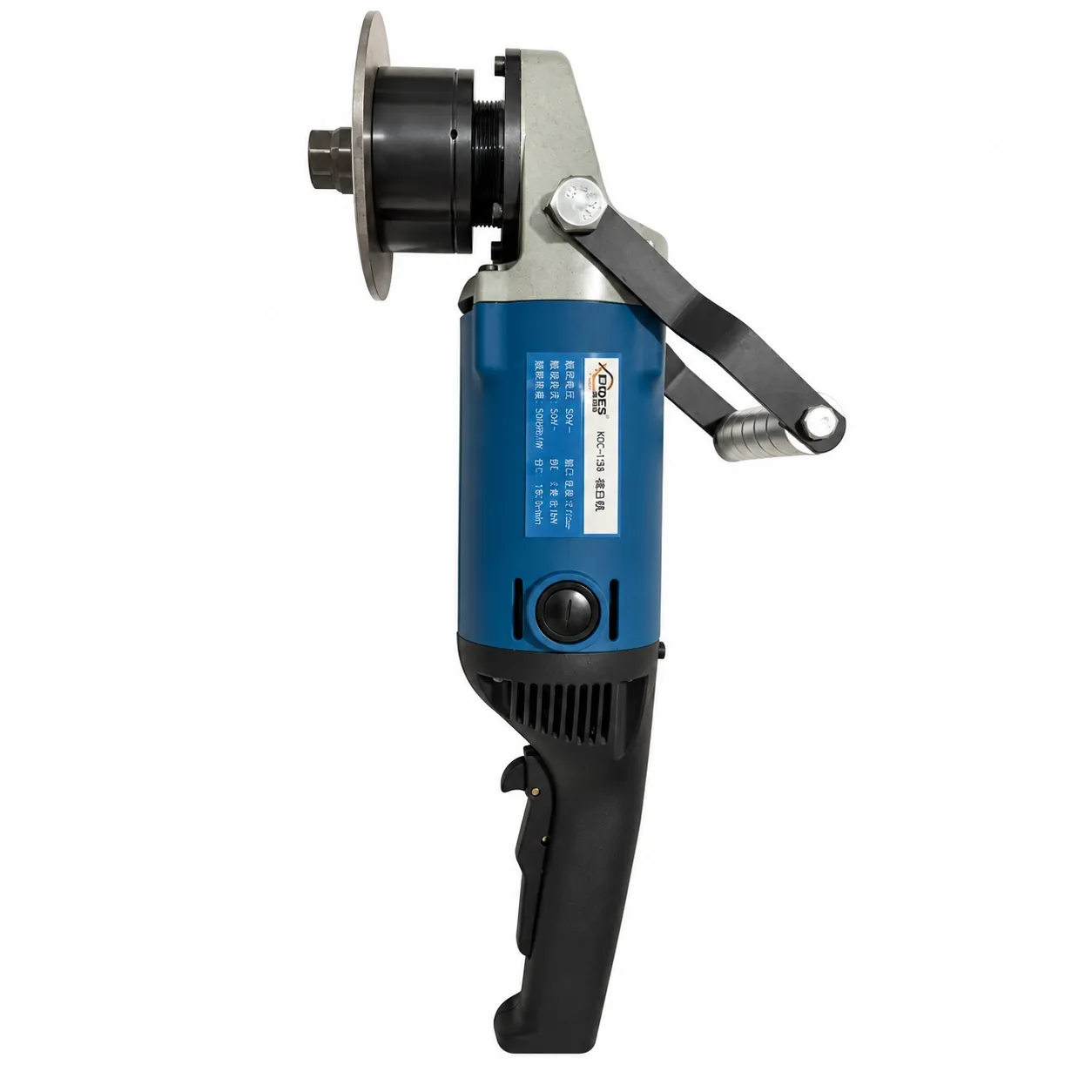
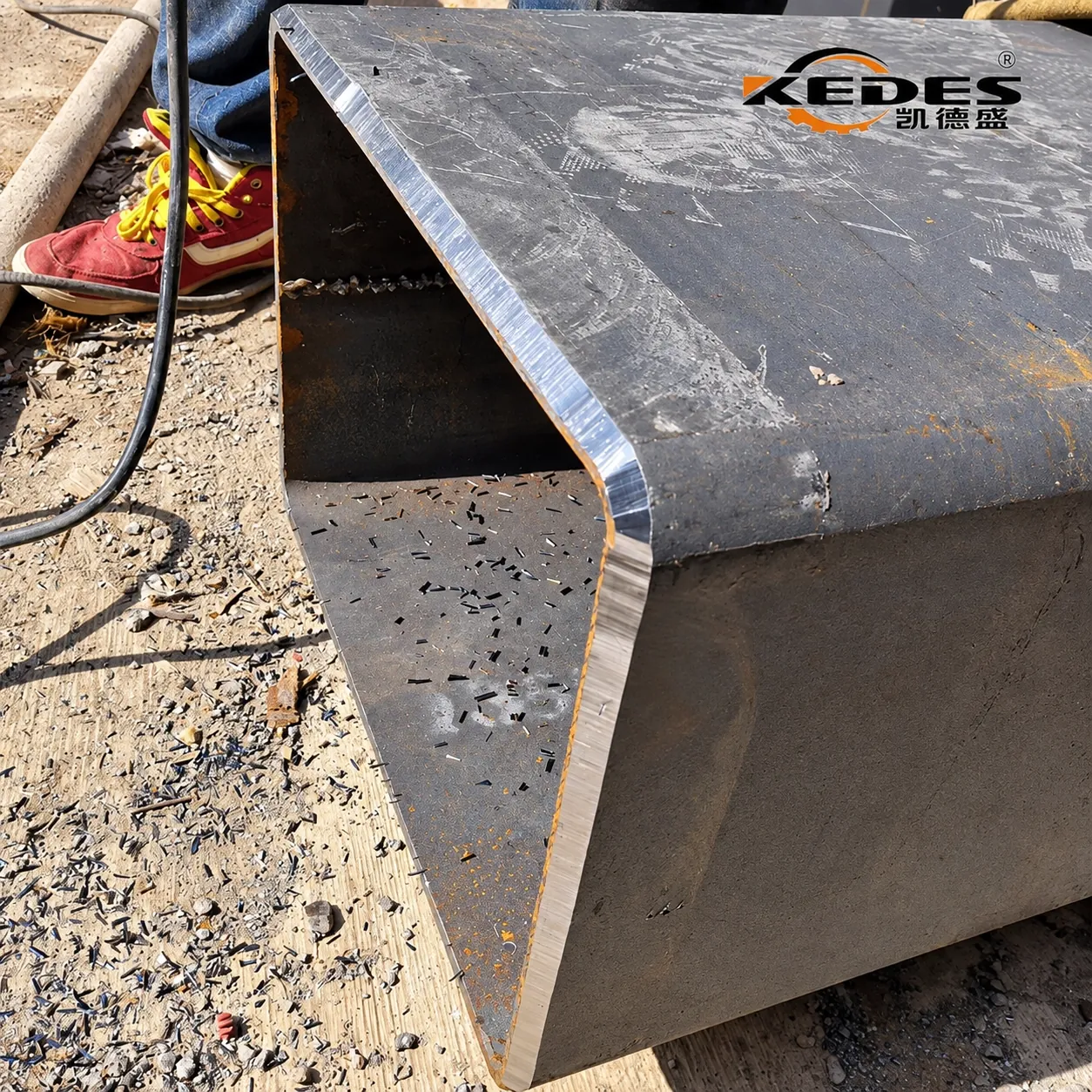
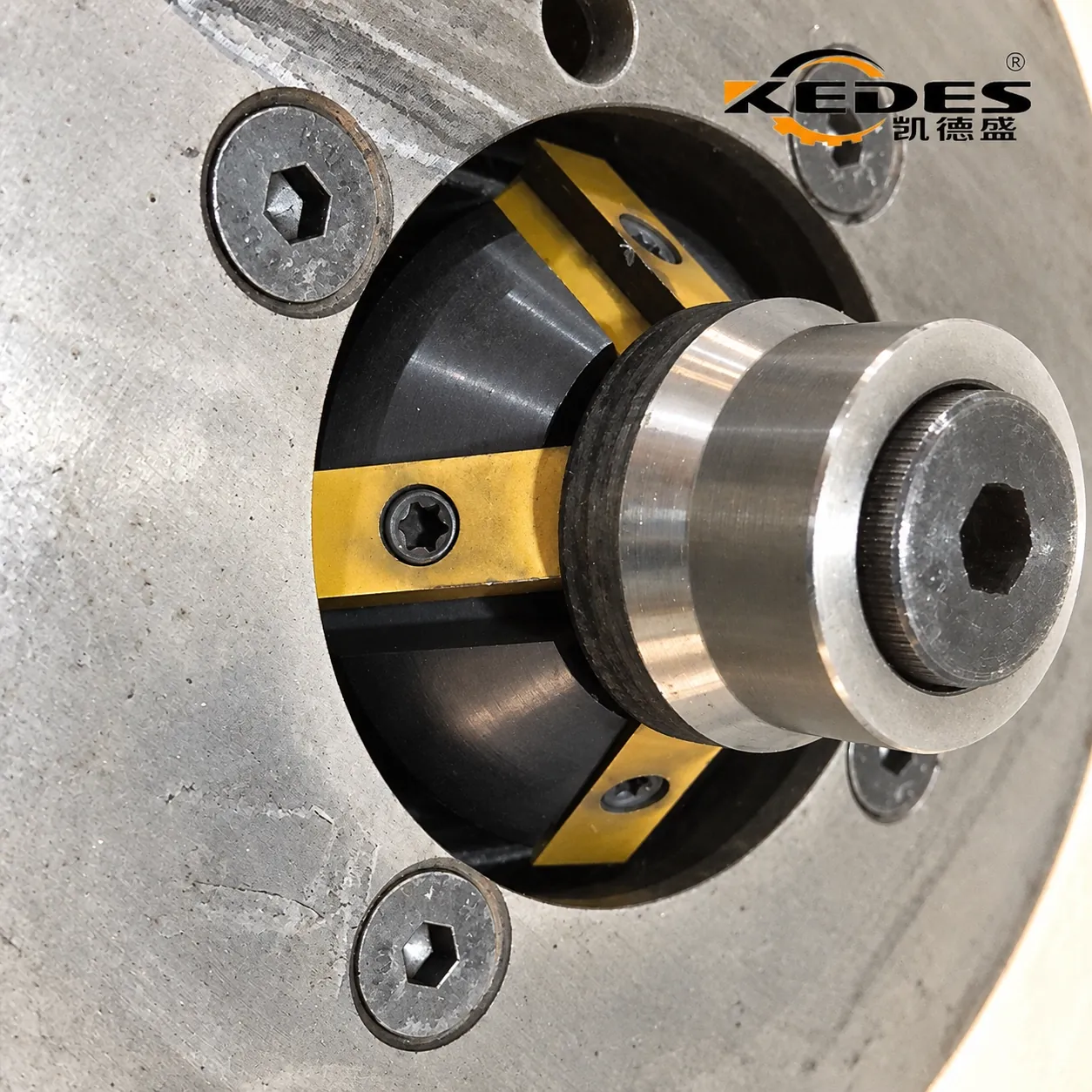
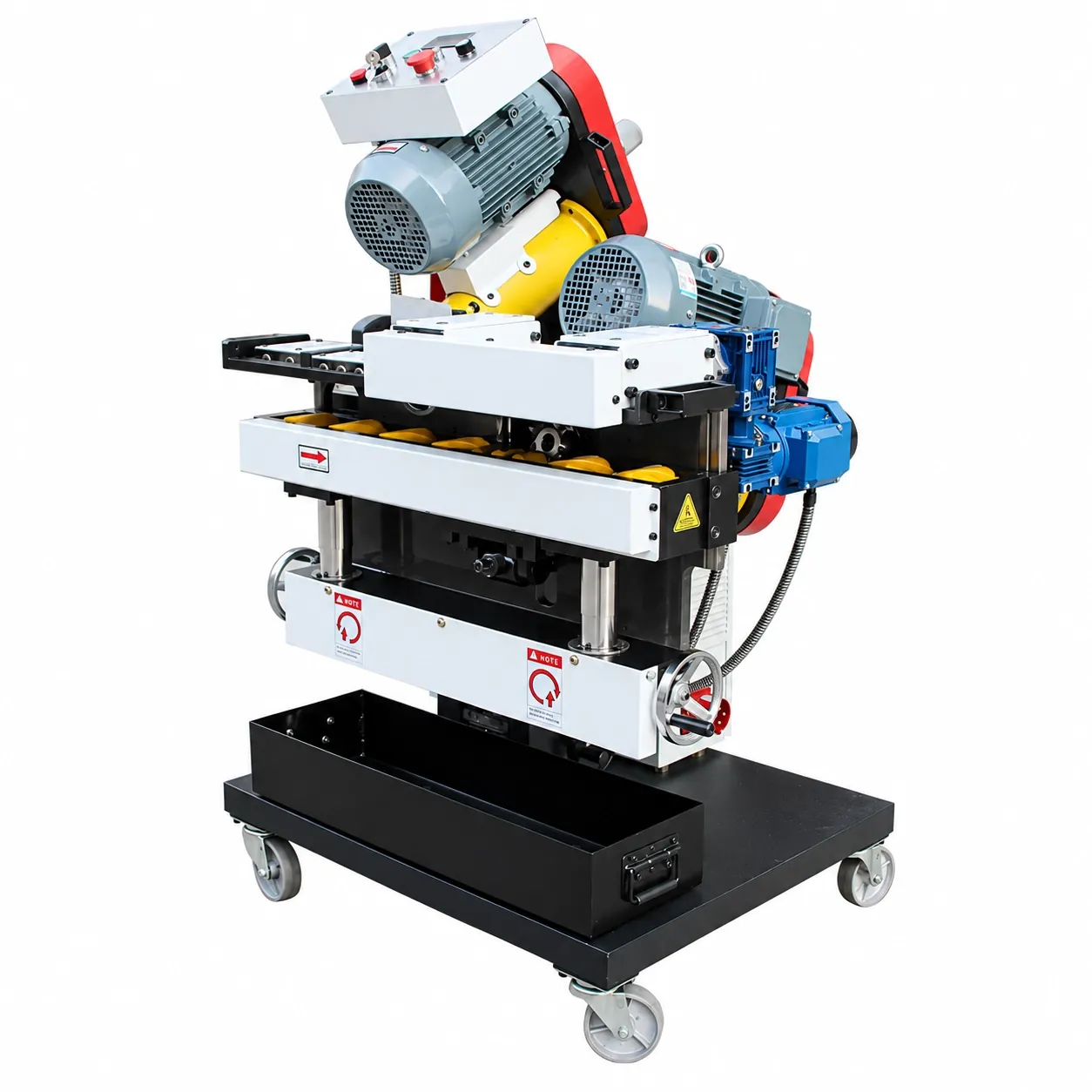
HDL Handheld Multifunctional Edge Miller
6 – 9 kg handheld cold edge miller that bevels what stationary and traveling machines cannot reach — inner holes, curved plate edges, nozzle stub-outs and one-off pipe ends. 4-insert carbide cutter, adjustable bevel angle 20° – 60°, up to 15 mm bevel width on the HDL-15A.
Pick your size — 2 models in the series.
| HDL-10A Standard · 1800 W · 6 kg · up to 10 mm bevel | HDL-15A High-power · 2450 W · 9 kg · up to 15 mm bevel | |
|---|---|---|
| Total motor power | 1800 W | 2450 W |
| Max bevel width | 10 mm | 15 mm |
| Bevel angle options | 30° / 37.5° / 45° | 20° – 60° adjustable |
| Processing speed | 400 – 800 mm/min | 500 – 1000 mm/min |
| Voltage | 220 – 240 V | 220 – 240 V |
| Net weight | 6.0 kg | 9.0 kg |
| Works on | Plate · curve · hole · pipe | Plate · curve · hole · pipe |
| Quote this model |
Why handheld cold milling solves what stationary machines can't
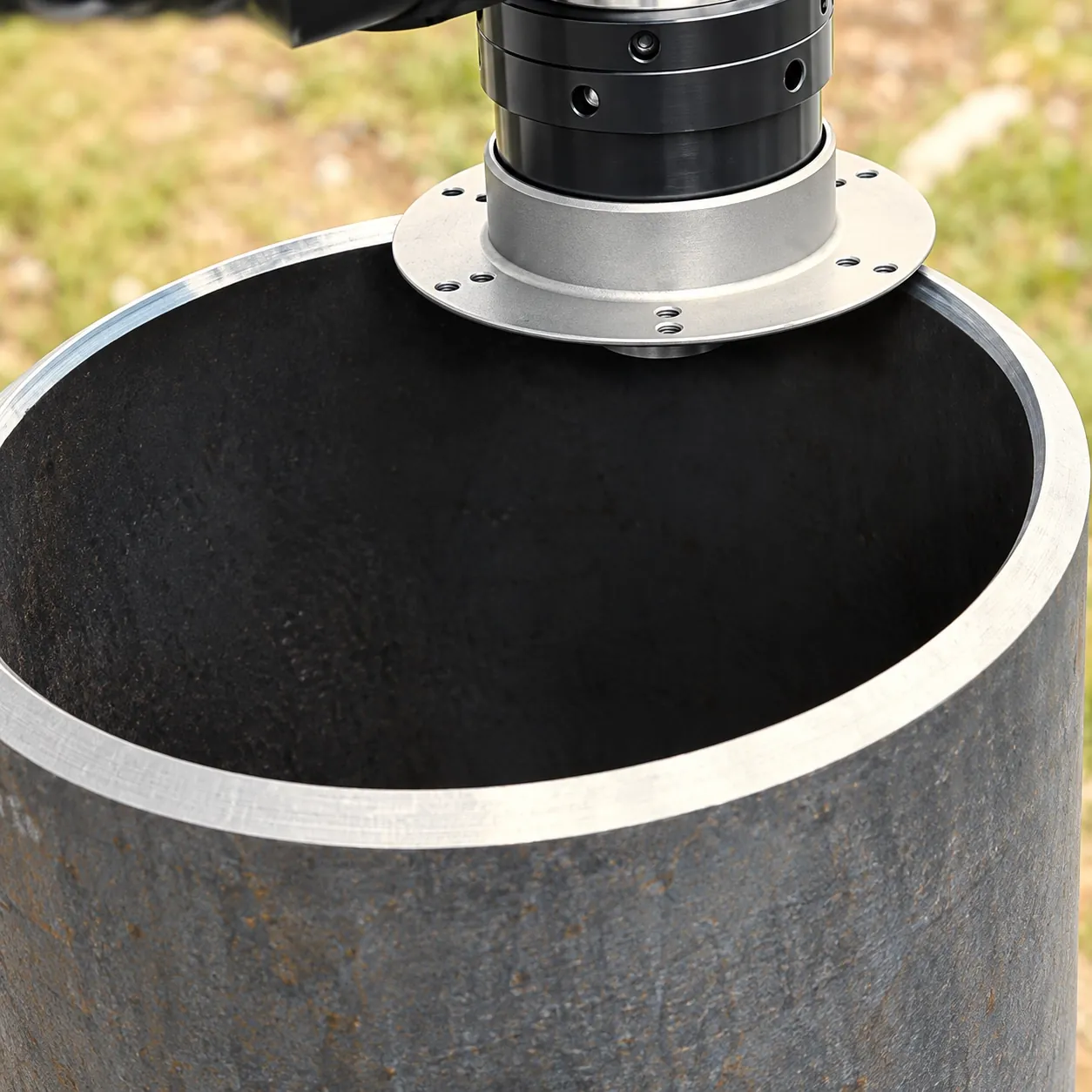
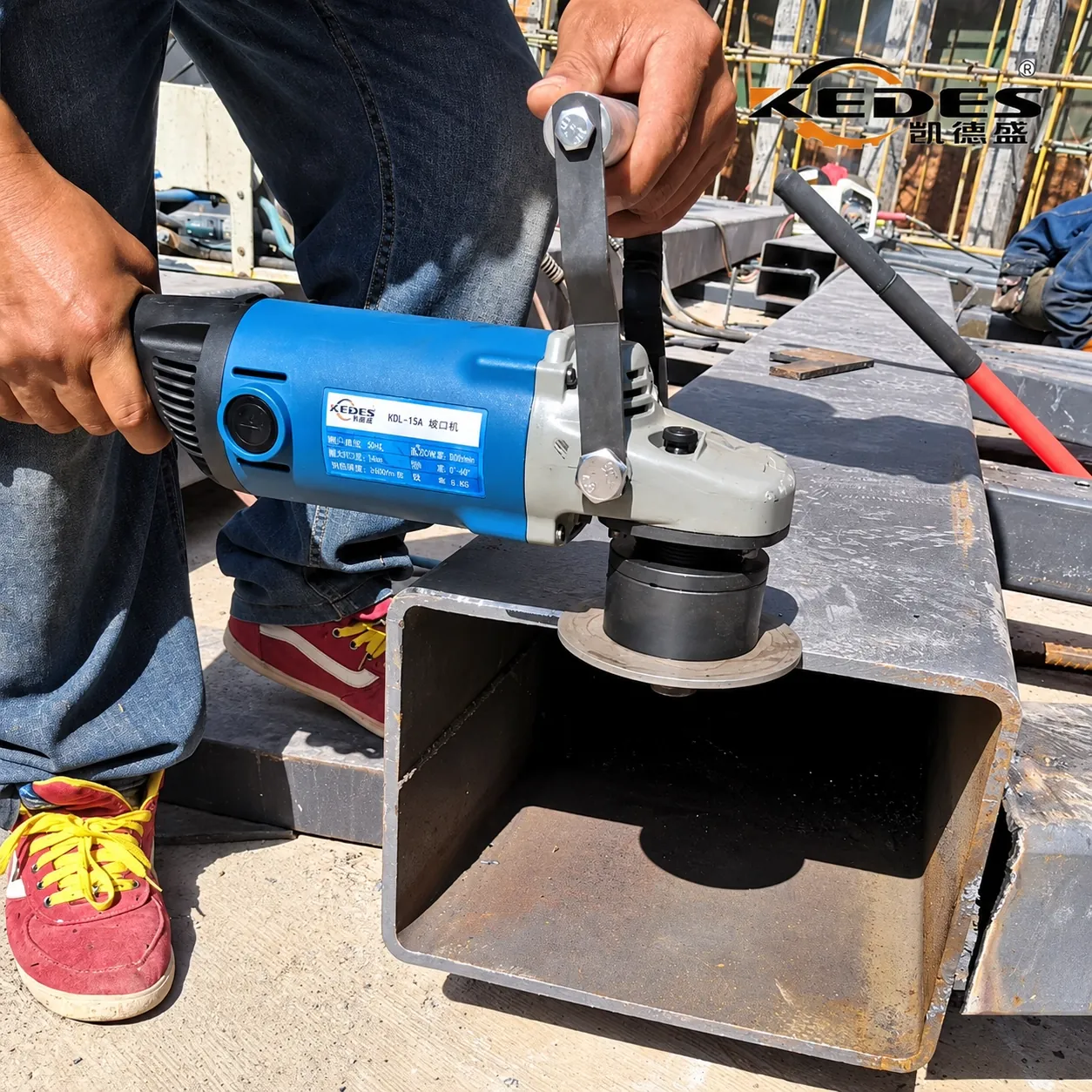
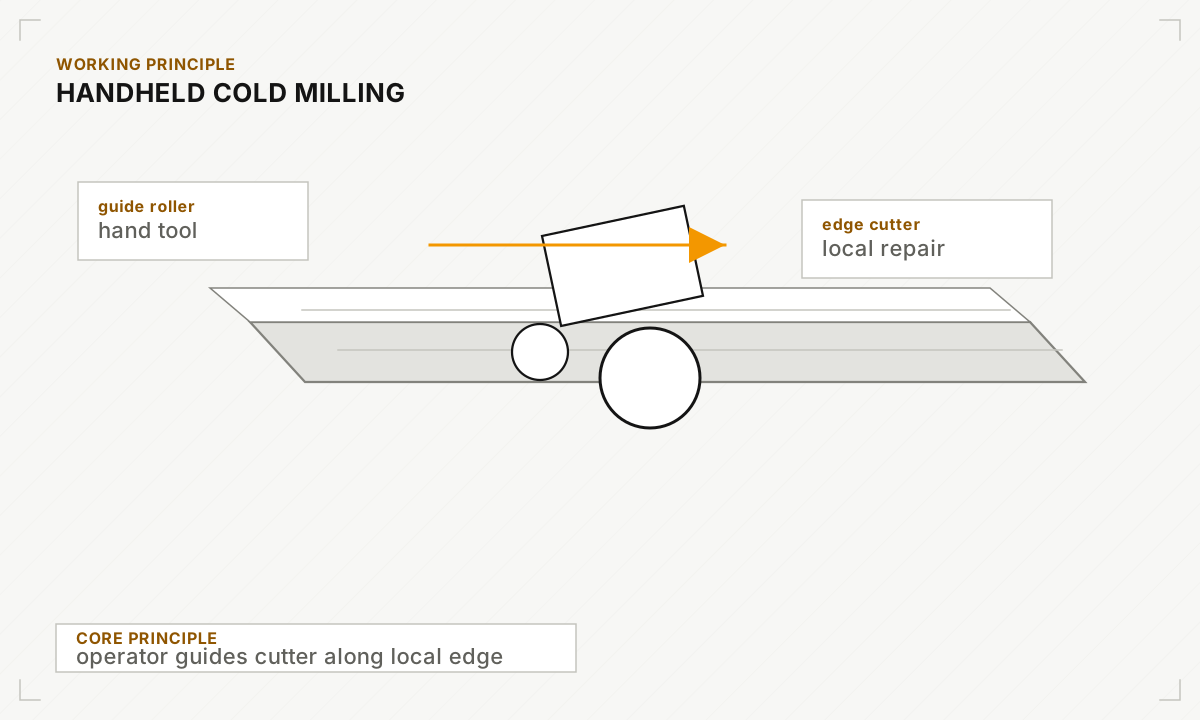
Stationary edge millers (DZ benchtop, DMM tabletop, DMM hydraulic), self-propelled travelers (GL, DMM-900) and rolling-shear bevelers (KBM) all assume the work is a straight plate edge accessible from a flat datum. The moment the geometry deviates — an inner-bore hole that needs a bevel for nozzle welding, a curved shell-plate edge, a one-off pipe end on an installed structure — those machines cannot reach. The HDL solves this by inverting the workflow: the operator carries the machine and walks it along the bevel path under hand control. A 4-insert carbide cutter delivers the same cold-milling surface quality as stationary machines (Ra 3.2 – 6.3 μm), with no HAZ. Bevel uniformity is operator-dependent — but trained operators consistently match production-machine surface quality on irregular geometry where alternatives simply don't exist.
Built for the job site.
Where this series earns its keep.
Pressure-vessel nozzle & manway prep
Internal-bore beveling for nozzle stub-outs, manway openings and shell penetrations on pressure vessels. The only practical tool for inner-bore weld-prep that meets ASME Section VIII surface requirements.
Bridge & structural-steel field work
Beam-hole beveling, irregular structural-cut bevels and on-site prep work on installed structural steel where production machines cannot reach.
Hull cutout & module-edge prep
Curved-edge prep on hull plate cutouts, manhole openings and module-interface edges in shipyards — where the irregular geometry of installed work defeats traveling machines.
Common questions about the HDL Series · Handheld.
Can't find your answer?
HDL-10A or HDL-15A — which should I order?
How is this different from the SKF-15 hand-propelled plate beveler?
Does it work on pipe ends?
Surface finish vs stationary machines?
Other plate beveling machines.
Get a quote within 24 hours.
Send us your spec sheet, pipe schedule, or drawing — our engineers reply with pricing, lead time, and recommended models.
- 01Send specs & drawings
- 02Receive quote within 24h
- 03Confirm & manufacture