
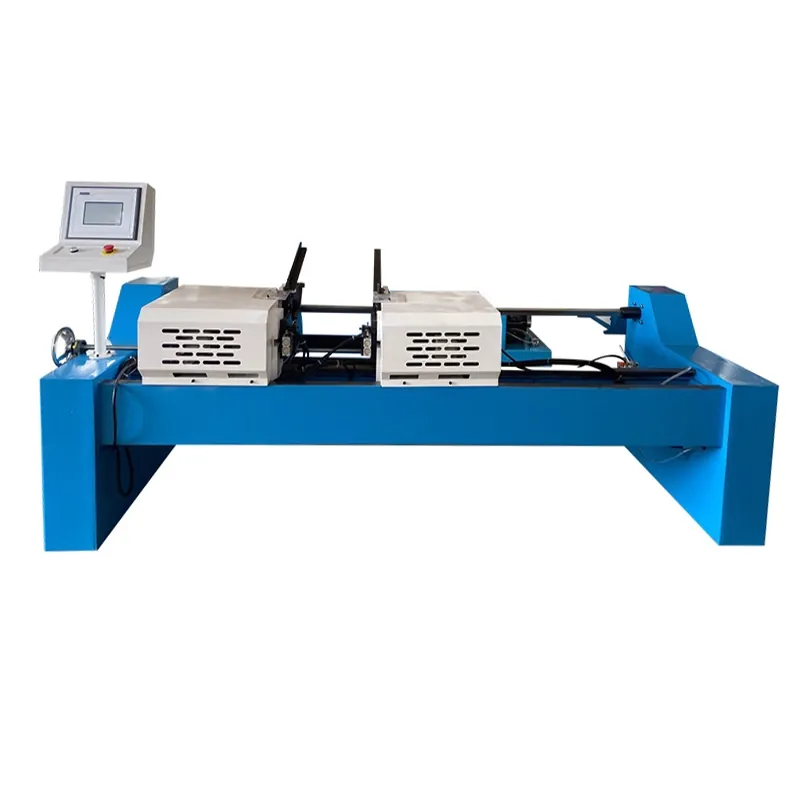
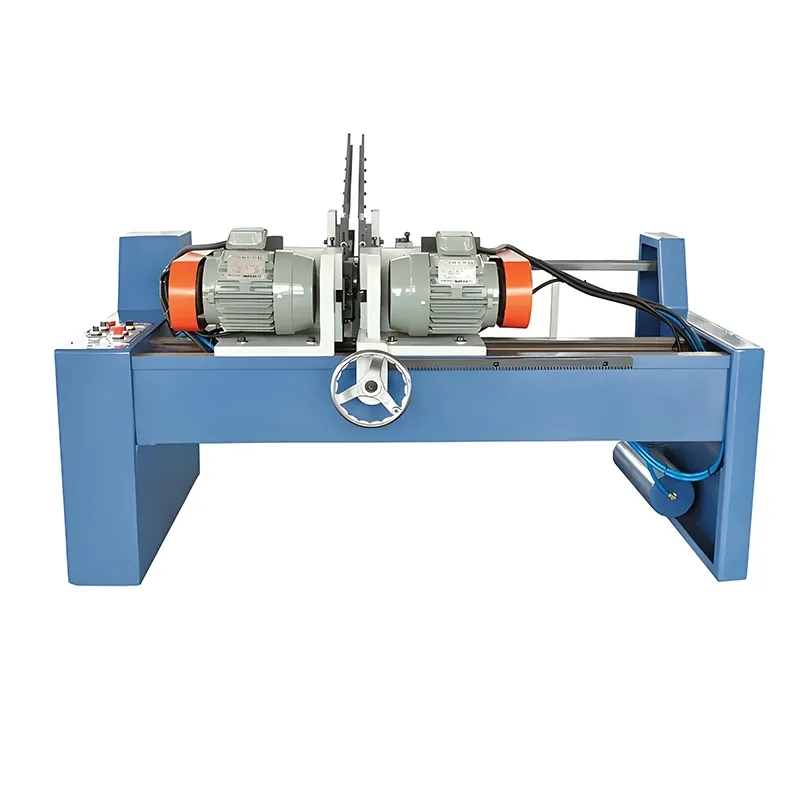
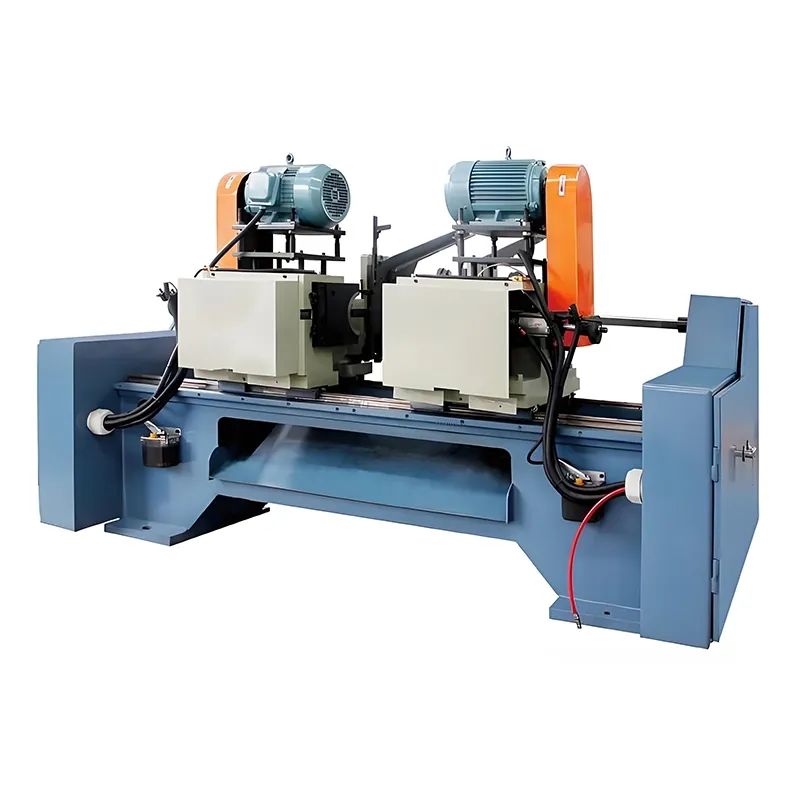
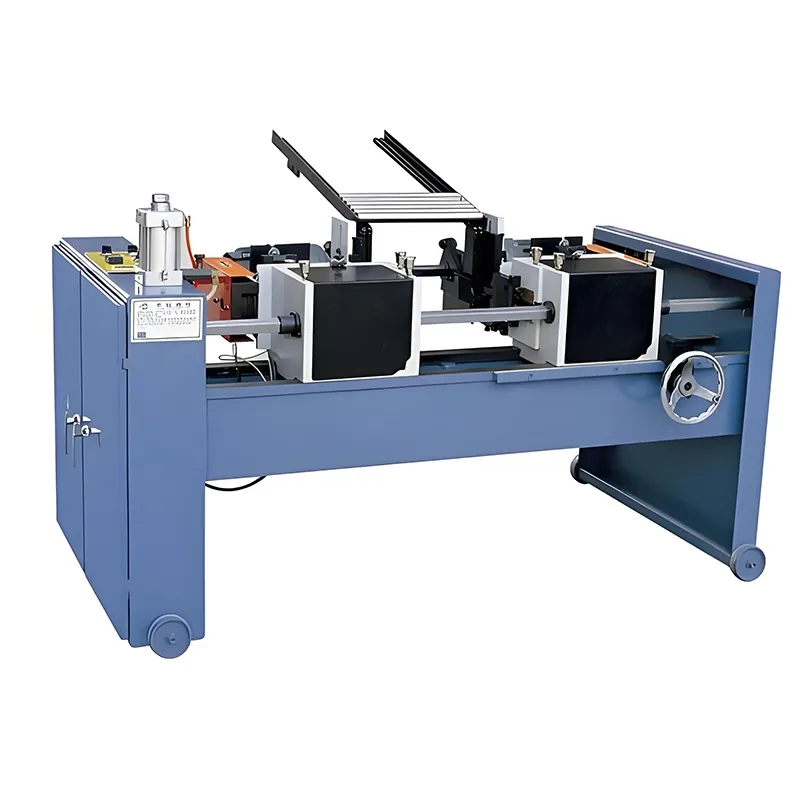
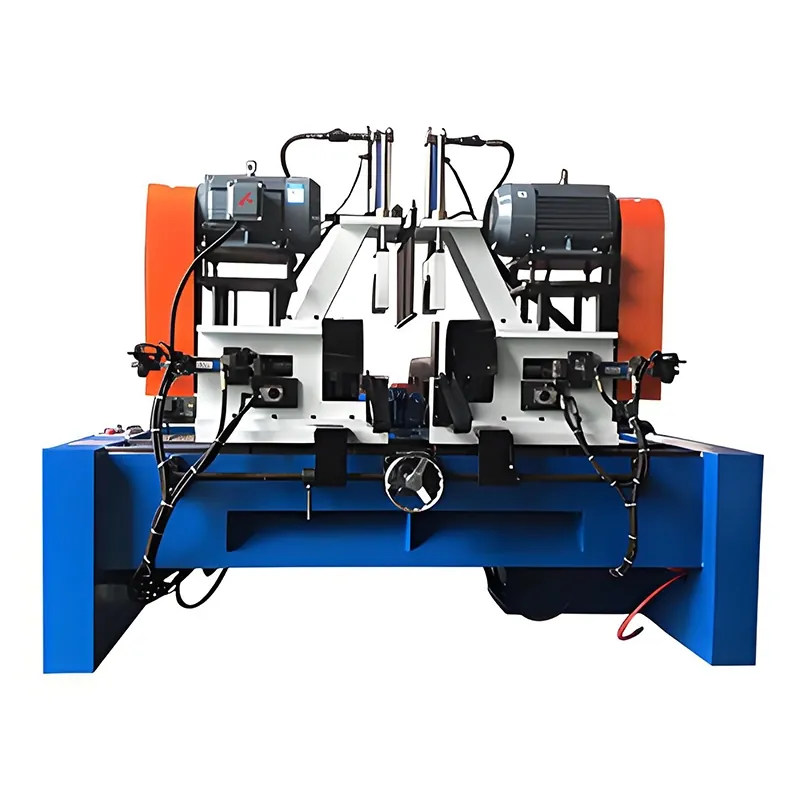
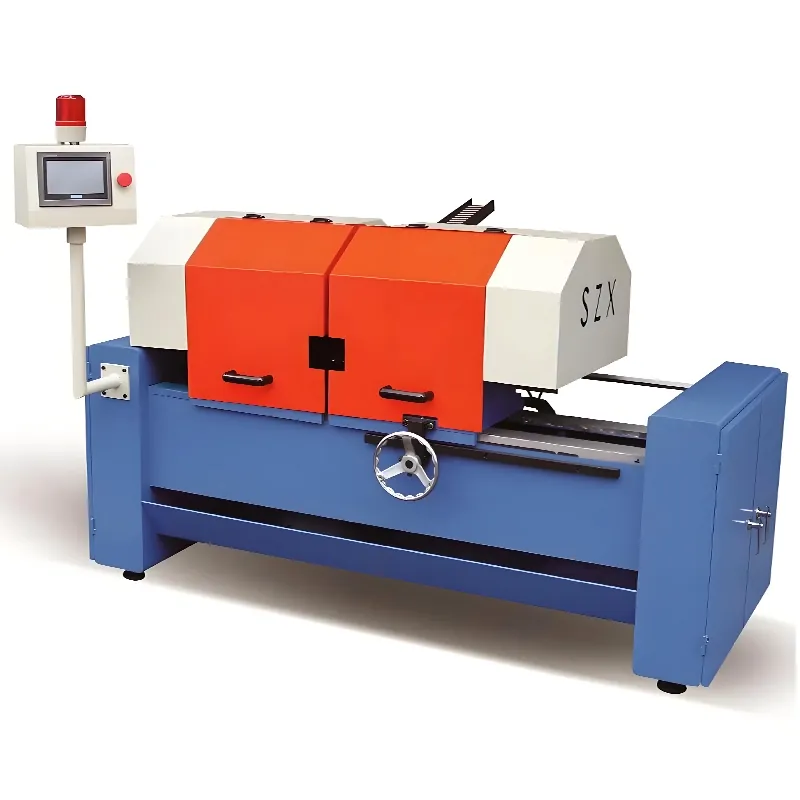
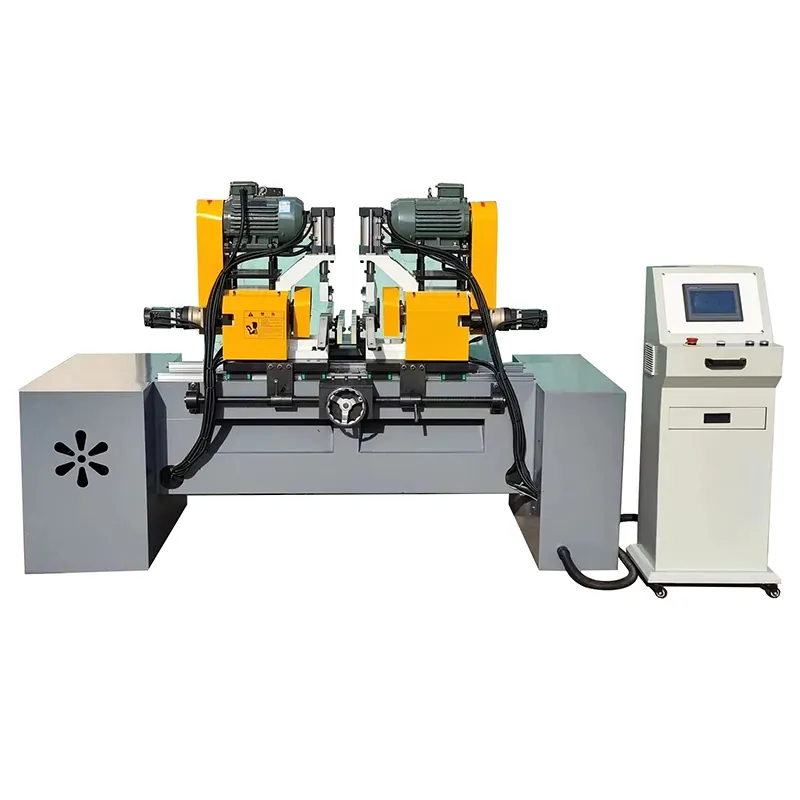
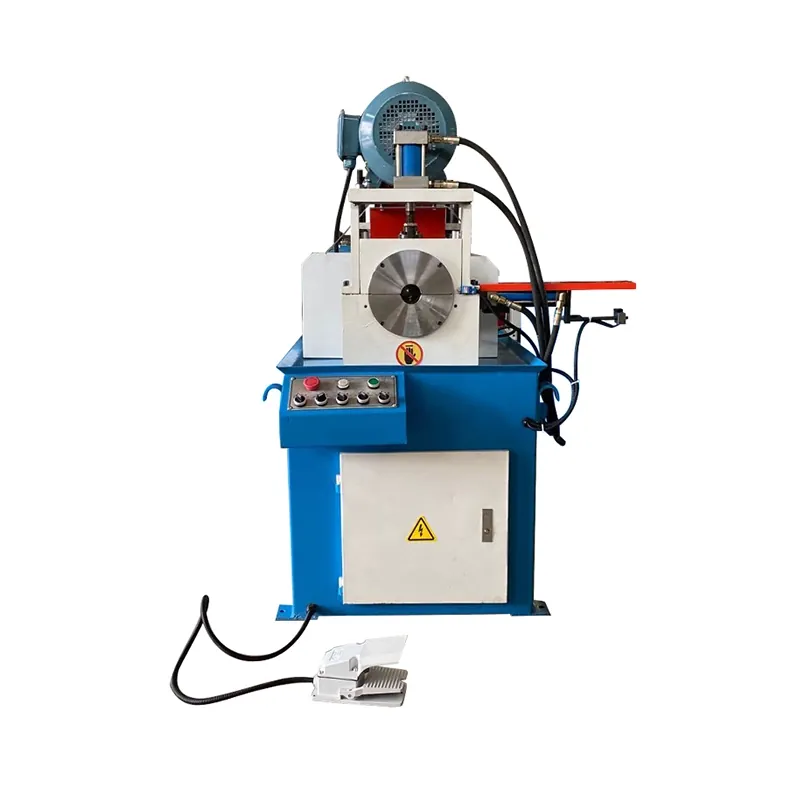
Double-Head Automatic Pipe Chamfering Machine
Both-ends-at-once automatic chamfering station — synchronized milling heads cut both pipe ends in the same 3–5 second cycle. Halves cycle time versus single-head and produces perfect length consistency for robotic welding downstream. Pipe lengths 20 – 1600 mm standard, extendable to 6000 mm.
Pick your size — 9 models in the series.
| DC-30-2 Pneumatic · Ø 3 – 30 mm | DC-50-2 Pneumatic · Ø 5 – 50 mm | DC-80-2 Pneumatic · Ø 18 – 80 mm | DC-120-2 Pneumatic · Ø 20 – 100 mm | DY-50-2 Hydraulic · Ø 6 – 50 mm | DY-60-2 Hydraulic · short pipe specialist | DY-80-2 Hydraulic · Ø 30 – 80 mm | DY-120-2 Hydraulic · Ø 60 – 100 mm | DY-180-2 Hydraulic · Ø 10 – 180 mm · full pallet | |
|---|---|---|---|---|---|---|---|---|---|
| Pipe OD range | 3 – 30 mm | 5 – 50 mm | 18 – 80 mm | 20 – 100 mm | 6 – 50 mm | 15 – 60 mm | 30 – 80 mm | 60 – 100 mm | 10 – 180 mm |
| Wall thickness | thin wall | thin wall | thin wall | thin wall | 0.6 – 8 mm | 1 – 5 mm | 1 – 5 mm | 3 – 9 mm | 0.6 – 18 mm |
| Standard pipe length | 20 – 100 mm | 200 – 1600 mm | 150 – 1000 mm | 150 – 800 mm | 80 – 550 mm | 20 – 100 mm | 120 – 600 mm | 120 – 600 mm | 110 – 500 mm |
| Motor power | 0.75 kW | 1.5 kW | 2.2 kW × 2 | 2.2 kW × 2 | 2.2 kW | 2.2 kW | 2.2 kW | 3.0 kW | 5.5 kW |
| Cycle time | 3 – 5 s/pc | 3 – 5 s/pc | 3 – 5 s/pc | 3 – 5 s/pc | 5 – 8 s/pc | 5 – 8 s/pc | 5 – 8 s/pc | 5 – 8 s/pc | 5 – 8 s/pc |
| Material support | Standard | Standard | Standard | Standard | Standard | Short-pipe jig | Standard | Heavy-duty | Full pallet |
| Quote this model |
Why both-ends-at-once cuts production time in half
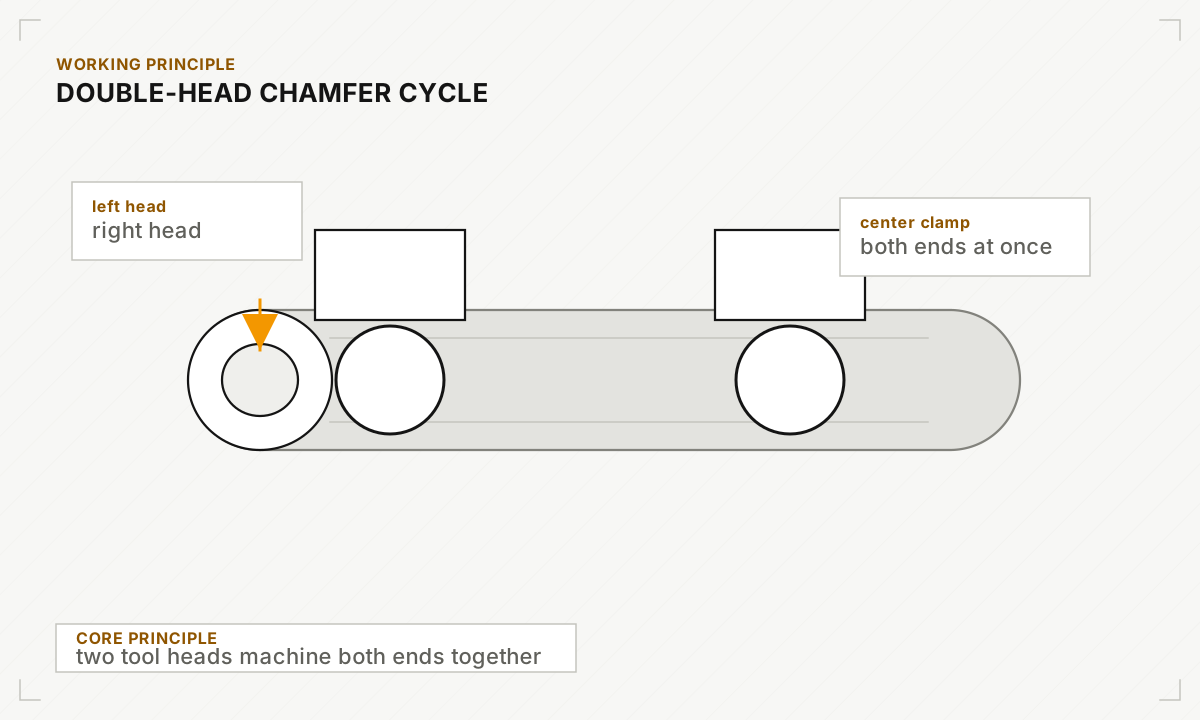
Two synchronized milling heads, one at each end of the workpiece, advance simultaneously on the same cycle command. Both pipe ends are chamfered and faced in the same 3 – 5 seconds — versus 6 – 10 seconds and two operator pedal-presses on a single-head machine. Length consistency drops out automatically: because both ends are referenced to the machine's rigid bed (not to a chuck and an unmeasured pipe length), every part is identical to within ±0.1 mm. This length consistency is what enables downstream robotic welding cells, which fail when input parts vary by more than ±0.3 mm in length. The DY-180-2 adds a full-length material pallet to prevent long, heavy pipes (e.g. scaffolding tube) from sagging during the cycle — required when finished length exceeds about 1 m for heavy-wall stock.
Built for the job site.
Where this series earns its keep.
Automotive axle, shock & exhaust production
High-volume chamfering for chassis components — both ends matched to ±0.1 mm for robotic welding. The defining application: automotive cells process 1000–3000 pieces per shift.
Furniture & scaffolding tube production
Steel furniture-tube and scaffolding-tube end prep for downstream welding assembly. DC pneumatic models dominate furniture (light wall); DY hydraulic handles scaffolding (heavier wall).
Hydraulic cylinder manufacturing
Synchronized facing of both ends of hydraulic cylinder tube — critical for cylinder-end weld concentricity and finished cylinder straightness.
Common questions about the DC / DY Double-Head.
Can't find your answer?
When is double-head worth the cost premium over single-head?
Can the same machine handle short tubes and 6 m tubes?
Do I need automatic feeding?
Does the machine cut chamfers other than 45°?
Other automatic chamfering machines.
Get a quote within 24 hours.
Send us your spec sheet, pipe schedule, or drawing — our engineers reply with pricing, lead time, and recommended models.
- 01Send specs & drawings
- 02Receive quote within 24h
- 03Confirm & manufacture